North Korea is preparing for a plenary meeting of the Workers’ Party Central Committee in mid-December to review this year’s activities across various sectors. This meeting is the final plenary session of the 8th Central Committee, which was formed during the 8th Party Congress in January 2021, and precedes the 9th Party Congress scheduled for early next year.
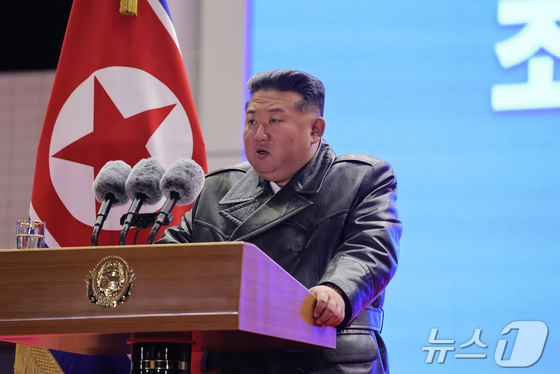
Kim Jong Un has consistently presided over these plenary meetings since their introduction in late 2019, except for 2020 when no meetings were held. He has strategically used these year-end sessions to deliver crucial messages through multiple speeches over several days.
This year is particularly significant as it concludes the five-year plan established during the 8th Party Congress. Kim is expected to lead the meeting personally. Analysts are keenly watching how North Korea will address the ongoing tensions with South Korea and respond to U.S. President Donald Trump’s recent overtures for dialogue.
The plenary meeting will evaluate the five-year achievements in economic and defense development, while also laying groundwork for the upcoming 9th Party Congress.
The mid-December timing of this year’s meeting is unusual, as North Korea typically holds these sessions for 3 to 5 days in late December, announcing results on December 31 or January 1.
This earlier schedule likely reflects preparations for next year’s Party Congress. Kim reinstated the Party Congress in 2016 after a 36-year hiatus, setting a five-year cycle. The Congress, as per party regulations, is the highest decision-making body, outranking the plenary meetings held 2-3 times annually.
At this year’s plenary meeting, North Korea is expected to assess national policy implementation and comprehensively review the five-year economic and defense development plan. Kim is likely to showcase achievements in his signature Local Development 20X10 Policy and highlight progress in developing tactical nuclear weapons, super-large nuclear warheads, hypersonic glide vehicles, and solid-fuel ICBMs for underwater and ground use.
The meeting is also expected to emphasize diplomatic efforts, particularly North Korea’s strengthened ties with Russia, evidenced by three summits since 2021, and the recent summit with China after a six-year gap. However, the hostile stance towards South Korea and the United States is likely to persist.
North Korea is not expected to reveal detailed plans for the coming year. Major decisions and announcements are likely to be reserved for next year’s Party Congress, which will outline a new five-year plan.
Park Won-gon, a professor of North Korean Studies at Ewha Womans University, suggests that the earlier timing of the plenary meeting serves as a preparatory step for the upcoming 9th Party Congress, though he doesn’t anticipate any groundbreaking announcements.
Likelihood of Shift in Policy Toward the U.S. and South Korea Low, But…Could be a Preliminary Move to Secure Future Room for Maneuver
Kim clearly articulated North Korea’s policies towards the U.S. and South Korea in a key speech at the Supreme People’s Assembly in September, marking a significant moment in North Korea’s messaging under the Lee Jae-myung and Trump administrations.
Kim stated that engagement with the U.S. was possible if it abandoned its focus on denuclearization, while firmly ruling out meetings or cooperation with South Korea.
Despite subsequent conciliatory gestures from South Korea and the U.S., a fact sheet from the October summit in Gyeongju reaffirmed commitment to North Korea’s complete denuclearization and peninsula stability, effectively rejecting Kim’s demand to abandon denuclearization efforts.
Given the recency of Kim’s statements and the unchanged stance on denuclearization, North Korea is unlikely to adopt a more conciliatory approach towards the U.S. and South Korea in the near term.
South Korea’s Unification Minister Chung Dong-young recently predicted that North Korea would likely intensify its policy of treating South Korea and the U.S. as hostile nations based on current trends.
However, with President Trump’s potential big deal meeting with President Xi Jinping in China next April, Kim may continue to make calculated strategic moves. Trump’s recent reaffirmation of his commitment to dialogue could prompt North Korea to adjust its stance slightly to maintain flexibility for potential U.S. policy shifts.
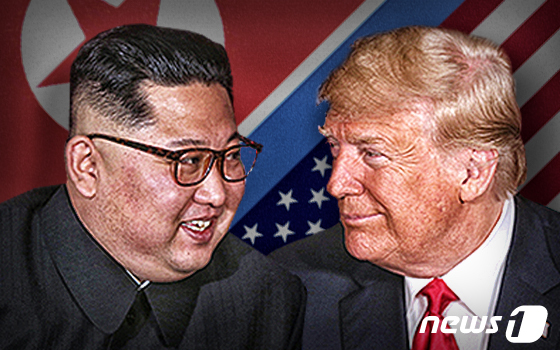
North Korea May Decide to Focus on the Economy Over Defense at Next Year’s Party Congress
Experts increasingly predict that North Korea will emphasize economic growth policies starting next year. Having secured diplomatic stability through closer ties with Russia and China, North Korea may focus more on domestic economic issues, regardless of its outward hostility towards South Korea and the U.S.
Yang Moo-jin, a professor at the University of North Korean Studies, notes that a key point of interest will be whether North Korea shifts from its dual nuclear-economic policy to a more economy-focused approach at the upcoming Party Congress.
Choi Eun-joo, a researcher at the Sejong Institute, predicted at a recent forum that North Korea will expand its production and construction plans at next year’s Party Congress, anticipating economic recovery through strengthened ties with Russia.
While changes in domestic policy at the Party Congress may not directly signal shifts in foreign policy, North Korea might downplay specific foreign plans and emphasize internal matters, particularly with an eye on Trump’s April visit to China.
The South Korean government is reportedly monitoring these possibilities closely. Given the low likelihood of direct inter-Korean dialogue in the near term, Seoul appears to be strategizing to facilitate U.S.-North Korea dialogue around April.