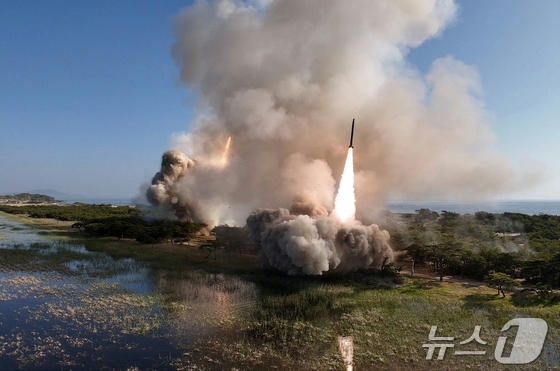
North Korea reportedly fired multiple rocket artillery rounds into the West Sea on Wednesday, the same day Chinese and Russian military aircraft entered South Korea’s Air Defense Identification Zone (KADIZ).
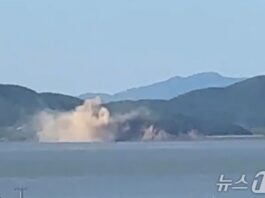
A Joint Chiefs of Staff official said North Korea was observed firing about ten rocket artillery rounds into the northern West Sea around 1500 hours on December 9. The official noted that intelligence agencies were analyzing the details and that the military was closely monitoring various North Korean activities.
Sources indicate that these rockets are not part of the ballistic missile category that North Korea claims can be equipped with nuclear warheads. Analysts assess this as a low-intensity military provocation conducted as part of North Korea’s winter training exercises.
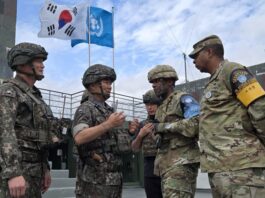
This latest rocket artillery provocation comes about a month after North Korea fired several shells into the northern West Sea on November 3, coinciding with the U.S. and South Korean defense ministers’ visit to the Joint Security Area (JSA). Some experts suggest that North Korea may be targeting key South Korean diplomatic events, noting that similar launches occurred on November 1 during the South Korea-China summit.
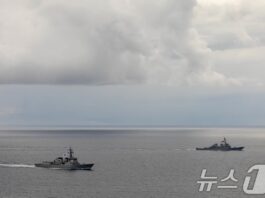
In a separate incident on the same day, at approximately 1000 hours, two Chinese and seven Russian military aircraft sequentially entered and exited the KADIZ over the East Sea and South Sea. The incursion lasted just over an hour, with no airspace violations reported. The JCS confirmed that South Korean fighter jets were scrambled to conduct tactical measures in response to potential contingencies.
This KADIZ incursion is believed to be related to ongoing China-Russia joint military exercises, with the aircraft repeatedly entering and exiting the zone. A similar incident occurred last November when Chinese and Russian military aircraft violated the KADIZ under the pretext of joint strategic patrols.
An Air Defense Identification Zone (ADIZ) is a designated area established to identify the intentions of foreign military aircraft before they enter a nation’s airspace. While not considered sovereign airspace, it has become standard practice for foreign aircraft to obtain prior authorization from the respective country to prevent potential military confrontations.