

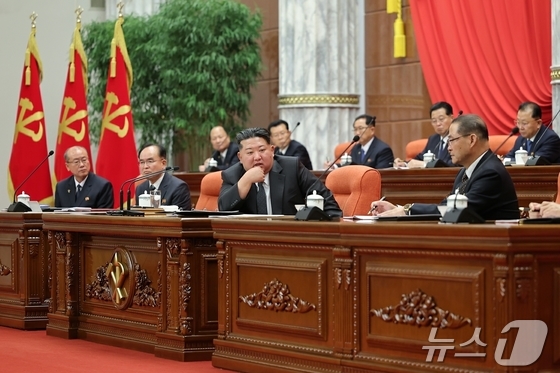
North Korea reached a significant decision regarding preparations for the 9th Party Congress, expected in early 2024, during the 13th Plenary Meeting of the 8th Central Committee of the Workers’ Party. Kim Jong Un, the General Secretary of the Workers’ Party, presided over the meeting and assessed the year’s key policy implementation outcomes. However, it remains uncertain whether foreign affairs were discussed.
On Thursday, the Workers’ Party’s official newspaper, Rodong Sinmun, reported that the second day of the 13th Plenary Meeting took place on Wednesday. The paper stated that General Secretary Kim drew important conclusions on the overall evaluation of Party and state policy implementation, the assessment of the Party’s Central Inspection Committee’s work, and matters related to Party Congress preparation, which were discussed during the first day’s session.
The newspaper reported that Kim presented a Party-level evaluation of this year’s implementation of Party and state policies and highlighted key achievements, though specific details were not disclosed.
The plenary meeting also addressed urgent tasks to be resolved before convening the 9th Party Congress and assigned critical tasks related to Congress preparation. This suggests that preparations for policy direction, personnel changes, and organizational restructuring are taking shape ahead of the Party Congress, anticipated for January or February next year.
According to the newspaper, the plenary meeting established a national budget review committee and began examining the execution of the 2025 budget and the draft budget for 2026. Typically, North Korea finalizes its budget during the year-end plenary meeting and officially approves it the following year at the Supreme People’s Assembly, the country’s equivalent of a parliament.
Some analysts view this plenary meeting as a stage for preparing the agenda and draft decisions for the 9th Party Congress. They expect that forthcoming publicized decisions and reports will offer insights into North Korea’s medium-term strategic direction for 2025-2030 and potential shifts in its approach to foreign relations and inter-Korean affairs.