A fire broke out at the Workers’ Party committee building in North Korea’s North Pyongan Province, completely destroying the structure, as reported on Wednesday.
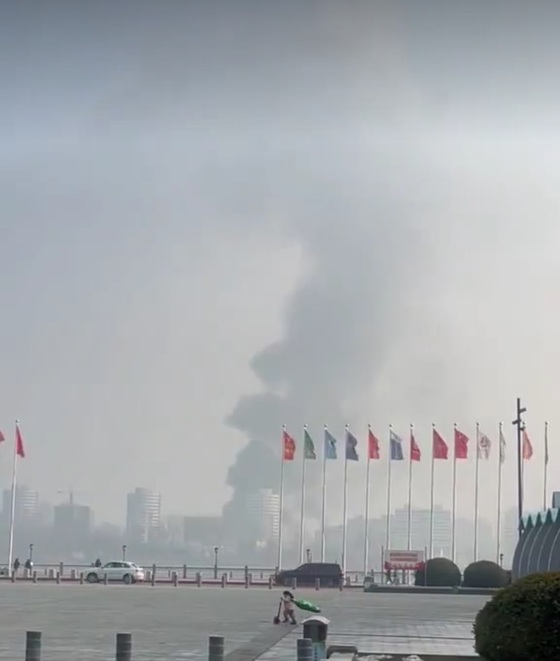
On December 7, footage emerged on X (formerly Twitter) showing a fire in Sinuiju, North Korea, across the Yalu River from Dandong, Liaoning Province, China. The video captured thick plumes of smoke rising from the North Korean side.
The person who posted the video questioned, What’s happening in Sinuiju? Smoke is blanketing the entire city.
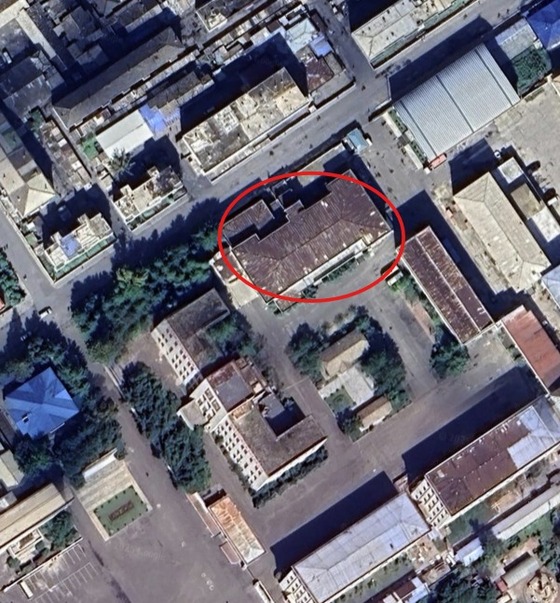
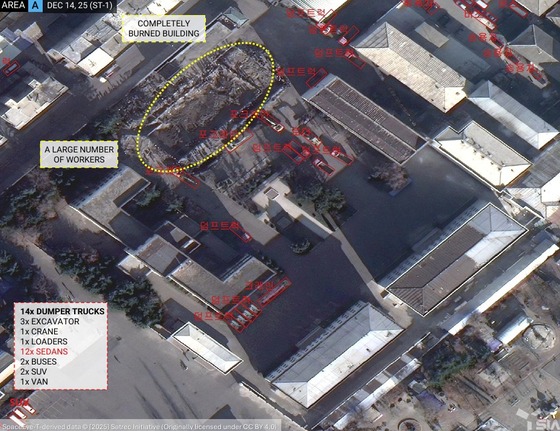
Satellite imagery experts believe the fire occurred at the Workers’ Party committee building in North Pyongan Province. Their analysis of satellite images showed that the building, which was intact on November 22, had been demolished by December 14.
U.S. government officials are also monitoring the unusual activity at the North Pyongan committee building and are currently analyzing the situation. A State Department spokesperson noted that they’ve identified demolition work at the North Pyongan committee building, but it cannot confirm whether a fire was the cause.
In North Korea, local party committees implement directives from the Central Committee of the Workers’ Party, overseeing party rule in their respective regions with delegated authority from the central leadership.
North Pyongan Province, being a crucial trade hub on the North Korean-Chinese border, typically has its committee leader directly appointed from Pyongyang. The current leader, Kim Cheol-sam, previously headed the Party’s Disciplinary Inspection Department and was appointed in December last year.
Some analysts cautiously suggest that the fire, which destroyed a heavily guarded party committee building, might have been an act of arson rather than an accident. They speculate it could be the work of someone with a grudge against the committee.
Kim Jong Un’s recent visit to Sinuiju to inspect a nearly completed greenhouse farm underscores the central party’s focus on projects in the area. Since attending the groundbreaking ceremony for the greenhouse farm in February, Kim has shown particular interest by inspecting the site five times in August, September, October, and November.
The limited reporting of the fire in China, despite its visibility from across the border, may be due to information control by Chinese authorities. Given the sensitive nature of the facility, it’s speculated that North Korea might have requested China’s cooperation in limiting the spread of information about the incident.