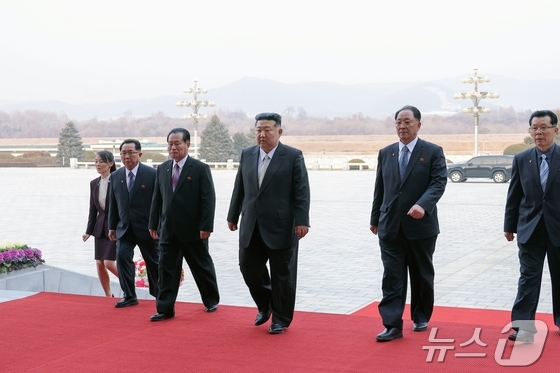
On Thursday, analysts proposed that the key factor in North Korea’s power succession following Kim Jong Un (Kim) will be the method of power transfer rather than the identity of the successor. The power succession scenario in North Korea could involve four coexisting possibilities, ranging from hereditary succession centered on a single heir to a model where the primary power is partially distributed among elites.
38 North, a North Korea-focused outlet run by the U.S. think tank Stimson Center, assessed that while recent discussions about succession have gained attention due to Kim’s health concerns and his daughter Ju-ae’s increased public appearances, a clear succession roadmap is not yet evident. They predicted that due to North Korea’s internal and external circumstances and sociocultural shifts, it would be challenging to simply replicate the linear succession model that characterized the transitions from Kim Il Sung to Kim Jong Il and then to Kim.
38 North noted that in the short term, a candidate with a strong political foundation, like Kim Yo Jong (Kim’s sister), is more likely to emerge as a successor if Kim suddenly dies or falls seriously ill. Other potential successors, such as his daughter Ju-ae or her unknown male siblings, are realistically unlikely to rise to succession within the next 5 to 15 years due to their youth or lack of political base.
They added that the longer Kim lives, the more Kim Yo Jong’s position as a potential successor will diminish, as Kim will have time to implement policies that secure sufficient support from the political and military elite for one of his children.
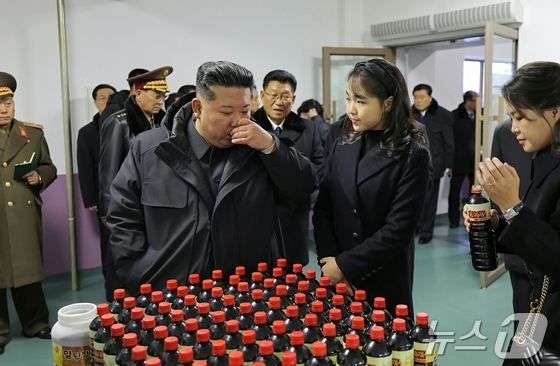
If Kim Steps Down Early… Power-Sharing With Elites May Become Inevitable
Based on this analysis, 38 North presented four scenarios for North Korea’s power succession: long-term preparation, short-term emergency succession, elite management, and a hybrid model.
The first scenario involves grooming a specific successor, such as Ju-ae, over an extended period to build legitimacy. This model, similar to the transitions to Kim Jong Il and Kim, requires time for successor training while imprinting the next leader on the elite and the public. It’s considered the most stable approach, provided there are no variables like Kim’s health issues or sudden regime changes.
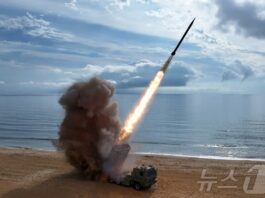
The second scenario is a short-term emergency succession. This would occur if Kim’s health rapidly deteriorates or an unexpected event leads to a power transfer that deviates from North Korea’s plans. 38 North suggests that in such a situation, even without an established successor, there could be a reliance on figures from the Paektu bloodline like Kim Yo Jong. They warn that this process might involve military provocations to create external tensions for internal cohesion.
The third scenario involves a collective leadership or regency model where party and military elites share power and manage the regime. This could be a practical alternative if the successor’s legitimacy is weak or if they are a minor. In this scenario, the Kim family’s primary power might be partially diluted or completely lose influence. However, 38 North cautions that accumulated conflicts of interest among elites could lead to instability.
Finally, 38 North proposed a hybrid model that presents a symbolic successor while a coalition of elites manages actual governance for a certain period. This compromise aims to secure both the legitimacy of the Paektu bloodline and regime stability, potentially the most realistic option given North Korea’s current system. However, they warned that prolonged dual power structures could reduce governance efficiency and policy consistency.
38 North concluded that each scenario has distinct implications for domestic politics and international security, particularly for South Korea. They advised policymakers to proactively plan for potential situations that may arise during the transition of North Korea’s leadership.