

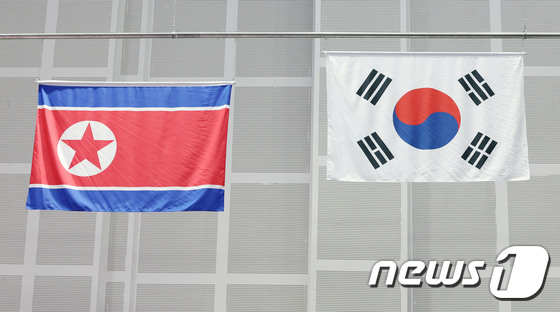
A recent survey reveals that while many foreigners acknowledge the necessity of Korean reunification, they view its actual feasibility as low. Analysts suggest that unification is perceived as an ideal goal rather than a tangible reality.
On Tuesday, the Korea Institute for National Unification released the results of its 2025 Global Awareness Survey on Unification. The survey, conducted in August, polled 9,519 citizens from eight countries: the U.S., Japan, Germany, Canada, Italy, Poland, Sweden, and Mongolia. All respondents were ordinary citizens, and the survey was conducted online through region-specific panels.
The survey results indicate that while nearly half (48.7%) of respondents across all surveyed countries believe the unification of North and South Korea is necessary, only 27.1% consider it possible.
A clear disparity in perception regarding the necessity and feasibility of unification was evident in most countries. In the United States, 55.6% of respondents recognized the need for unification, but only 27.2% believed it achievable. Similarly, in Germany, 55.4% acknowledged the necessity, yet only 29.9% deemed it possible. Even Germany, with its own experience of reunification, reflects a strong sentiment that unification is necessary but challenging.
Mongolia stood out with high percentages of respondents indicating that unification is both necessary (63.1%) and possible (61.7%). This can be attributed to Mongolia’s traditional friendship with North Korea and increased interest in Korean Peninsula issues, partly due to the popularity of the Korean Wave.
Japan recorded the lowest responses among surveyed countries, with only 29.3% viewing unification as necessary and 13.4% as possible. The Institute analyzed this as reflecting Japanese public opinion that unification might not benefit Japan’s national interests.
The report concluded that while the international community generally views Korean reunification as desirable, it is not considered a realistic short-term goal. This perception is influenced by the ongoing North Korean nuclear issue, U.S.-China strategic competition, and the structural divide between North and South Korea.
The survey also revealed that seven out of the eight countries view South Korea as a nation of trust and cooperation, while perceiving North Korea as a source of threat and distrust. Japan, however, uniquely holds negative perceptions of both Koreas.
The report noted that using a median value of 3 as a benchmark, all countries except Japan have an average trust level for South Korea above 3. It further explained that Japan’s average trust level for South Korea is 2.65, indicating that Japanese people tend to slightly distrust South Korea.