North Korea’s demand for a clarification of the circumstances surrounding the recent drone incursion has renewed attention on inter-Korean military talks proposed by South Korea last November. While Pyongyang has remained silent on the proposal for military dialogue, some experts suggest that Seoul could use the drone issue, which prompted an unusually proactive response from the North, as a potential opening to restart negotiations.
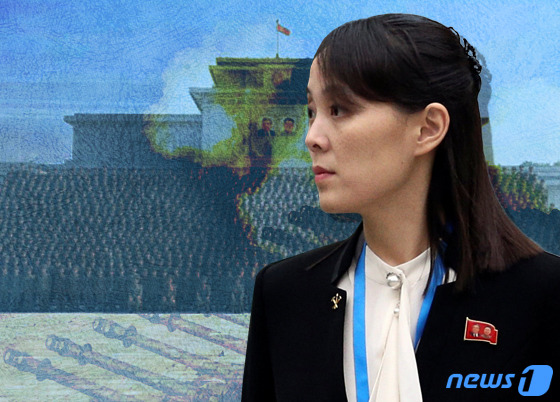
According to the Rodong Sinmun, the official newspaper of North Korea’s ruling party, Kim Yo Jong, vice director of the party’s Central Committee, described recent statements by the South Korean military denying possession of the drone and rejecting any intent to provoke North Korea as a wise choice for survival.
She emphasized that a detailed explanation regarding the uncrewed aerial vehicle (UAV) that allegedly violated the DPRK’s southern border from South Korean airspace is imperative, stressing that Seoul must take responsibility regardless of the circumstances.
This sequence of developments, beginning with the North Korean People’s Army General Staff spokesperson’s announcement about the drone incursion, followed by the South Korean Defense Ministry’s response and Kim’s subsequent remarks, is being interpreted as indirect communication between the two sides’ military authorities.
Some analysts argue that this could be a rare opportunity to break the prolonged stalemate in inter-Korean dialogue. They suggest that Seoul should actively engage Pyongyang on the drone issue, which originated from the North, under the framework of preventing accidental military incidents.
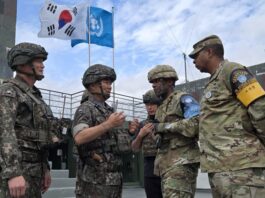
Attention has also returned to the military talks proposed by South Korea’s Defense Ministry last November, which aimed to prevent accidental crossings of the Military Demarcation Line (MDL). North Korea has not responded to the proposal for the past three months.
Professor Kim Yong Hyun of Dongguk University’s North Korean Studies Department stated that North Korea is likely concerned about the risk of unexpected incidents during drone encounters. He noted that while full-scale cooperation may be premature, the issue could provide a starting point for dialogue focused on information sharing and preventive measures related to UAV operations.
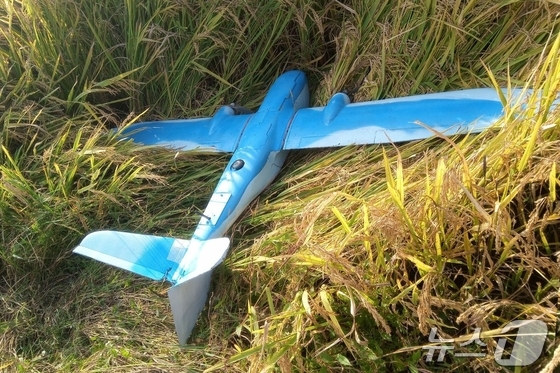
There are indications that some government officials aim to use North Korea’s drone response as a catalyst for dialogue. Defense Minister An Gyu Baek’s recent suggestion of possible joint North-South investigations is seen as a reflection of this intent.
Following President Lee Jae Myung’s directive, the government is set to establish a joint military-police investigation team to conduct a thorough probe into the incident.
Military sources reveal that the Defense Ministry is considering a collaborative investigation led by its Military Police Investigation Headquarters in conjunction with civilian police. While lacking independent investigative authority, there’s a discussion of potential cooperation with civilian drone regulators, such as the Ministry of Land, Infrastructure, and Transport.
The Blue House National Security Office also reaffirmed the government’s position, saying the facts would be established through an initial military investigation followed by a joint military-police probe, with the findings to be disclosed promptly.
However, given widespread expectations that North Korea will solidify its hostile two-state stance at the upcoming 9th Party Congress and potentially enshrine it in party regulations and the constitution, the prospects for meaningful military exchanges between the two Koreas remain slim.
In her statement, Kim Yo Jong maintained a sharply critical tone, referring to South Korea as a gang of thugs and a trash group. She also cited the Pyongyang drone incident during the Yoon Suk Yeol administration, suggesting that Pyongyang’s confrontational posture would persist regardless of changes in leadership in Seoul.
Professor Park Won Gon, a professor in Ewha Womans University’s Department of North Korean Studies, said North Korea’s decision to publicly highlight what it described as the vulnerability exposed by the drone intrusion reflects a strong determination to maintain an adversarial stance toward South Korea. He added that as Pyongyang seeks to formalize its hostile campaign through the upcoming party congress and the Supreme People’s Assembly in the first half of the year, a positive response to dialogue proposals in the near term appears unlikely.