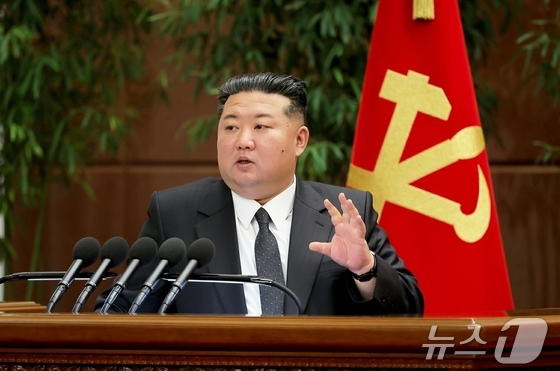
On Tuesday, the Ministry of Unification reported that North Korea has been steadily restructuring personnel and organizations across its military leadership, party, and state apparatus, including the security and escort units responsible for General Secretary Kim Jong Un’s (Kim) protection.
The ministry released updated information based on analyses of North Korean state media reports and public activities, including a roster of North Korean institutions, profiles of key figures, and a power structure chart. This update, reflecting data confirmed through the end of last year, reveals significant changes within Kim’s core power structure.
The most striking change is the replacement of commanders in three out of four of Kim’s security and escort units. The head of the Workers’ Party’s escort office has changed from Han Soon-cheol to Song Jun-seol, while the director of the State Affairs Commission’s security bureau has shifted from Kim Cheol-kyu to Ro Kyung-chul. The commander of the escort command, overseeing Kim-related facilities and some senior officials, has transitioned from Kwak Chang-sik to Ra Cheol-jin. These changes were confirmed during the party’s 80th anniversary parade last October.
Of the four key security positions, only Kim Yong-ho, the director of the escort bureau, has retained his role. The specific reasons for these changes remain unclear.
The military command structure has also undergone reorganization. The first vice minister position in the Ministry of National Defense has expanded from one to two individuals: General Kang Soon-nam (four-star) and Lieutenant General Cha Yong-beom (two-star). Similarly, the first deputy chief of the General Staff now comprises two officers: Major General Jeong Myeong-do (three-star) and Brigadier General Kim Young-bok. Notably, Kim Young-bok’s status has risen due to his leadership of forces deployed to Russia.
The navy commander has been replaced, with Park Kwang-seob taking over from Kim Myung-sik. While this change coincides with last year’s failed launch of a new 5,000-ton destroyer, the Ministry of Unification cautions against definitively linking the two events.
Leadership changes have also swept through military educational institutions. Heads of key military academies, including Kim Il Sung Political University, Air Force University, and the Kang Gun Myung Comprehensive Military Academy, have all been replaced.
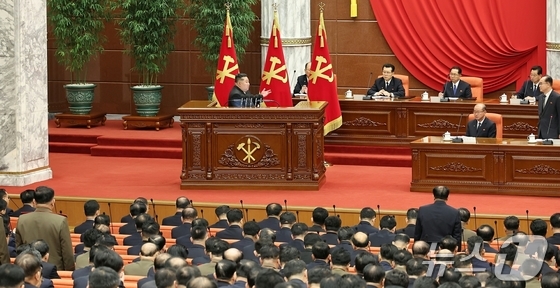
At the highest levels of the party, the Politburo Standing Committee has shrunk from five to four members. Ri Byeong-cheol, a key figure in military supply, has reportedly been dismissed from this committee and is believed to have stepped down as vice chairman of the party’s Central Military Commission. The Ministry of Unification suggests this reflects both Ri’s advanced age and his advisory role in military supply policies, indicating a continuation of the generational shift initiated under Kim’s leadership.
Foreign Minister Choe Son-hui has been promoted from candidate member to full member of the Politburo. The ministry notes this elevation, which actually occurred two years ago, reflects an increased emphasis on foreign affairs. Choe is expected to play a more significant role in future U.S.-North Korea negotiations and foreign policy formulation.
Park In-cheol, chair of the Supreme People’s Assembly and head of the General Federation of Trade Unions, is presumed to have been dismissed. With no successor announced, an acting vice chair may be temporarily leading these bodies.
Organizational restructuring has also taken place. The Ministry of Food and Procurement has been renamed the Ministry of Grain Management, the State Emergency Disaster Committee is now the Ministry of Disaster Prevention, and the Central Prosecutor’s Office and Central Court have become the Supreme Prosecutor’s Office and Supreme Court, respectively. The Reconnaissance General Bureau, known for operations against South Korea, has been reorganized into the Reconnaissance Information General Bureau. The Korea Asia-Pacific Peace Committee, which served as a channel for U.S.-North Korea negotiations in 2018, has been dissolved. Currently, no official organization dedicated to South Korea operations has been identified.
The ministry is closely monitoring Ri Il-hwan, the propaganda and agitation secretary who recently reappeared after a year-long absence from public view. Ri may be assuming economic responsibilities, potentially filling the role of the less visible economic secretary, Kim Tok-hun.
This year’s personnel update includes 19 new appointments, the removal of 28 individuals whose activities have not been observed since 2022, and the reclassification of one deceased person. The institutional roster now contains information on over 10,400 organizations and more than 17,100 affiliated individuals, accessible through the Ministry of Unification’s North Korea Information Portal.
The Ministry of Unification projects that the 9th Workers’ Party Congress will convene in February. This timeline is based on outstanding tasks assigned by Kim to be completed before the congress, and the typical 7-10 day advance notice given through a Politburo meeting, making a January gathering unlikely.