

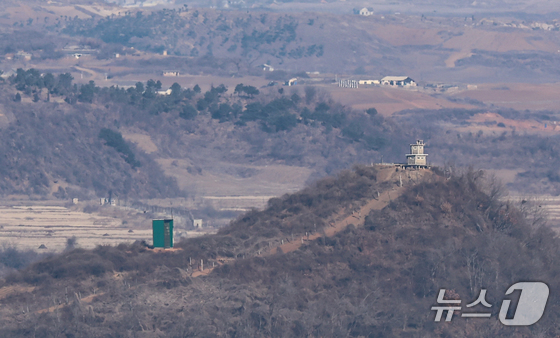
This year, the Lee Jae Myung administration boldly declared it the Year of Peaceful Coexistence on the Korean Peninsula and unveiled ambitious plans to restore inter-Korean relations. However, unexpected warning signs have emerged. On January 10, North Korea suddenly claimed that a South Korean drone had infiltrated its airspace.
Caught off guard, the South Korean government swiftly moved to verify the facts and clarified that it was not a military operation. Nevertheless, North Korea continued to criticize South Korea daily, ratcheting up tensions between the two sides.
Following the declaration of the two hostile states policy, Kim Yo-jong, deputy director of the Workers’ Party, who had previously refrained from criticizing South Korea, unleashed a barrage of harsh words, calling South Korea bullies and a garbage group.
Interestingly, some within the government sense that this incident could actually lead to the resumption of dialogue between the two Koreas. As North Korea expresses strong displeasure and delivers blunt criticisms, seemingly creating a worst-case scenario, what has led the government to discover a glimmer of hope in inter-Korean relations?
North and South Korea, No Regular Contact for Over Two Years… Indirect Communication via the Drone Incident?
When North Korea first claimed the drone incursion on January 10, the South Korean government promptly issued a statement, to which North Korea responded that it would pay attention to the government’s position.
In a situation where basic communication between the North and South had entirely broken down, this indirect interaction can be seen as a positive development.
Unification Minister Chung Dong-young stated on Wednesday that since communication channels between the North and South have been severed, they are conveying messages to each other through public statements. This is a very unnatural and abnormal situation. He expressed hope for a swift restoration of communication lines between the two Koreas.
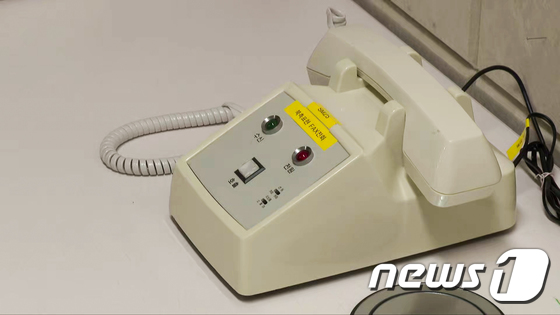
Currently, official communication channels between the North and South have been completely inactive for about two years and nine months. In April 2023, North Korea unilaterally severed all communication channels, declaring it would cut off ties with South Korea.
Until then, both sides maintained a constant contact channel by communicating twice daily through military communication lines and the inter-Korean liaison office. This channel served as the first point of contact in situations such as fires or accidental gunfire in the Demilitarized Zone (DMZ). Now, this basic communication avenue has completely ceased to function.
Consequently, there have been awkward moments when both sides could not reach out to each other when necessary. In two incidents in March and May of last year, a total of six North Korean residents drifted southward across the Northern Limit Line (NLL) on fishing boats. After expressing their desire to return to North Korea, the North Korean authorities failed to respond to South Korea’s repatriation requests.
Depending on the timing of their rescue, these North Korean residents stayed under the protection of South Korean military and intelligence agencies for as little as 43 days and as long as 124 days before being repatriated. North Korea ultimately did not respond to the South Korean government, quietly dispatching patrol boats and tugboats to the locations and times communicated for their repatriation.
If communication channels between authorities had been operational, these situations could have been resolved quickly. However, from North Korea’s perspective, responding to the South Korean government’s outreach was likely difficult given the context of its hostile two-state policy. This was true even for a humanitarian issue as straightforward as bringing back fishermen who had accidentally drifted away.
Critics Call It Wishful Thinking, but Restoring Inter-Korean Communication Lines Could Be a Starting Point
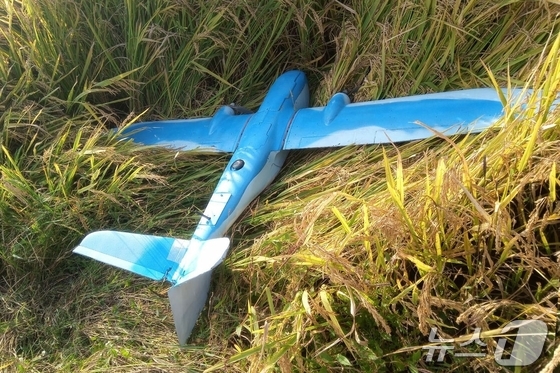
After the drone incident, North Korea did not retaliate with actions like sending balloon propaganda, and instead adopted a stance of observing the South Korean government’s investigation results. This led some within the government to interpret it as a positive signal.
In particular, the government is comparing the current situation to the Pyongyang drone incident that occurred in October 2024 during the Yoon Suk Yeol administration.
At that time, North Korea responded by releasing balloon propaganda when the South Korean military did not provide a clear stance, citing strategic ambiguity. Compared to then, there appears to be much more room for dialogue between the two sides now.
Of course, some criticize the government for being overly hopeful. They argue that mentioning dialogue with North Korea before any investigation results come out is premature. After Kim Yo-jong condemned the improvement of inter-Korean relations as a pipe dream and an impossible delusion in a statement on Tuesday, public criticism of the government’s optimism grew.
Despite various concerns, one thing is clear: it is more rational for the North and South to restore their communication lines at some point. This is not just for political purposes or ideological differences; it is essential to reduce the risk of misjudgment in unexpected situations like the recent drone incident and to create conditions for jointly managing such circumstances.
The drone incident, which cast a shadow over inter-Korean relations at the start of the new year, may not necessarily lead to a dialogue atmosphere between the two sides. However, it has clearly highlighted the necessity of communication, regardless of the circumstances.