The South Korean government is ramping up discussions to reinstate the September 19 inter-Korean military agreement following North Korea’s allegations of a South Korean drone incursion. This move has sparked debate, with some advocating for the agreement’s restoration to establish safeguards against accidental clashes and foster dialogue, while others warn that unilateral revival could compromise South Korean military capabilities.
Government sources revealed on Thursday that the National Security Council (NSC) convened a standing committee meeting on January 8 to address plans for reviving the September 19 agreement. While no definitive decisions were made regarding timing or methodology, the government has reportedly intensified discussions since North Korea’s January 10 claim of a South Korean drone intrusion.
National Security Advisor Wi Seong-lac confirmed that they are evaluating the restoration of the September 19 agreement and engaging in necessary talks. The administration’s trajectory is to reinstate the agreement, aligning with the President’s directives.
President Lee Jae Myung, in his Liberation Day address last August, pledged to proactively and incrementally restore the September 19 agreement to mitigate accidental conflicts and build military trust between the Koreas. Defense Minister Ahn Gyu-back has consistently emphasized the need for gradual reinstatement since taking office last year.
The administration is focusing on developing a phased roadmap for the agreement’s restoration, carefully balancing military implications and diplomatic consequences. The process must account for the ongoing drone incident investigation, potential inter-Korean communication resumption, and the U.S.-South Korea allied defense posture, precluding immediate decisions on timing and implementation.
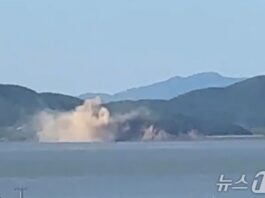
The 2018 September 19 agreement encompassed measures to prevent border clashes, including halting military drills near the Military Demarcation Line (MDL), establishing no-fly zones, creating Yellow Sea buffer zones, and withdrawing demilitarized zone (DMZ) guard posts. However, following the breakdown of denuclearization talks, North Korea frequently violated the agreement with provocative military actions. The Yoon administration partially suspended the agreement in 2023, with full suspension slated for June 2024, effectively nullifying the pact for both parties.
Since taking office, the Lee administration has pursued conciliatory measures towards North Korea, such as restricting anti-North leaflet distributions and ceasing loudspeaker broadcasts, signaling a commitment to swiftly restore the September 19 agreement. However, North Korea’s lack of reciprocation has raised doubts about the agreement’s efficacy, delaying a unilateral restoration declaration. The government appears to view the recent drone incident as an opportunity to reopen dialogue on the agreement’s restoration.
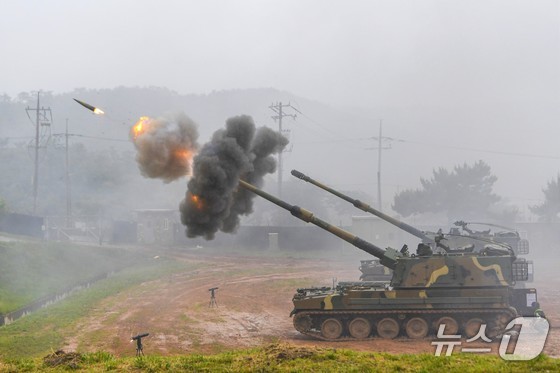
Sources indicate that the government is considering prioritizing the reinstatement of Article 1.2, which mandates the cessation of various military exercises near the MDL. This would halt artillery drills within 5 kilometers of the border and restrict military aircraft from entering North Korean airspace.
The restoration of Article 1.3, concerning no-fly zones, is being considered as a secondary priority. This article is often cited as the primary reason against unilateral reinstatement of the agreement by South Korea. Its revival would limit reconnaissance missions by fighter jets, surveillance aircraft, and drones, as well as live-fire tests of air-to-ground guided weapons. Military officials worry that such restrictions could significantly impair their ability to monitor North Korean provocations. Consequently, some within the defense establishment argue that preemptive measures without North Korean buy-in lack practical value.
This situation underscores the need to clarify whether the restoration discussions aim to reopen dialogue with North Korea or to reestablish minimal safeguards against inter-Korean clashes. The administration must also strategize to counter public criticism of appearing submissive towards North Korea during these deliberations.
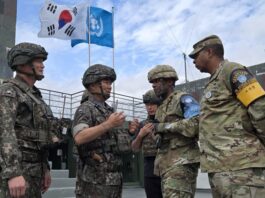
Shin Jong-woo, Secretary-General of the Korea Defense Security Forum (KODEF), stated that the agreement’s restoration should incorporate lessons from its previous ineffectiveness. It needs practical measures, such as establishing a joint monitoring body with the United Nations (UN) Command to ensure mutual compliance.
Former Joint Chiefs of Staff spokesperson Um Hyo-sik commented that while restoring the agreement to ease military tensions is desirable, the process must not be unilateral. Unconditional concessions or reliance on North Korean goodwill won’t foster healthy inter-Korean relations.
Yoo Ji-hoon, a Korea Institute for Defense Analysis (KIDA) researcher, noted that restoring the agreement has both policy and political implications, signaling the government’s intent to maintain dialogue channels while prioritizing deterrence. The key challenge is strategically balancing deterrence and engagement in the current geopolitical landscape.