

North Korea is exhibiting a sensitive stance towards South Korea amid the diplomatic engagements between South Korea and China, as well as South Korea and Japan. Each time President Lee Jae Myung engages in foreign diplomacy, North Korea takes actions to disrupt the atmosphere, particularly showing a lack of full trust in China, according to analyses released on Wednesday.
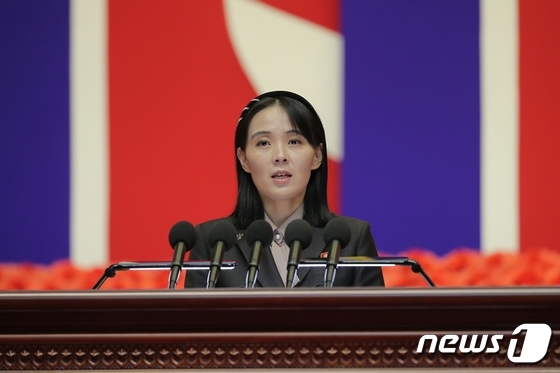
In a statement issued late the previous night, Kim Yo Jong, deputy director of North Korea’s Workers’ Party, dismissed the South Korean Ministry of Unification’s suggestion that recent drone incidents might create opportunities for inter-Korean communication. She called it a hopeful delusion and an unrealistic fantasy.
Notably, Kim’s remarks specifically targeted President Lee’s diplomatic efforts. She asserted that no matter how much the ruling power goes around begging abroad, or how much the authorities pretend to act benevolently while dreaming, the reality of inter-Korean relations will never change.
Some analysts interpret Kim’s statement as a sign of dissatisfaction, particularly as it coincided with the South Korea-Japan summit, which reaffirmed the principle of North Korea’s denuclearization. However, the prevailing analysis suggests that North Korea’s heightened vigilance stems from China’s warm reception of President Lee during the recent China-South Korea summit and the closer ties between the two countries.
Experts believe that if China positions itself as a mediator in inter-Korean and North Korea-U.S. relations, North Korea would find it difficult to reject that role, raising concerns about the strengthening China-South Korea relationship. North Korea’s ballistic missile launch on January 4, the day of President Lee’s visit to China, is seen as a message to both countries that now is not the time for dialogue.
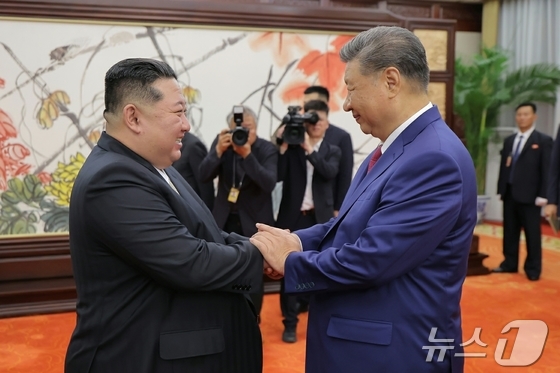
During his meeting with President Xi Jinping, President Lee detailed South Korea’s plans regarding North Korea and requested China’s involvement. However, North Korea criticized this as begging. Some argue that had North Korea received a thorough explanation from China regarding South Korea’s proposals or China’s stance, it might not have felt the need to attack South Korea’s diplomatic efforts. It could have displayed a more relaxed demeanor.
Last September, North Korea appeared to re-establish China as a strong ally following Kim Jong Un’s visit to Beijing and the North Korea-China summit. However, North Korea’s state-run newspaper, Rodong Sinmun, notably downplayed President Xi’s New Year message on January 1. In previous years, when relations were strong, Xi’s congratulatory message received significant coverage in the newspaper. This year, however, it was merely reported as a brief notice alongside messages from other countries, without disclosing its content.
Some interpret this as a consequence of China’s lukewarm attitude toward prior communications related to the China-South Korea summit. Faced with the need to draw South Korea closer amid its hegemonic competition with the United States, China appears reluctant to lean too heavily toward North Korea. From North Korea’s perspective, having previously sent its top leader to Beijing, it may have felt disappointed by China’s actions.
Additionally, as Japan warmly welcomed President Lee during the South Korea-Japan summit, enhancing South Korea’s standing in the region, North Korea may have grown somewhat anxious.
Kim Yo Jong’s unusual timing for her statement directed at South Korea, often made in the evening to align with U.S. time, also suggests that North Korea’s assessment of the situation is not calm.
Yang Mu Jin, a professor at the University of North Korean Studies, analyzed that Kim Yo-jong’s remarks about begging clearly aim to undermine President Lee’s diplomatic achievements and serve as a message to block any mediation possibilities through China or Japan preemptively.
In this context, experts suggest that it is essential to analyze North Korea’s actions related to the drone incidents. They propose that North Korea might be using the drone events to frame South Korea as the cause of heightened tensions, thereby lowering the likelihood of Chinese intervention for dialogue. There are also discussions that North Korea’s late adoption of the September drone incident as a diplomatic card is part of this strategy.
Experts advise the government to analyze the level of communication between North Korea and China more closely and to issue restrained and strategic messages toward North Korea. They warn against interpreting Kim Yo Jong’s harsh rhetoric as mere optimism or wishful thinking, emphasizing the need to examine the context of her statements from multiple angles.
Professor Lim Eul Chul from Kyungnam University’s Institute for International Affairs explained that Kim Yo Jong’s harsh remarks tend to become stronger the more our government shows goodwill. The Ministry of Unification’s immediate interpretation of her comments as indicating possibilities for communication could mistakenly give the impression that we are desperately clinging to North Korea.