

The Donald Trump administration’s move to exempt certain humanitarian aid projects for North Korea from sanctions has sparked interest in the underlying motivations.
On February 6, it was confirmed that 17 humanitarian aid projects for North Korea, previously held up by the United Nations (UN) Security Council’s North Korea Sanctions Committee (1718 Committee), received sanctions exemptions with the Trump administration’s approval.
Multiple government sources reported that following a proposal from South Korean Foreign Minister Cho Hyun, currently visiting the U.S., Washington agreed to the exemption process, resulting in the collective processing of projects that had been stalled for about nine months.
The newly approved projects reportedly include five from South Korean local governments and private organizations, eight from international bodies such as United Nations International Children’s Emergency Fund (UNICEF), the World Health Organization (WHO), and the UN Food and Agriculture Organization (FAO), and four from private groups in other countries, including the U.S. Most of these focus on extending exemption periods for existing initiatives.
Specifically, the projects concentrate on areas like health, water, sanitation, and nutrition support for vulnerable populations, and received unanimous approval from all 15 Security Council member states.
However, experts caution that the actual resumption of these projects hinges on North Korea’s acceptance, necessitating close monitoring of future developments.
This move is interpreted not merely as a humanitarian gesture but as part of Washington’s management strategy to navigate the stalled U.S.-North Korea relations. Analysts suggest that the reality of North Korea’s ongoing nuclear and missile capability advancements has made it challenging to control escalating tensions through pressure alone.
President Trump’s planned visit to China in April may have also influenced this decision. Considering the possibility of the North Korean nuclear issue arising in U.S.-China talks, maintaining a manageable relationship with North Korea could be more advantageous for the U.S. than complete severance, according to some analyses.
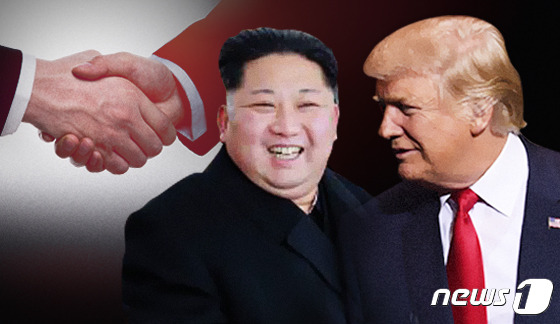
Weight on Washington-Style Crisis Control—Experts See Strategic Double Payoff
Experts emphasize Washington’s approach to situation management, noting that it also strategically accommodates South Korea’s push for inter-Korean dialogue and peace on the peninsula this year.
Professor Namgung Young, an emeritus professor of political science and diplomacy at Hankuk University of Foreign Studies, suggested that this could be a gesture indicating the U.S. is open to cooperation if North Korea is willing. He added that it likely aims to create a conducive atmosphere for potential summit talks.
He further stated that this reflects some of South Korea’s requests for a more flexible approach toward North Korea, potentially serving as a strategic win-win for the U.S.
Kim Tae-won, a research fellow at the Korea Institute for National Unification, commented that this move strongly aims to maintain sanctions while visibly reinforcing humanitarian principles to manage negotiation conditions. It also provides justification for a hardline stance against North Korea by securing a narrative of protecting civilians to allied nations and the international community.
Regarding North Korea’s anticipated response, Kim added that they may refrain from publicly welcoming the decision, considering their regime’s image and negotiation leverage, but could pragmatically accept necessary supplies. While there may be legal and institutional progress, financial constraints and access limitations might restrict the actual humanitarian impact.