North Korea has unveiled all 20 cities and counties selected for the third year of Kim Jong Un’s flagship Local Development 20X10 Policy ahead of the 9th Workers’ Party Congress.
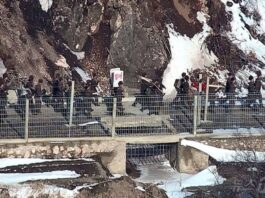
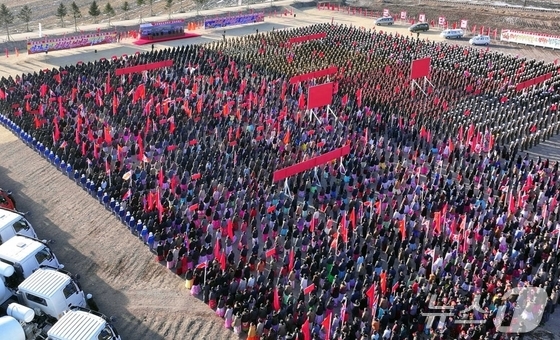
The party’s official newspaper, Rodong Sinmun, reported that groundbreaking ceremonies took place the previous day in Hwapyeong, Pyeonggang, Myonggan, and Samsu counties. These locations will see the simultaneous construction of light industrial factories, hospitals, and comprehensive service centers. In Riwon County, a modern marine aquaculture facility is set to be built.
Prior to this announcement, North Korean media had disclosed groundbreaking ceremonies for other locations, including Eunyul County (January 30), Pyeongwon County (February 1), Sinuiju City, Gangnam County, and Maengsan County (February 4), Nakwon County (February 6), Mushin County, Songhwa County, Daean District, and Panmun District (February 7), Sinpyeong County and Seoncheon County (February 8), as well as Bongsan, Sijung, Sinheung, and Tongchon counties (February 9). With this latest report, all 20 selected regions for this year have now been revealed.
North Korea launched the Local Development 20X10 Policy in 2022. The initiative aims to construct modernized local industrial factories and hospitals in 20 cities and counties annually for a decade, with the goal of improving living standards for local residents and narrowing the urban-rural divide.
Kim, the General Secretary of the Workers’ Party, attended the first local factory groundbreaking ceremony of the year in Uunyul County on January 30. There, he outlined plans to build factories, health facilities, and comprehensive service centers in 20 regions this year. However, North Korea had not previously disclosed the specific locations for this year’s projects.
Recently, the U.S.-based North Korea-focused media outlet NK News speculated that the selected regions for this year are closely tied to military projects. In a report last month, NK News stated that they examined dozens of cities and counties through satellite imagery, but only identified seven locations that showed typical signs of factory construction preparation during the past two years of the Local Development 20X10 Policy. They claimed that most of these sites are connected to military and weapons industries.
Initially, North Korea promised to prioritize assistance to the most underdeveloped and economically struggling areas. However, this year’s selections suggest a shift away from that approach.
According to North Korean media, the construction of local industrial factories was completed in 20 locations during 2022 and 2023. These included Seongcheon, Jaeryeong, Sukcheon, Eunpa, Gyeongseong, Euncheon, Yeontan, Hamju, Oncheon, Gujang, Ushi, Gosan, Guseong City, Eorang, Jangpung, Geumya, Dongshin, Icheon, Kim Hyong Jik, and Unsan counties.
However, some experts argue that not all of the 20 selected regions this year are necessarily linked to military projects.
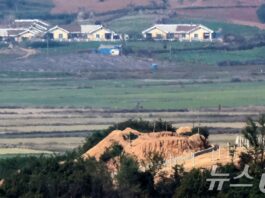
Lee Sang-geun, a researcher at the Institute for National Security Strategy (INSS), noted that the cities designated at the beginning of the 2022 project certainly started with slightly better infrastructure. However, even in the third year, selecting industrial zones like the Panmunjom area, which has relatively favorable conditions, does not clearly indicate a trend toward expanding to more remote areas.
He added that in the regions where military factories are already established, the infrastructure is typically in place. Therefore, there’s no pressing need to add health facilities or light industrial factories near these military sites to develop infrastructure.
As of February 10 last year, North Korea had completed the construction of local factories in 19 locations. With the 9th Party Congress approaching later this month, it appears they are accelerating construction to showcase economic progress. However, even if factories or hospitals are built, challenges in supplying materials for normal operations raise concerns that these projects may end up being more symbolic than functional.