Friday, April 17, 2026

North Korea Constructs Five Hotels In Samjiyon City As Regime Nears Tourism Normalization Amid Forced Mobilization Of Residents

North Korea opens five new hotels in Samjiyon, aiming to boost tourism culture and establish a major tourist destination.

North Korea Launches Multiple Short-Range Missiles in Provocative Show of Force

North Korea fired multiple short-range ballistic missiles into the East Sea, marking its second military provocation of the year.

North Korea Media May Open to the Public as Seoul Pushes to Ease Access Restrictions

South Korea is pushing to open North Korean media access, with new legislation aimed at easing restrictions and enhancing public understanding.

North Korea’s Rice Cultivation Area Grows by 3.1%: What This Means for Food Security

NorthKoreaNorth Korea's Rice Cultivation Area Grows by 3.1%: What This Means for Food Security
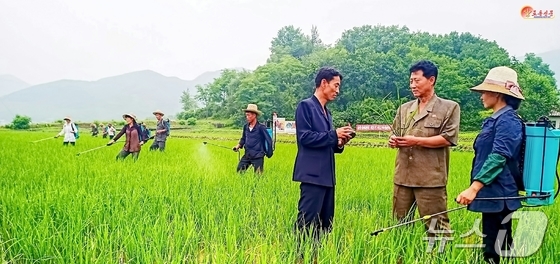
The Rodong Sinmun, the official newspaper of North Korea\'s Workers\' Party, reported on February 4 that scientific and technological methods are being used for rice paddy irrigation management in Sungchon County / Rodong Sinmun
The Rodong Sinmun, the official newspaper of North Korea’s Workers’ Party, reported on February 4 that scientific and technological methods are being used for rice paddy irrigation management in Sungchon County / Rodong Sinmun

North Korea’s rice cultivation area expanded by 3.1% last year, primarily due to land reclamation efforts.

South Korea’s Ministry of Data and Statistics released its 2025 North Korea Rice Cultivation Area Survey on Thursday, revealing that the country’s rice fields now cover 542,913 hectares, an increase of 16,243 hectares (3.1%) from the previous year’s 526,670 hectares.

This marks the first growth in North Korea’s rice cultivation area since 2021, ending a four-year decline.

Experts attribute this expansion to the recovery from major flood damage in 2024 and ongoing land reclamation projects.

A spokesperson for the Ministry of Data and Statistics stated that it appears that large-scale land reclamation efforts have enabled cultivation in new areas. Additionally, the recovery from significant flood damage along the Yalu River basin in July 2024 has contributed to this increase.

By region, South Hwanghae Province led with 141,827 hectares (26.1%), followed by North Pyongan Province at 104,557 hectares (19.3%), and South Pyongan Province with 80,021 hectares (14.7%).

The survey relied on visual analysis of satellite imagery captured over North Korean territory between April and September of last year.

The Ministry of Data and Statistics has been conducting these surveys since 2020 to inform agricultural policies and research related to food security issues in North Korea.

Check Out Our Content

Check Out Other Tags:

Most Popular Articles