

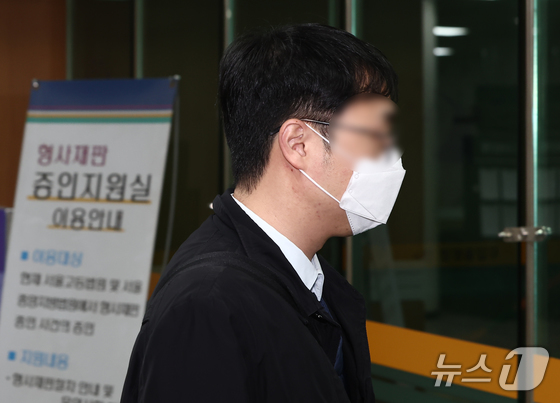
A 30-year-old graduate student accused of flying multiple drones into North Korea has completed a pre-arrest interrogation. The suspect denied all charges and insisted there was no external backing for his actions.
On Thursday, the presiding judge of the Seoul Central District Court’s warrant review division conducted a hearing lasting approximately one hour, starting at 10:30 a.m. (South Korean time). The hearing concerned Mr. Oh, who faces charges including general espionage.
Mr. Oh allegedly launched drones on four separate occasions. These unmanned aircraft were programmed to depart from Ganghwa Island in Incheon, pass through North Korea’s Kaesong and Pyongsan regions, and return to Paju in South Korea’s Gyeonggi Province. The purpose was reportedly to test the drones’ capabilities. A joint military-police task force is also investigating potential collusion between Mr. Oh and an employee of the National Intelligence Service, identified only as Mr. A.
Following the hearing, Mr. Oh remained silent in response to reporters’ questions about his acknowledgment of the charges and his testimony. He promptly entered a waiting vehicle without comment.
Mr. Oh’s legal counsel argued that the charges of violating general espionage laws were excessive, stating that espionage isn’t something visible to the naked eye. Moreover, North Korea isn’t subject to the general espionage laws and isn’t considered a foreign country in this context.
The attorney further elaborated that the application of general espionage laws ultimately depends on how one interprets the actions. Mr. Oh’s fundamental intention was not to benefit a foreign or hostile nation. He also pointed out that the drone footage didn’t capture any South Korean military installations.
The defense firmly denied any involvement of the National Intelligence Service or military, countering earlier speculation.
Regarding Mr. Oh’s alleged solo act and motives, the defense’s position has evolved. Initially claiming Mr. Oh acted alone, they’ve now reportedly acknowledged some of the investigators’ assertions. The defense has also shifted from the initial claim that Mr. Oh was attempting to measure radiation levels from a uranium facility, now stating the purpose was related to research and economic objectives.
It’s reported that Mr. Oh personally addressed the court for approximately five minutes.
The task force believes Mr. Oh’s actions were motivated by potential economic gains from drone operations. They filed for an arrest warrant on February 19, with the prosecution following suit the same day.
A decision on Mr. Oh’s potential arrest could be reached as early as later that evening.
This case first came to light last month when North Korea alleged a South Korean drone had violated its airspace. Pyongyang demanded an investigation, prompting South Korea’s Unification Minister, Chung Dong-young, to issue an official statement of regret on February 18.