

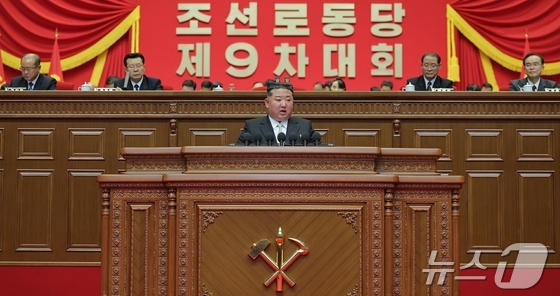
North Korean leader Kim Jong Un reaffirmed the nation’s nuclear forces as the cornerstone of its war deterrence strategy during a summary report at the 9th Party Congress. He outlined plans to expand the nuclear arsenal and enhance operational systems, asserting that North Korea has irreversibly cemented its status as a nuclear power. Kim detailed strategies to boost the combat readiness of nuclear forces through testing the Integrated Nuclear Crisis Response System and conducting various weapons trials and training exercises.
Nuclear Arms as Pillar of National Defense… Systematizing Use Conditions to Bolster Retaliatory Capability
According to the Workers’ Party’s official newspaper Rodong Sinmun, Kim declared in a report on February 20 and 21 that establishing an uncompromising stance on nuclear capabilities, making negotiations impossible under any circumstances, marks a historic milestone. He highlighted the enactment of the Nuclear Force Policy Law in 2022 and its subsequent incorporation into the constitution as the most crucial strategic measure since the 8th Party Congress in 2021.
Kim asserted that the nuclear forces now serve as a powerful deterrent against any invasion, and it stands fully prepared to retaliate immediately if attacked, underscoring that national defense is built around nuclear capabilities.
Analysts note that Kim’s nuclear rhetoric has shifted from possession to operational readiness. He stated intentions to increase the nuclear arsenal and expand the means and scope of nuclear operations, hinting at escalated military provocations to prepare for potential nuclear deployment.
Notably, Kim stressed the activation and operational testing of the Nuclear Trigger system, established in 2023. He outlined various drills aimed at perfecting the handling and operation of nuclear weapons. This indicates a move towards a more systematic approach to nuclear decision-making during crises, potentially allowing for ‘automatic’ retaliation against external nuclear threats.
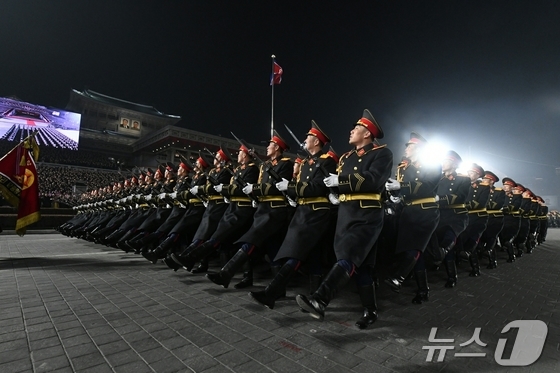
Nuclear + Conventional Forces Dual Strategy: Building a Combat-Ready Military Posture
In his report, Kim unveiled weapon systems slated for development under a new five-year defense plan. These include advanced ground and submarine-launched intercontinental ballistic missiles (ICBMs), artificial intelligence (AI) powered unmanned attack systems, specialized assets for targeting enemy satellites, powerful electronic warfare systems to disable enemy command centers, and next-generation reconnaissance satellites.
Kim emphasized that fast-tracking the deployment of newly developed weapons is a key objective for the next five years. He outlined plans to annually enhance the 600mm multiple rocket launchers and new 240mm rocket launcher systems, primary strike weapons against South Korea, along with the Operational Tactical Missile complex.
This strategy encompasses the nuclear armament of naval forces and fortification of the southern border (MDL), further solidifying the dual approach of nuclear and conventional forces first introduced last September.
The strategy suggests ongoing development of reconnaissance and surprise attack capabilities against South Korea. In a conflict scenario, it envisions subduing South Korea with multiple rocket launchers or short-range nuclear missiles, followed by long-range strikes on the U.S. mainland using nuclear submarines and various ICBM systems.
This shift underscores North Korea’s intent to transition from using nuclear capabilities as deterrents to preparing them for potential combat scenarios. It may also serve to clearly demonstrate the potential costs of conflict to South Korea and the U.S.
Professor Lim Eom-chul from Kyungnam University’s Institute for Far Eastern Studies interprets this as North Korea’s declaration of full operational readiness across its weapons systems, including nuclear assets. He notes that the specific mention of activating and exercising the Nuclear Trigger system demonstrates North Korea’s readiness for immediate nuclear operations.