

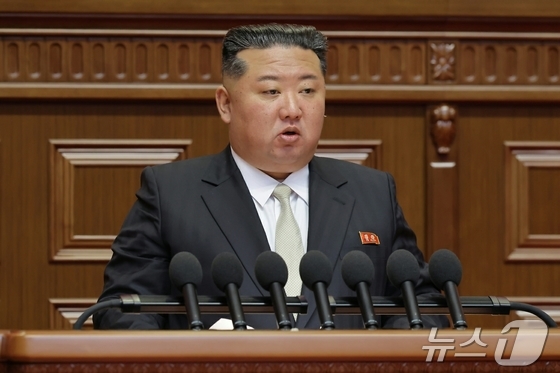
Kim Jong Un, the General Secretary of North Korea’s Workers’ Party, reiterated his demand for the United States to recognize North Korea’s status as a nuclear power during the 9th Party Congress. He also stated that if it recognize them, there’s no reason it can’t get along, leaving the door open for dialogue. However, prevailing assessments suggest that the chances for meaningful conversations remain slim.
The possibility of North Korean-U.S. dialogue has been consistently raised in anticipation of President Donald Trump’s upcoming visit to China and his summit with President Xi Jinping, scheduled for about a month from now. Yet, some analysts argue that North Korea has strengthened its position, seeing no reason to rush into talks.
Slams U.S. as Rogue and Aggressor… Presses for Recognition as a Nuclear-Armed State
According to the Workers’ Party’s official newspaper, Rodong Sinmun, during the summary report of the 9th Party Congress held on February 20 and 21, Kim stated that if the U.S. respects the current status as outlined in the constitution and retracts its hostile policies toward them, there’s no reason it can’t get along.
The status outlined in the constitution refers to North Korea’s self-proclamation as a nuclear power, which they formalized in their 2023 socialist constitution by incorporating the essence of the Nuclear Force Policy Act established in 2022. This demand implies that the U.S. must take diplomatic action to officially recognize North Korea as a nuclear power.
Last September, during a speech at the Supreme People’s Assembly, Kim also stated that if the U.S. abandoned its unrealistic denuclearization obsession and genuinely desired peaceful coexistence with North Korea, there would be no reason not to engage in dialogue.
However, unlike his previous speech where he mentioned having fond memories of the current U.S. president, this time, he launched indiscriminate attacks against the U.S. Kim criticized that the U.S.’s inherent hostile view of them and its coercive, rogue nature have not changed at all, and added that while it may be temporarily concealed, the nature of an aggressor cannot be altered.
He emphasized that it will remain fully prepared for confrontation with the U.S. and will steadfastly maintain the strong stance as part of the unwavering policy toward America. This raises the bar for negotiations, suggesting that the U.S. must meet all of North Korea’s demands for talks to be possible. Kim reaffirmed that as long as the world does not change fundamentally, the abandonment of nuclear weapons is absolutely impossible, reiterating the stance that denuclearization will not happen.
Kim expressed confidence, stating that in the future, the construction of a fair and just multipolar world will accelerate, and it will be at the center of it.
Park Won-gon, a professor of North Korean studies at Ewha Womans University, noted that Kim’s statement that there’s no reason it can’t get along, indicates that North Korea is open to meeting, but clarified that such dialogue should not involve denuclearization negotiations but rather discussions on recognizing North Korea as a nuclear power.
Professor Park further analyzed that the retraction of hostile policies is a prerequisite, which implies halting joint U.S.-South Korea military exercises and the deployment of U.S. strategic assets.
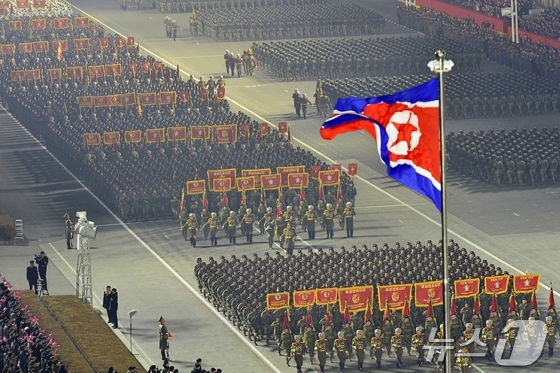
Trump’s China Visit: Navigating Crisis or Abandoning Nuclear Talks?
With North Korea’s inflexible stance, President Trump’s upcoming visit to China from March 31 to April 2 carries added weight. Recently, the U.S. Supreme Court has hindered the tariff policies that symbolize Trump 2.0, and his approval ratings have stagnated in the upper 30s, suggesting a decline in his influence.
Ahead of this crucial visit to China, which was considered the ultimate Target of his reciprocal tariff policy, Trump appears to have lost some momentum. Analysts speculate he may refocus on North Korea to shift public perception and present new achievements.
The key question is whether he can meet North Korea’s demands. If he unconditionally agrees to North Korea’s requests for a summit, it could severely damage relations with allies, including South Korea and Japan. Additionally, public opinion in the U.S. still heavily favors nuclear non-proliferation, making it difficult to ignore. Recognizing North Korea as a nuclear power could negatively impact the strategic positions of Russia and China, who align with Pyongyang.
Even if nuclear disarmament is on the agenda, defining the concept of disarmament presents a significant challenge. North Korea’s declaration at the Party Congress that the enemy must not know them complicates the assessment of the level of nuclear weapons and capabilities they possess.
Some view Kim’s message in the summary report as a signal that he is unwilling to engage with a weakened Trump. Last September, Kim seemed to envision North Korean-U.S. negotiations as a top-down meeting, but this time, he omitted references to the U.S. president, potentially signaling that the U.S. should prepare for agreements or treaties guaranteed at the administrative level, indicating a bottom-up approach.
Additionally, Kim criticized South Korea’s North Korea policy, which promotes advancing U.S.-North Korea dialogue, as a clumsy deception and a poor performance. This perspective underscores skepticism about potential contacts on the Korean Peninsula coinciding with Trump’s visit to China. Consequently, some predict that Trump might forgo any outreach to North Korea during his upcoming trip to avoid the appearance of being rejected.