

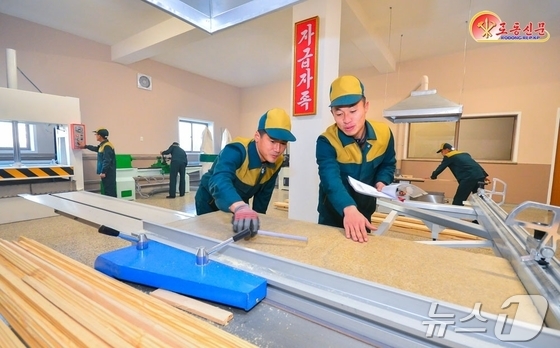
An analysis by South Korea’s national research institute suggests that North Korea is likely to focus on boosting light industry production and strengthening regional self-sufficiency as key strategies in its upcoming Five-Year Plan.
This year, however, policy efforts are expected to concentrate on improving existing facility utilization and securing power and raw materials to stabilize operations, rather than pursuing structural changes.
The Korea Development Institute (KDI) published its February edition of the North Korean Economy Review on Friday, which includes a forecast on North Korea’s economic strategy for 2026. The report indicates that the next Five-Year Plan will likely shift towards a phase of production increases, building on the maintenance and reinforcement strategy of the past five years.
As this year marks the beginning of the new Five-Year Plan, there will likely be significant pressure to deliver quick results.
The urgency is heightened by upcoming political milestones, including the Workers’ Party of Korea’s 85th anniversary in 2030 and the 20th year of Kim Jong Un’s rule, coinciding with the 10th Party Congress in 2031, which demand visible achievements.
Consequently, the economic focus for this inaugural year will likely prioritize stabilizing existing facilities and normalizing production over new expansions.
The strategic objectives of the upcoming plan aim to improve living standards by increasing light industry production and to achieve local self-sufficiency through regional development.
In the energy sector, efforts are expected to focus on ensuring a stable industrial power supply by ramping up coal production and maintaining small to medium-sized hydroelectric plants.
If necessary, limited measures such as importing refined oil from Russia may be implemented to address power shortages.
The strategy may also involve sourcing raw materials and supplies partially from China and Russia to minimize production disruptions.
Simultaneously, projects that deliver tangible benefits to citizens – such as housing, hospitals, local industrial facilities, and tourism development – are likely to continue, aiming to maintain momentum for the Five-Year Plan’s implementation.