The U.S.’s recent announcement of a new National Security Strategy (NSS) that intensifies its containment of China has led experts to predict a further solidification of North Korea-China relations.
On March 1, the Korea Development Institute (KDI) released its February issue of the North Korean Economic Review. The report forecasts that as U.S.-China strategic competition deepens, China will strengthen its cooperation with North Korea, viewing it as a diplomatic buffer zone.
KDI observed that despite the resumption of North Korea-China trade in 2024, their relationship hasn’t fully recovered. This is attributed to China’s unexpectedly cautious approach towards North Korea, aimed at managing risks associated with the U.S.
Unlike Russia, another permanent member of the United Nations (UN) Security Council that has openly supported North Korea’s flagrant violations of international norms, China has maintained a more distant stance.
However, KDI anticipates that with the NSS clearly designating China as a competitor and source of conflict, Beijing will likely reassess North Korea’s strategic value in countering U.S. pressure.
The institute predicts that China will circumvent existing sanctions to facilitate high-level exchanges with North Korea. It’s also expected to gradually expand economic cooperation under the guise of humanitarian aid and pursue infrastructure projects in border regions.
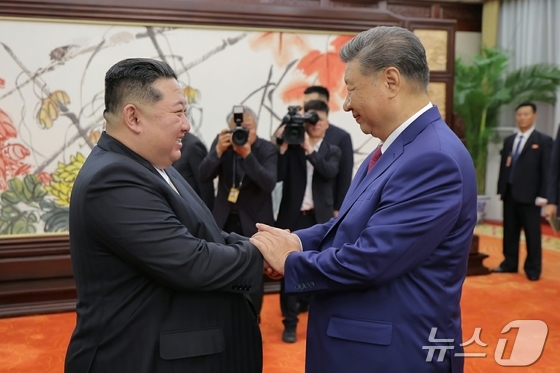
Chinese President Xi Jinping recently demonstrated the strength of North Korea-China ties by sending a congratulatory message to Kim Jong Un on his re-election as General Secretary at the 9th Congress of the Workers’ Party. Xi characterized their relationship as that of socialist friendly neighbors, emphasizing that maintaining and developing this bond is an unwavering policy of the Chinese Party and government.
Some analysts suggest that this strengthening of North Korea-China relations could challenge the Lee Jae Myung administration’s policy of peaceful coexistence on the Korean Peninsula. KDI noted that historically, North Korea has been more open to engagement with South Korea and the U.S. when its relationships with China and Russia stagnated.
KDI also anticipates that the ongoing conflict in Ukraine will deepen North Korea’s ties with Russia. This could prompt China to offer conciliatory measures to increase its influence over North Korea, potentially complicating South Korea’s efforts to address the North Korean nuclear issue.
As North Korea strengthens its collaboration with major powers like Russia and China, its motivation to engage in nuclear negotiations with the U.S. may diminish.
Furthermore, the U.S. shift in foreign strategy, prioritizing the containment of China’s expansion over North Korean deterrence for U.S. Forces Korea, could negatively impact progress on the North Korean nuclear issue.
However, KDI suggests that the Donald Trump administration’s need for domestic political gains and the President’s personal ambition for a Nobel Peace Prize could still lead to a diplomatic breakthrough.
In light of this, diplomatic circles are closely monitoring the possibility of a North Korea-China summit during President Trump’s anticipated visit to China in April.
During a recent party congress report, Kim labeled South Korea as an eternal enemy while signaling conditional dialogue with the U.S., stating that the future of U.S.-North Korea relations depends on Washington recognizing North Korea as a nuclear power.
The White House responded by stating that President Trump remains open to unconditional dialogue with Kim, indicating a tentative willingness to engage.