North Korea has maintained an unexpected silence regarding the military actions of the U.S. and Israel against Iran. Following a single statement from its Foreign Ministry condemning the airstrikes shortly after they began on February 28, the country has refrained from issuing any further responses. On Thursday, observers noted that North Korea appears to be adopting a cautious, wait-and-see approach, carefully monitoring the situation and calibrating its messaging accordingly.
Notably, North Korea has not reported on the removal of Iran’s Supreme Leader, Ayatollah Ali Khamenei. In a Foreign Ministry statement published in the Rodong Sinmun on Monday, North Korea only referred to Israel’s military attacks against Iran, initiated with active support and protection from the U.S., and the U.S. military actions that joined in.
This reticence suggests that the regime, under the one-man rule is wary of acknowledging that a leader who maintained an iron grip on power for 37 years was swiftly ousted by the U.S. It indicates that North Korea is not taking this issue lightly and points to a strategy of calculated silence.
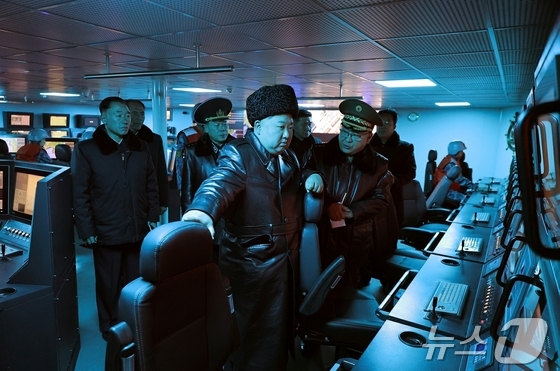
Since the Foreign Ministry’s initial statement, North Korea has refrained from further comment on the matter. On March 1, General Secretary Kim Jong Un visited the Sangwon Cement Complex to boost productivity. On Tuesday and Wednesday, he inspected a newly constructed 5,000-ton destroyer, overseeing the test launch of a strategic cruise missile capable of carrying nuclear warheads. During these events, he made no reference to the ongoing situation in the Middle East.
This approach stands in stark contrast to the behavior of Kim Jong Il, who suspended public activities for approximately 50 days during the U.S. invasion of Iraq in 2003. Some analysts interpret North Korea’s continued public exposure of its Supreme Leader as an attempt to project stability and differentiate its current situation from that of other countries.
Alternatively, some experts suggest that North Korea may be moving away from its traditional propaganda warfare style of diplomacy. At the 9th Workers’ Party Congress held last month, Kim announced plans to broaden the scope of diplomacy and indicated that the Party Central, or the supreme leadership, would directly oversee diplomatic matters. This has led to speculation that North Korea will adopt a more measured approach in its messaging and seek direct communication with involved parties.
Indeed, on the same day, Iranian Ambassador to South Korea, Saeed Koozechi, expressed gratitude during a press conference for North Korea’s condemnation of the situation. He stated that remaining silent on the attacks against Iran can only be interpreted as agreeing with the U.S. and Israel’s attacks on them, thereby acknowledging North Korea’s support.