Unification Minister Chung Dong-young announced that North Korea is increasingly likely to enshrine the hostile two states policy in its constitution during the upcoming Supreme People’s Assembly this month.
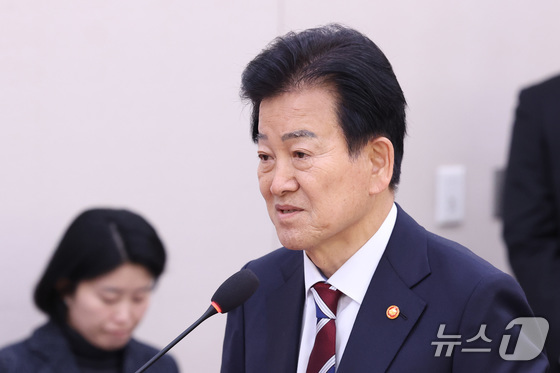
At a full committee meeting of the National Assembly’s Foreign Affairs and Unification Committee on March 6, Minister Chung responded to an inquiry from Kim Tae-ho, a member of the People Power Party. He stated that the likelihood of incorporating the hostile two states concept into the constitution at the March Supreme People’s Assembly has grown significantly.
Chung explained that North Korea declared in its recent Workers’ Party congress decision document that it would no longer consider inter-Korean relations. The regime now views South Korea as a hostile state rather than as part of the same ethnic group.
The Supreme People’s Assembly is North Korea’s highest power institution and nominal legislative body. It is responsible for constitutional amendments, enacting major laws, and approving the national budget. North Korea has previously announced that elections for Supreme People’s Assembly delegates will be held on March 15, suggesting a meeting with newly elected representatives may follow.
In late 2023, North Korea officially characterized inter-Korean relations as those between hostile states during a plenary meeting of the Workers’ Party, marking a departure from its previous unification policy. However, this stance has not yet been codified in the North Korean constitution.
Minister Chung assessed that even if North Korea formalizes this position in its constitution, the fundamental identity of both Koreas as entities striving for long-term unification will not disappear.
He stated that even if North Korea enshrines this concept in its constitution, while it may have internal normative power, the identity of the two nations as peaceful entities ultimately aiming for unification will not vanish.
Chung emphasized that the path towards unification through reconciliation, cooperation, and confederation, as outlined in the National Community Unification Plan established during the Kim Young-sam administration, remains valid.