

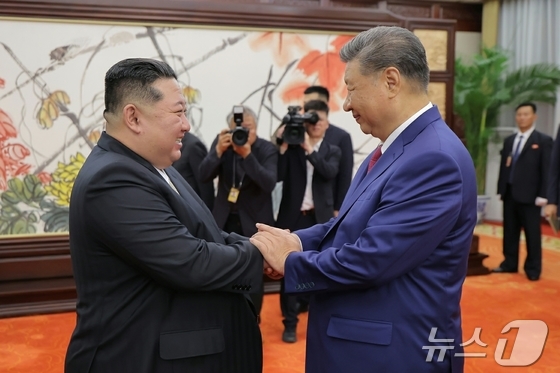
As President Donald Trump prepares for his upcoming visit to China on March 31, Beijing is intensifying efforts to revitalize its relationship with North Korea by resuming train and air services.
With Trump consistently expressing his desire to meet with Kim Jong Un, analysts suggest that China aims to leverage its increased influence over North Korea as a bargaining chip in negotiations with the United States.
On March 12, China restarted passenger train services between Beijing and Pyongyang after a nearly six-year hiatus due to the COVID-19 pandemic. This rail link, officially inaugurated in 1954, has grown in significance over the years. Since 2013, it has operated daily, at its peak carrying an average of over 250 passengers per day, symbolizing the robust exchanges and cooperation between North Korea and China.
Additionally, Air China, the state-owned carrier, announced the resumption of direct flights between Beijing and Pyongyang starting on March 30, marking another six-year milestone.
The revival of these transportation links is expected to have a positive impact on North Korea’s tourism industry, a sector of great interest to Kim. Since last year, Kim has been gradually reopening the country’s borders, which were completely sealed due to COVID-19. He has been actively promoting tourism packages targeting foreigners, particularly from Russia and China, despite facing various practical limitations, including infrastructure challenges.
As North Korea expands its transportation options with China, its largest trading partner, experts predict that economic cooperation between the two nations, encompassing tourism and trade, will strengthen further.
China Moves to Soothe North Korea After It Bristled at January Korea–China Summit
The Chinese government’s proactive stance seems to have played a crucial role in normalizing exchanges that had been stagnant for six months since the September summit between North Korea and China.
Following the outbreak of the Ukraine war, the relationship between North Korea and China had been neglected. However, expectations for a rapid recovery arose when Kim visited Beijing and met with President Xi Jingping last September.
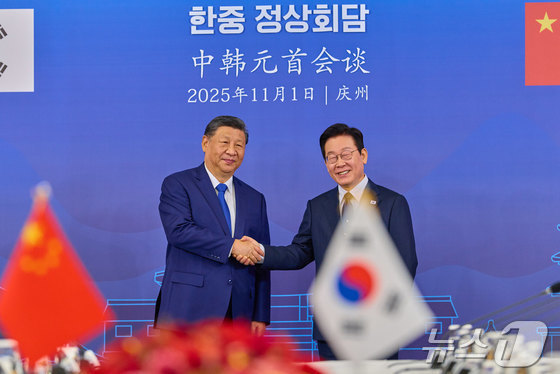
Despite this, the relationship has struggled to regain momentum, showing signs of friction. This tension was particularly evident after South Korean President Lee Jae Myung and Xi showcased closer ties during their summit in January, which reportedly made North Korea uncomfortable.
During that meeting, President Lee explained South Korea’s vision for North Korea and urged China to play a constructive role. North Korea later mocked this as begging.
Furthermore, when Kim sent New Year’s greetings to various world leaders earlier this year, North Korean media referred to Xi only by his title, omitting his name. This was widely interpreted as a subtle expression of dissatisfaction with China.
Against this backdrop, Chinese Foreign Ministry spokesperson Guo Jiakun announced on March 10 that the resumption of passenger train services between North Korea and China holds significant importance for facilitating people-to-people exchanges between the two friendly neighboring countries. He emphasized China’s support for strengthening communication between the relevant departments of both nations to create more convenient conditions for human exchanges.
China’s sudden emphasis on its relationship with North Korea appears to be a strategic move to showcase its influence over the Korean Peninsula ahead of the upcoming U.S.-China summit. Notably, President Trump has repeatedly mentioned the possibility of a North Korea-U.S. summit during his visit to China.
On March 13, during a meeting with South Korean Prime Minister Kim Min-seok at the White House, Trump reportedly expressed deep interest in North Korea-U.S. dialogue, asking about Chairman Kim wants to talk with him or the U.S.
Professor Lim Eul-chul from Kyungnam University’s Institute for Far Eastern Studies described the current North Korea-China relationship as strategically balanced—neither entirely distant nor completely close—suggesting that both nations adjust their proximity based on the actions of the U.S.