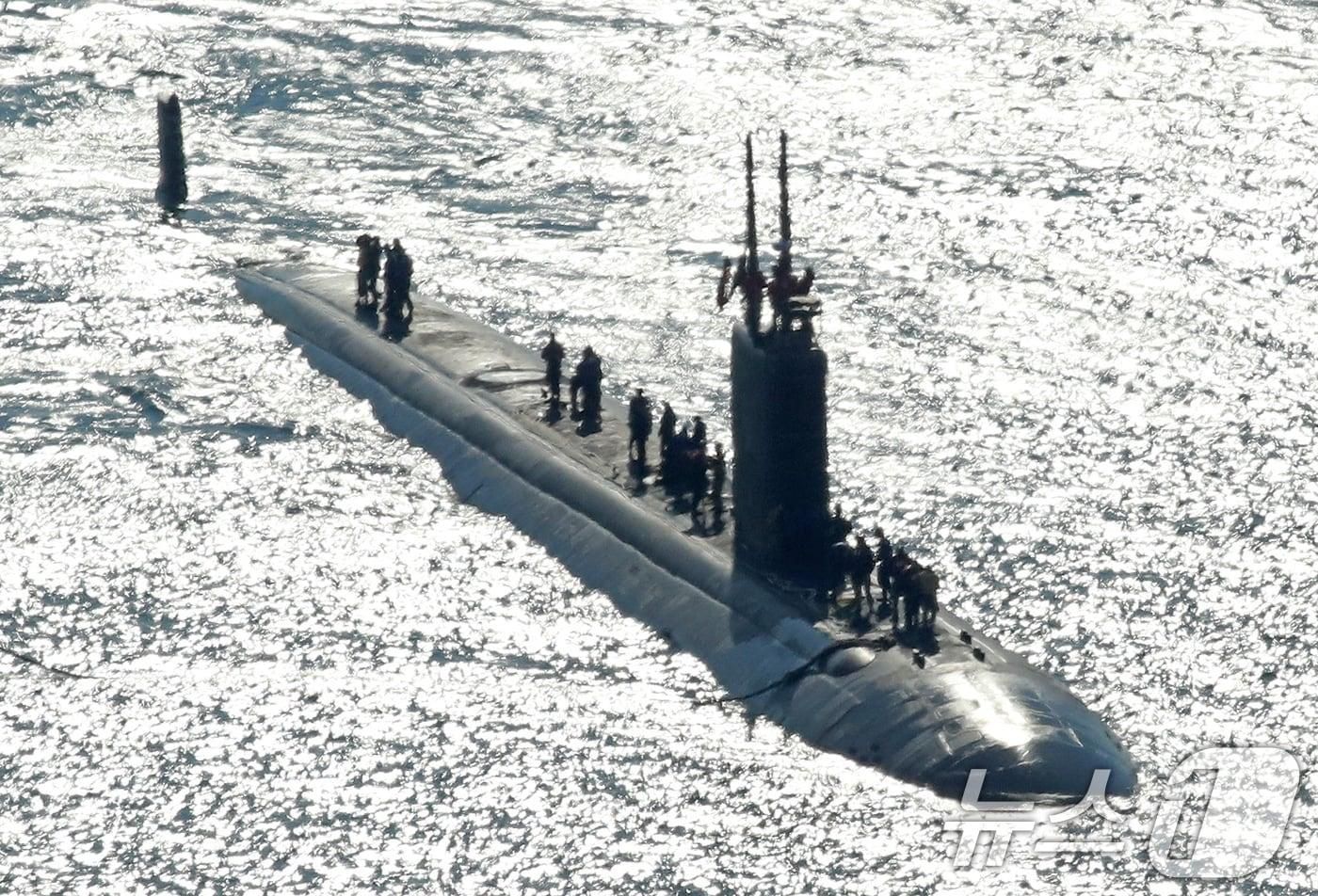
The Ministry of National Defense has initiated research on establishing a Special Law for Nuclear Submarines to facilitate the introduction of nuclear-powered submarines. Additionally, the ministry has begun studying strategies to negotiate exceptions with the International Atomic Energy Agency (IAEA) for safeguards on military nuclear fuel.
News1 reports on Wednesday that the Defense Ministry recently commissioned a study on Developing Response Measures for IAEA Safeguards on Military Nuclear Fuel. The six-month research project is expected to conclude by late September, with the selection of a research institution to be finalized this month.
A Defense Ministry official explained that under the agreement with the IAEA, it must report all nuclear materials and facilities it possesses or produce, which the IAEA then inspects and verifies. The government needs to establish an organization and system for nuclear submarine-related safeguards that align with IAEA standards. It also need to develop a non-application agreement within the bounds of the Non-Proliferation Treaty (NPT) and design alternative safeguard measures.
The official added that it also needs to establish an institutional foundation to prepare for negotiations on the non-application of safeguards for nuclear submarines, based on Article 14 of the safeguards agreement between South Korea and the IAEA.
Non-nuclear weapon states that have joined the NPT and signed a Comprehensive Safeguards Agreement (CSA) with the IAEA must apply IAEA safeguards to all nuclear materials. Consequently, using nuclear fuel for submarine propulsion requires negotiating safeguards exemptions with the IAEA.
The challenge lies in the fact that no non-nuclear weapon state has ever possessed nuclear submarines, and the IAEA has no experience finalizing safeguards exemption negotiations with such states. Experts suggest that a well-established domestic regulatory framework could alleviate concerns from the IAEA and the international community, potentially strengthening South Korea’s negotiating position for acquiring nuclear submarines.
For instance, Australia and Brazil, both non-nuclear weapon states like South Korea, are preparing to introduce nuclear submarines. These countries have been in talks with the IAEA since 2021 for safeguards exemptions but have reportedly faced difficulties in concluding a special agreement for over four years.
The Defense Ministry is concerned that the lack of an established framework for safeguards exemptions related to nuclear submarines could delay negotiations with the IAEA to secure military nuclear fuel during the future development of the nuclear submarine program. There are also worries that a lack of transparency during subsequent IAEA inspections and audits could undermine international trust, even if the necessary nuclear fuel is secured.
To address these issues, the Defense Ministry has prioritized the Preparation of a Non-Application Agreement for Safeguards as a key research task. This involves defining the subjects and duration for which safeguards will not apply to military nuclear fuel and establishing procedures for alternative measures related to fuel measurement, sealing, and monitoring.
The ministry also aims to develop response strategies for IAEA safeguards exemption negotiations under various nuclear submarine acquisition scenarios. It plans to establish a comprehensive framework covering pre-inspection preparations, post-inspection measures, and the management of information security.
Furthermore, the ministry intends to propose measures to maintain and strengthen international trust by implementing transparent nuclear inspection processes. These may include voluntary notifications, communications with allied nations, and supplementary technical verification methods following negotiations with the IAEA on military nuclear fuel use exemptions.
In a related development, the Defense Ministry commissioned a study last month on Preparing a Special Law for Promoting Nuclear Submarine Projects, with the Korea Legislation Research Institute selected to conduct the research.
The ministry’s research agenda includes analyzing relevant domestic and international laws, such as the Defense Acquisition Program Act and the Nuclear Safety Act, estimating budgets, assessing the industrial and market impact of the special law for nuclear submarines, and evaluating community acceptance regarding nuclear waste disposal.