The South Korean government has reconfirmed that there are no abnormalities in the regular monitoring results for the first quarter of this year regarding concerns about the discharge of radioactive wastewater from North Korea’s Pyongsan uranium plant. No significant issues were found in investigations that began in the latter half of last year. Nevertheless, the government intends to maintain its quarterly surveillance.
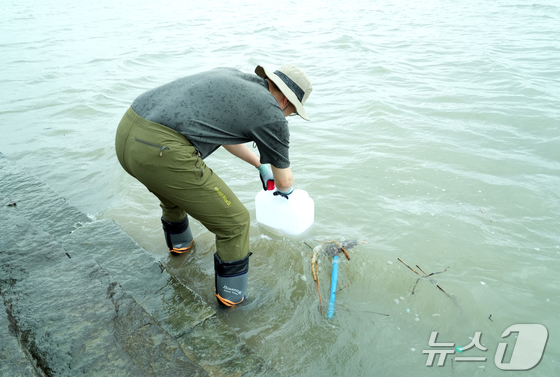
On March 20, the government announced that, in collaboration with relevant departments, it had collected and analyzed samples from seven locations, including Ganghwa Island, the Han River, the Imjin River estuary, and the Incheon coast earlier this month. The results showed that uranium and heavy metal concentrations were all within normal ranges.
Uranium levels in the three Ganghwa area sites were between 2.574 and 2.923 parts per billion (ppb), while the Han River and Imjin River estuary measured between 0.433 and 0.592 ppb. The Incheon coast showed levels between 2.579 and 2.776 ppb. These figures are consistent with previous measurements, indicating normal levels that are well below the drinking water standard of 30 ppb.
The five heavy metals tested (cadmium, arsenic, mercury, lead, and hexavalent chromium) were either below environmental standards or undetectable at all sites. Mercury and hexavalent chromium were not detected in most areas, while lead and arsenic levels remained low compared to established limits.
This investigation corroborates the findings from the monthly monitoring conducted in the second half of last year, which showed no anomalies. At that time, the government concluded that there were no significant changes in water quality around the West Sea and Han River estuary, despite concerns about potential wastewater influx from the Pyongsan uranium plant.
The government has stated its commitment to continuing quarterly monitoring efforts. Authorities emphasized that they will enhance surveillance to prepare for any possibility of radioactive material entering from North Korea.