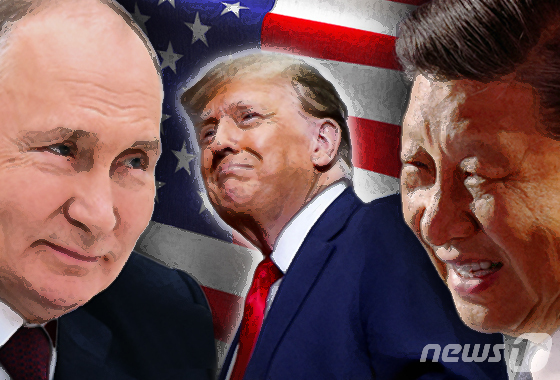
In May, an unprecedented diplomatic scenario may unfold as the presidents of the United States and Russia are expected to make back-to-back visits to China. While the U.S. government aims to leverage President Donald Trump’s visit to promote dialogue between North Korea and the U.S., as well as inter-Korean talks, some analysts suggest that China might prioritize strengthening its trilateral ties with North Korea and Russia, as seen last September. The developments on Monday will be closely monitored.
The South China Morning Post (SCMP), based in Hong Kong, recently reported that Russian President Vladimir Putin might visit China shortly after President Trump’s trip, citing multiple sources.
President Trump’s visit to China, initially scheduled for late May, has been postponed to May 14-15 due to the ongoing situation in the Middle East. According to SCMP, President Putin’s visit is expected to occur within two weeks of the summit between President Trump and Chinese President Xi Jinping. Such closely timed visits by U.S. and Russian leaders to China are exceptionally rare.
If this schedule materializes, it will likely impact South Korea’s diplomatic efforts toward North Korea. The South Korean government aims to establish this year as the starting point for the Korean Peninsula Peace Coexistence Process, focusing on resuming dialogue with North Korea and using U.S.-North Korea discussions as leverage to facilitate inter-Korean talks. Consequently, Seoul has been closely monitoring President Trump’s upcoming visit to China with high expectations for the U.S.-China summit.
President Trump has frequently emphasized his personal rapport with Kim Jong Un and has repeatedly expressed his willingness to engage in dialogue with North Korea. During a meeting with South Korean Prime Minister Kim Min-seok on March 13, he even inquired if Kim wants to talk to the U.S. or Trump.
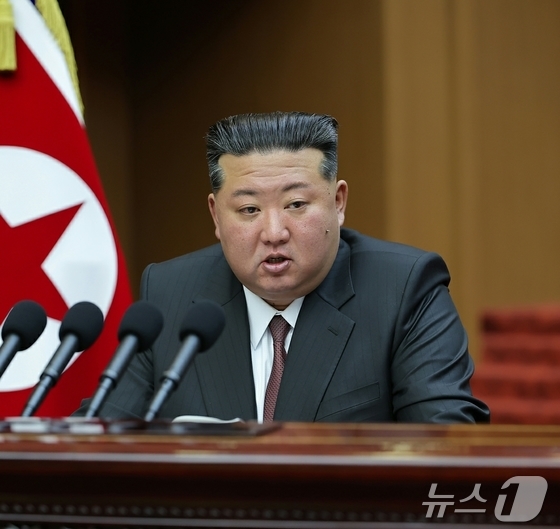
However, swaying North Korea, which has set high barriers to dialogue, appears challenging. In a speech during the Supreme People’s Assembly on March 23, Kim declared that it recognizes South Korea as the most hostile nation and will thoroughly reject and ignore it, reaffirming the hostile two-nation theory.
Regarding the U.S., Kim suggested that trust in the U.S. has diminished due to its alleged acts of state terrorism and aggression worldwide, citing the ousting of Venezuelan President Nicolás Maduro and military actions against Iran. Kim has previously stated that dialogue would only be possible if North Korea is recognized as a nuclear power.
Will China Bridge to a New Phase or Revive North Korea–China–Russia Alignment?
Given the current circumstances, diplomatic circles believe that Russia or China, rather than the U.S., may be able to influence North Korea. In this context, analysts speculate that China’s messages during its consecutive summit diplomacy in May could provide insights into potential changes in the Korean Peninsula situation.
If President Xi positions himself as a link between the U.S. and North Korea, he could take on a mediating role. However, this scenario would likely require clear concessions from the U.S. Given ongoing issues like tariffs between the U.S. and China, and China’s discontent with the U.S.-initiated Middle Eastern crisis, close dialogue between the two leaders regarding North Korea seems unlikely.
Nonetheless, China has shown signs of improving relations with South Korea following the January summit and has been working on enhancing ties with North Korea since February. This has led to cautious predictions that China could contribute to facilitating contacts between the U.S. and North Korea as it seeks to strengthen its position as a global power.
However, if President Putin indeed visits China, the overarching message of countering the U.S. through trilateral ties, as highlighted during last September’s 80th anniversary of China’s victory day, is likely to become more pronounced. Should Kim make an unexpected visit to China, this message would likely be amplified.
Park Won-gon, a professor at Ewha Womans University, commented on China’s options, stating that the key is what outcomes arise from the U.S.-China summit, adding that China will adjust the level of its North Korea-China-Russia trilateral ties based on the results of the summit with the U.S.
In this evolving situation, South Korea’s diplomatic calculations will inevitably become more complex. While relations with China have been relatively stable recently, Seoul may find its diplomatic space regarding North Korea shrinking if China positions itself at the center of North Korea-China-Russia closeness.