North Korea has not publicly announced the death of former International Olympic Committee (IOC) member Jang Ung five days after he passed away. The muted response contrasts with past occasions when state media ran extensive obituaries and the country’s top leader personally expressed condolences.
On Thursday, North Korean state outlets including the Korean Central News Agency and Rodong Sinmun had not reported on Jang’s funeral or related events; he reportedly died on March 29. The IOC disclosed his death on Wednesday and said it would fly flags at half-staff for three days at Olympic House in Lausanne, Switzerland, as a mark of mourning.
When other senior officials die, Rodong Sinmun gives front-page coverage
North Korea typically treats obituaries for senior party, government and military officials as instruments of state messaging — both to honor elders and to reinforce the regime.
Recent examples include Kim Yong-nam, former chairman of the Supreme People’s Assembly Presidium (November 2025); Kim Ki-nam, former propaganda secretary of the Workers’ Party Central Committee (May 2024); and Hyon Chol-hae, former senior adviser to the Ministry of Defense (May 2022).
State media hailed Kim Yong-nam as an elder revolutionary who left exceptional achievements in strengthening and developing the party and state, noting his role leading high-level delegations and serving under multiple leaders.
Kim Jong Un reportedly visited the body at Seojang Hall in Potonggang District, Pyongyang, with senior officials on the night of Kim Yong-nam’s death to pay his respects.
When Kim Ki-nam — a key figure in the cultivation of the Kim family’s personality cult — died, the top leader chaired the funeral committee and personally attended the wake. Rodong Sinmun praised Kim Ki-nam for dedicating himself to preserving the revolution’s ideological purity and securing the steady victory of the socialist cause.
Hyon Chol-hae, who once served as a mentor to the current leader, received one of the most prominent official send-offs in recent memory: extensive obituaries, an elaborate funeral and annual visits by Kim Jong Un to his grave, with those visits routinely reported as major stories.
Obituaries have also been meaningful for figures who were not top powerholders but had clear accomplishments or enjoyed the leader’s special favor. Composer Hwang Jin-yong, a former player with the national symphony and deputy director of the Moranbong Band, received official honors at his death in January 2025. Ri Jong-o — known for composing the well-known song “Nice to Meet You,” who died in November 2016 — was awarded the title of People’s Artist for his contributions to state propaganda.
A Veteran Who Raised National Prestige—Now Snubbed?… Ties to Top Leader, Political Climate Seen as Factors
North Korea uses obituaries not only to report deaths but also to convey political messages and shape domestic perception.
Experts say Pyongyang appears to apply informal criteria when deciding how prominently to cover a death: current or former high-ranking officials; individuals with personal ties to the top leader; and symbolic figures linked to foreign relations or current political priorities. If someone does not fit those categories, fame alone may not secure prominent coverage.
By current standards, Jang may have fallen outside Pyongyang’s guideline for major coverage, said Kim In-tae, senior researcher at the Institute for National Security Strategy. He added that state media might still refer to Jang later in a different context.
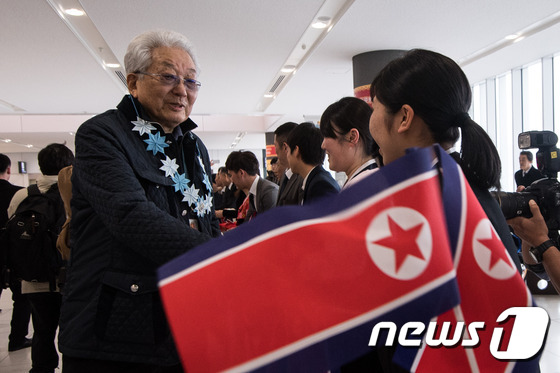
Jang was unusual among North Korean officials for his extensive overseas engagement. From the late 1970s through roughly 2010, he represented North Korea actively on the international sports stage. Serving as the country’s first and, to date, only IOC member underscored the distinctiveness of his career.
Some analysts suggest Pyongyang’s restrained response may reflect concerns about Jang’s role in improving inter-Korean ties. He played a key part in arranging joint North–South athlete marches at the Olympics, and officials may have worried that prominent obituary coverage would prompt a sympathy response in South Korea — a state North Korea regards as hostile. Given Jang’s international standing, the regime may have moved to control the narrative.
Born in Pyongyang in 1938, Jang was a former basketball player who captained North Korea’s national team from 1956 to 1967. He later coached and moved into administration, serving as secretary-general and vice president of the Olympic Committee of the Democratic People’s Republic of Korea. He drew attention when the IOC elected him as a member at its 1996 session alongside the late Lee Kun-hee, chairman of Samsung Group.
Jang played decisive roles in arranging joint North–South entries at the 2000 Sydney Summer Olympics and the 2018 PyeongChang Winter Olympics. He also helped broker a memorandum of understanding between World Taekwondo and the North Korea–led International Taekwon-Do Federation at the 2014 Nanjing Youth Olympics. In October 2023, at the 141st IOC session in Mumbai, India, the IOC awarded him the Olympic Order.