


Recent analysis suggests that while North Korea has eased some Wi-Fi access regulations for smartphones, it has simultaneously introduced a mobile communication identifier system to intensify surveillance of mobile users.
A report titled, North Korea’s Smartphones in 2026, published on April 5 by Martin Williams, a researcher at the U.S. think tank Crimson Center, reveals that North Korea has recently permitted limited access to its state-operated Wi-Fi network through an app called Future. Previously, while North Korean smartphones had Wi-Fi connectivity features, users were unable to activate them or connect to other networks.
According to the report, North Korea currently operates at least three agencies managing four wireless communication networks. Koryolink provides 3G mobile services, while Kangsong has reportedly established both 3G and 4G Long Term Evolution (LTE) networks. The Future app operates a Wi-Fi-based network.
However, all devices are equipped with a modified Android-based operating system designed to block the execution of content without state-approved digital signatures. The system is also said to incorporate robust control measures, including random screen recording during use and restrictions on accessing external Wi-Fi and foreign communication networks.
The report emphasizes that North Korea has recently stepped up efforts to authenticate and track users through the mobile communication identifier system. This system, consisting of a ten-digit number issued by North Korea’s Ministry of Information Technology, is believed to function as a unique identifier separate from regular phone numbers.
The registration process for the Kangsong Mobile Network app requires users to input their mobile communication identifier, user identification (ID), and citizenship number. This structure suggests a multi-layered approach to personal identification and authentication during communication service use.
Previously, in 2020, North Korea adopted the Mobile Communication Law during a plenary session of the Supreme People’s Assembly and reportedly amended it in 2023. At that time, North Korean media stated that the law had clarified regulations on repair and purchase services for mobile devices, requirements for using mobile devices, and the suspension of mobile services.
The report reveals that North Korea’s smartphone market is surprisingly competitive. Currently, it is estimated that at least 24 different smartphone brands and over 500 domestic Android apps exist within the ecosystem.
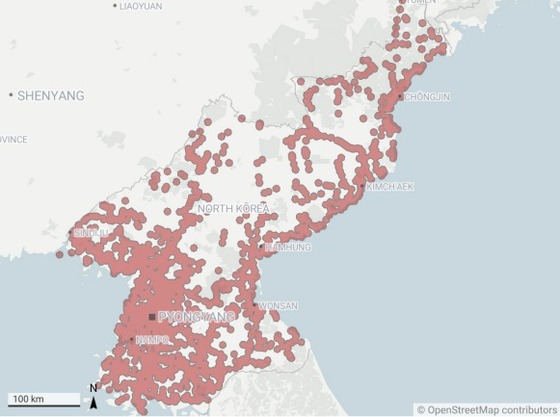
Furthermore, analysis of base stations using satellite imagery suggests that most major population centers in North Korea have access to at least one mobile communication network. This appears to be a measure aligned with the North Korean authorities’ efforts to digitalize administrative services.
Notably, mobile networks continue to expand into rural areas, and the 4G service launched in 2023 is projected to be available nationwide, beyond Pyongyang. The International Telecommunication Union (ITU) estimates that by 2024, the number of subscribers in North Korea will reach 6.35 million, with potential for continued growth due to the expansion of smartphone adoption and 4G networks.