Kim Yo-jong, the director of the Organization and Guidance Department of North Korea’s Workers’ Party, issued both praise and a warning on the same day that President Lee Jae Myung expressed regret over the drone incident, showcasing an attempt to maintain control amid rising tensions.
In a statement released on Monday, Kim described President Lee’s expression of regret as highly fortunate and a wise move on his part.
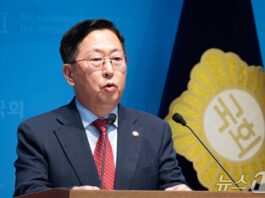
Earlier that day, President Lee had stated regarding the incident that he regrets causing unnecessary military tension, while discussing measures to prevent its recurrence.
Kim conveyed that its leader evaluated this with the attitude of an honest and magnanimous person, revealing Kim Jong Un’s judgment. By using Kim as a mouthpiece, this formalizes the supreme leader’s assessment, indicating that North Korea is managing this issue not merely as a response to an incident but as a leader’s message.
Analysts interpret this positive evaluation as an attempt to emphasize the narrative that the South has effectively acknowledged responsibility. Historically, North Korea has used the South’s expressions of regret or apologies to reinforce its regime’s legitimacy and deflect blame, and it appears to be repeating this pattern now.
However, the statement’s emphasis quickly shifted to a warning. Kim demanded to cease all reckless provocations against the Democratic People’s Republic of Korea, and insisted that any attempts at contact must be abandoned.
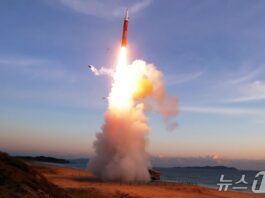
Notably, she stressed that if provocations infringing on sovereignty occur again, there will be unbearable consequences, leaving open the possibility of military responses. This combination of positive evaluation and a stern message exemplifies a typical dual signal strategy.
This response aligns with North Korea’s recent pattern of swift reactions. Previously, when issues regarding the South’s manned aircraft arose, Kim had also issued an immediate statement, defining the South’s responsibility and establishing the level of response. Once again, she responded on the same day as President Lee’s remarks, replicating the rapid response and framing strategy.
This method of preemptive interpretation followed by warnings through statements from Kim has been repeated in various scenarios, including the destruction of the inter-Korean liaison office in Kaesong during the 2020 leafleting crisis, as well as during criticisms of U.S.-South Korean joint military exercises and North Korea policies. This approach first establishes responsibility through statements, then accumulates justification for potential action if deemed necessary.
The backdrop to this is the entrenched hostile two-state policy that solidified after the 9th Party Congress and the Supreme People’s Assembly. North Korea has defined inter-Korean relations as a structural antagonism rather than a cooperative one, opting to suppress escalation while blocking contact. The explicit mention of abandoning attempts at contact in this statement extends this policy.
Ultimately, this message appears less as a conciliatory signal aimed at reducing tensions and more as an effort to maintain control over the situation at a manageable level while asserting leadership. By revealing Kim Jong Un’s assessment through Kim and simultaneously restricting the South’s range of actions, they intend to sustain a controlled tension phase.
Professor Lim Eul-chul from Kyungnam University’s Institute of Far Eastern Studies remarked that this statement departs from the previous one-sided criticisms and takes on the character of managed discourse by evaluating the counterpart’s remarks and presenting conditions. He analyzed that it reflects an intention to pragmatically manage military tensions while further solidifying the hostile two-state framework.
Professor Lim particularly noted the direct citation of Kim Jong Un’s evaluation. He pointed out that while using unusually friendly expressions like wise decision and magnanimous attitude, the statement maintained a tone of admonition with must be abandoned, thereby elevating the weight of the discourse while simultaneously setting behavioral standards. He elaborated that this indicates an intention to allow only cold border management under the hostile two-state system.