

North Korea has reaffirmed its hardline stance toward South Korea, designating it as the most hostile rival state.
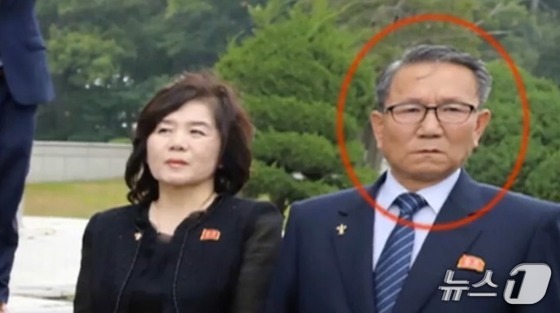
On Tuesday, the Korean Central News Agency released a statement from Jang Geun-chul, First Vice Minister of Foreign Affairs and Director of the 10th Bureau, criticizing South Korea for interpreting the North’s swift response as an unusually friendly reaction and a quick confirmation of mutual intentions between leaders. He dismissed such views as wishful thinking by foolish simpletons.
Jang characterized Kim Yo-jong’s earlier remarks as a clear warning, emphasizing that her positive assessment of President Lee Jae Myung’s expression of regret regarding a drone incident should not be interpreted as a conciliatory signal.
He argued that the underlying message of Kim’s statement was essentially that if you want to stay safe, prevent recurrence,and to stop provoking them, or it won’t end well, underscoring that despite the restrained language, it amounted to a warning to South Korea.
Jang also reaffirmed that South Korea’s identity as the most hostile rival state to the Democratic People’s Republic of Korea cannot change, regardless of what officials say or do, thus maintaining the existing narrative of the two Koreas as hostile nations.
Previously, Kim had described President Lee’s expression of regret as a candid and bold attitude, while also warning against reckless provocative actions. Although her language was less aggressive than in the past, analysts viewed her comments as a managed discourse that combined conditional evaluations with warnings.
In response, some in the South Korean government and political circles interpreted this as a possible signal from North Korea to shift toward managing tensions.
The Ministry of Unification noted that North Korea’s positive reaction to President Lee’s expression of regret regarding the drone incident indicated a swift confirmation of both leaders’ intentions to halt unnecessary military escalations, calling it a significant step toward peaceful coexistence on the Korean Peninsula.
However, North Korea’s immediate rebuttal suggests that this statement reflects an intention to manage the level of confrontation while maintaining the existing narrative of hostile nations, rather than signaling a genuine easing of tensions.