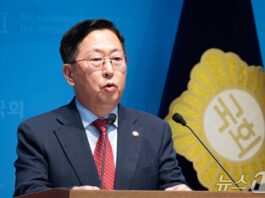
The Donald Trump administration has nominated Michelle Park Steel, a Korean-American former U.S. Representative, as its first ambassador to South Korea, 15 months into its second term. On Wednesday, diplomatic circles expressed both hope for improved U.S.-South Korea communication and concern that Steel’s critical stance toward China and North Korea could create friction between the two allies.
Born in Seoul in 1955, Steel’s Korean name is Park Eun-joo. If confirmed, she will become the second Korean-American ambassador to South Korea, following Sung Kim’s appointment in 2011, and the first Korean-American woman in this role.
Steel’s parents, who fled North Korea during the Korean War, are known for their deep understanding of Korean culture and language. She immigrated to the U.S. with her family in the mid-1970s and was elected to the U.S. House of Representatives from California in 2020 and 2022.
In Congress, Steel has consistently advocated for Korean-American interests and addressed various Korea-related issues.
In 2021, she urged Congress to respond to the controversy surrounding Harvard professor Mark Ramseyer’s comments about comfort women and emphasized the need to increase COVID-19 vaccine supplies to South Korea.
She also introduced the Divided Families Reunification Act to facilitate reunions for families separated during the Korean War.
Diplomats draw parallels between Steel’s background and interest in Korea and former Ambassador Sung Kim, who effectively bridged U.S.-South Korea relations.
Steel’s Korean-American Background and MAGA Leanings Spark Both Optimism and Caution, Reminiscent of Tensions During Trump’s First Term
However, concerns arise as Steel’s approach to international relations aligns closely with Trump’s America First (MAGA) agenda.
Her tough stance on North Korea and China may clash with President Lee Jae Myung’s administration’s more conciliatory approach toward North Korea.
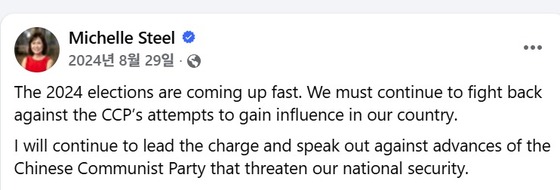
In a past Facebook video, Steel mentioned her parents’ escape from North Korea, stating that it lost everything due to socialism, but found opportunities for a better life in America. In another post, she emphasized the need to combat the Chinese Communist Party’s influence in the U.S., vowing to lead efforts against its national security threats.
While Steel hasn’t recently voiced her positions on these issues, her past comments suggest a stark contrast to the Lee administration’s diplomatic approach, which seeks to improve relations with China and pursue peaceful coexistence with North Korea.
If Steel adopts a hardline stance on North Korea and China as ambassador, it could escalate tensions between the U.S. and South Korea.
Given the Trump administration’s desire to counter China across all sectors, having an ambassador who acts as Trump’s official representative could pose risks for future U.S.-China relations.
Observers note that the strained relationship between the Trump administration and the Moon Jae-in government might resurface, reminiscent of former Ambassador Harry Harris’s tenure.
Harris, who became the first ambassador to South Korea under the Trump administration in July 2018, frequently clashed with the Moon administration over defense spending increases and the pace of inter-Korean cooperation.
When the Moon administration decided not to extend the military information sharing agreement (GSOMIA) with Japan in 2019, Harris publicly expressed disappointment, prompting South Korea’s Foreign Ministry to take the unprecedented step of summoning the U.S. ambassador. Unconfirmed reports suggested he made remarks implying that the president was surrounded by pro-North Korean leftists.
These precedents fuel mixed expectations about whether Steel will be a pro-Korea ambassador or a proxy for Trump-style pressure. The mere fact of having a Korean-American ambassador doesn’t guarantee smooth U.S.-South Korea relations. As Trump’s transactional diplomacy remains a factor, Steel’s actions as ambassador will likely significantly shape the future of U.S.-South Korea relations.