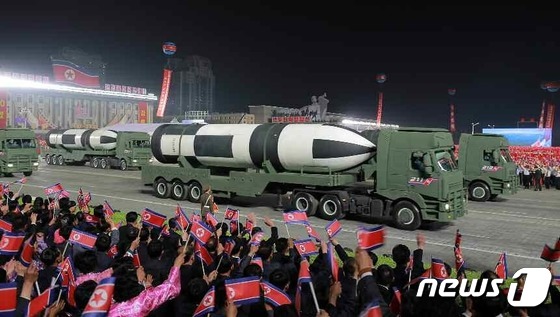
On April 19, North Korea conducted a provocative launch of ballistic missiles from the Sinpo area, a known submarine base. This raises speculation that the missiles could be new submarine-launched ballistic missiles (SLBMs). If confirmed, it would mark North Korea’s first SLBM test in approximately four years.
The Joint Chiefs of Staff reported that North Korea fired multiple ballistic missiles into the East Sea at around 6:10 a.m. (South Korean time) from the Sinpo area in South Hamgyong Province.
U.S. and South Korean officials are currently analyzing the missiles’ specifications. Sinpo has become a prominent North Korean submarine base in recent years. In 2023, North Korea launched a conventional submarine from this location, dubbed the Kim Gun-Ok Hero Ship, claiming it could launch nuclear ballistic missiles and referring to it as a tactical nuclear attack submarine.
Sinpo is also the home port of the 8.24 Hero Ship, which has conducted several underwater SLBM launches since 2016. Experts believe this location could serve as the base for North Korea’s recently unveiled nuclear-powered submarine capable of carrying nuclear missiles.
SLBMs are ballistic missiles launched from submarines, leveraging their stealth and mobility to conduct surprise strikes against key enemy targets while remaining difficult to track underwater.
North Korea is believed to have made significant progress in cold launch technology, where the missile’s first stage ignites after being ejected from underwater. The regime has focused on extending SLBM range by incorporating propulsion systems from their intermediate-range and intercontinental ballistic missile programs.
If today’s launch indeed involved SLBMs, it would represent North Korea’s first such provocation in about four years, following a launch just before President Yoon Suk Yeol’s inauguration on May 7, 2022.
While North Korea did not disclose details about the May 2022 SLBM, including photos or range data, military analysts believe it was launched from the 8.24 Hero Ship off the coast of Sinpo.
Prior to this, on October 19, 2021, North Korea tested a smaller SLBM from the 8.24 Hero Ship. This missile, part of the Hwasong series, was reportedly smaller than the Pukguksong-series SLBMs developed since 2015. The 2022 launch was also identified as a Hwasong-series SLBM. That missile had an estimated range of 600 km (about 373 miles) and reached an altitude of 60 km (about 38 miles).
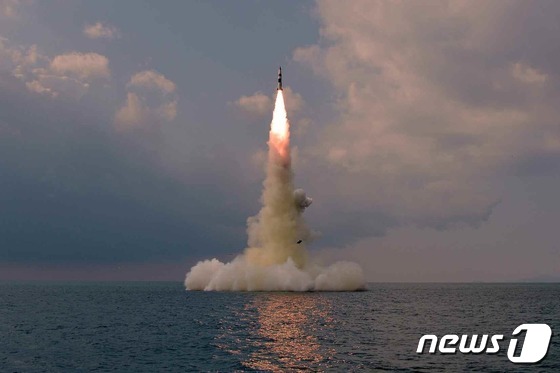
North Korean leader Kim Jong Un has prioritized naval power enhancement since 2023. Following the launch of the Kim Gun-Ok Hero Ship, North Korea commissioned a new 5,000-ton destroyer last year. This vessel is currently undergoing weapons integration and testing for operational deployment.
Concurrently, North Korea continues to upgrade its existing ballistic missiles, focusing on improving warhead lethality and missile speed.
Given this context, some analysts suggest that today’s launch near Sinpo may have been conducted to test upgraded SLBM capabilities.
However, South Korean military sources estimate the missiles’ range at approximately 140 km (about 87 miles), significantly shorter than the 600 km range (about 373 miles) observed during the 2022 miniaturized SLBM test. This discrepancy has led some experts to speculate that North Korea may have instead tested close-range ballistic missiles (CRBMs) designed for low-altitude flight to evade missile defenses.
Alternative theories suggest the launch could have involved unidentified missiles intended for the new destroyer or a limited SLBM test focused on specific performance parameters rather than maximum range.
It’s worth noting that North Korea has not previously conducted simultaneous launches of multiple SLBMs during test firings.
On April 8, North Korea launched several ballistic missiles from the Wonsan coast in Gangwon Province. The regime claimed these missiles were equipped with cluster munitions to enhance destructive power and carbon fiber warheads capable of causing widespread electrical disruptions.