North Korea launched multiple short-range ballistic missiles (SRBMs) into the East Sea from its submarine base in Sinpo on April 19. This marks the first ballistic missile test in 11 days, following the previous launch on April 8.
The Joint Chiefs of Staff (JCS) reported that its military detected several short-range ballistic missiles fired into the East Sea at approximately 6:10 a.m. (South Korean time) on April 19 from the Sinpo area in South Hamgyong Province.
The JCS added that the detected missiles traveled about 140 km (about 87 miles), and noted that the exact specifications are currently under thorough analysis by U.S. and South Korean intelligence. Given the flight distance of less than 300 km (about 186 miles), these could potentially be close-range ballistic missiles (CRBMs), which are challenging to intercept due to their low-altitude trajectory.
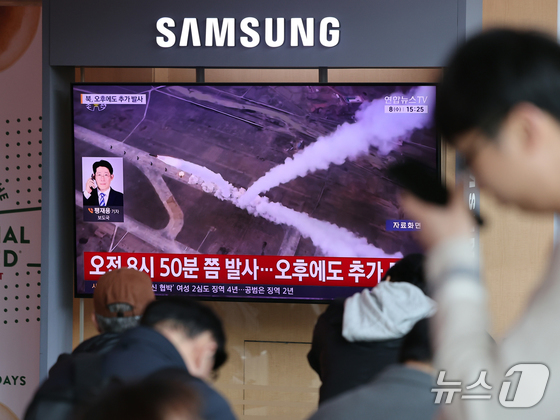
This latest missile test comes roughly two weeks after North Korea’s previous SRBM launches on April 8. On that morning, Pyongyang fired multiple SRBMs into the East Sea from the Wonsan area in South Hamgyong Province, with those missiles covering approximately 240 km (about 149 miles).
Later that same day, an additional SRBM was launched, traveling over 700 km (about 435 miles) towards the East Sea. On April 7, North Korea also attempted to fire an unidentified projectile, but it reportedly malfunctioned shortly after launch and was lost.
This incident marks North Korea’s fourth military provocation this month alone. On April 14, Pyongyang claimed to have test-fired cruise missiles and anti-ship missiles from its new destroyer, the Choe Hyon (5,000 tons), purportedly capable of carrying nuclear warheads.
This pattern of frequent provocations contradicts recent speculation about a potential easing of tensions between the two adversarial nations. Instead, it appears to be part of North Korea’s strategy to accelerate its policy of simultaneous development (byungjin) of nuclear weapons and conventional arms, a directive that gained momentum during the Workers’ Party Congress in February.