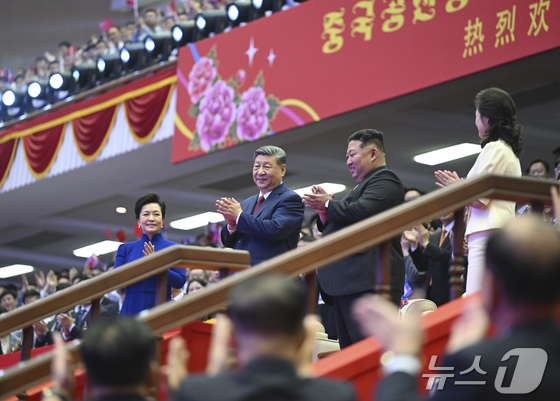
North Korea and China seem to be transitioning their traditional party-to-party relationship towards a state-to-state connection, following their recent summit in Pyongyang.
In the wake of North Korea’s two states declaration in December 2023, the country has been reinforcing its identity as a diplomatic state rather than a socialist ideological nation. As of Tuesday, analysts suggest this is part of North Korea’s strategy to recalibrate its relationship with China and bolster its diplomatic standing in the international community.
Xi Pledges to Guide China–North Korea Ties From a Strategic Perspective; Kim Says Strengthening Relations Is a Strategic Commitment
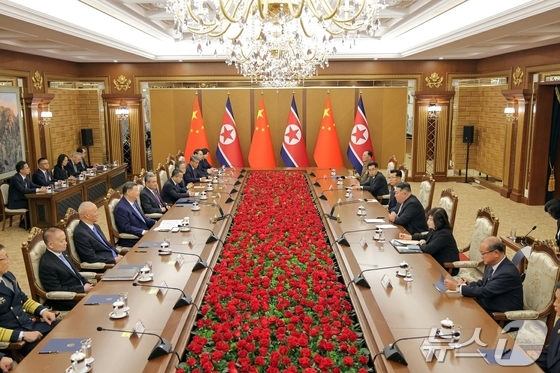
During their June 8 summit, President Xi Jinping and Kim Jong Un focused on establishing a strategic relationship.
Prior to his North Korea visit, President Xi published an article on Rodong Sinmun’s front page, asserting that North Korea and China must enhance strategic communication and cooperation in line with current trends, jointly upholding an international order based on the United Nations (UN)-centric international law.
The article repeatedly used phrases highlighting the strategic nature of their relationship, such as high-level strategic guidance and strategic cooperation.
President Xi notably stated that China would work with North Korea to elevate their relationship to a strategic level, promoting greater development in bilateral ties. This indicates a desire to fully restore and strengthen the North Korea-China relationship, which had reportedly cooled following North Korea’s closer ties with Russia.
Kim echoed the term strategy multiple times, aligning with President Xi’s rhetoric.
In his opening remarks, Kim stated that strengthening and developing North Korea-China friendship is the people’s choice, a demand of the times, and North Korea’s unwavering strategic decision. It considers the development of North Korea-China relations as the state’s most crucial and top strategic priority.
Kim even declared that he would make the development of North Korea-China relations the state’s foremost strategic project.
Relations Recast From an Ideology-Based Party-to-Party Bond to a Strategic State-to-State Partnership Built on Shared Interests
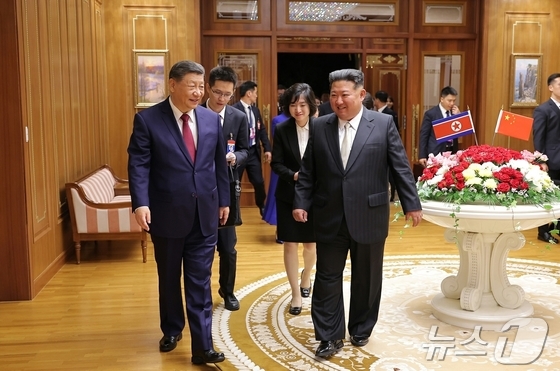
Some analysts suggest that North Korea and China have elevated their relationship to a strategic partnership.
However, given that North Korea and China have historically prioritized party-to-party ties based on shared ideologies, some interpret this summit as a shift in the concept of their relationship rather than an elevation of ties.
North Korea and China have maintained a unique blood alliance relationship, differing from conventional diplomatic relations. China has acted as North Korea’s big brother, providing economic support and military protection without expecting reciprocation, resulting in a long-standing imbalanced relationship favoring North Korea.
Therefore, defining their relationship as a strategic partnership using common diplomatic terminology may be seen as resetting their ties to a more normal diplomatic relationship rather than elevating their status.
In his meeting with President Xi, Kim expressed commitment to making the North Korea-China relationship a model of state relations, indicating a desire to transform their historically imbalanced ties into a mutually beneficial relationship.
Professor Lim Eul-chul from Kyungnam University noted that North Korea aims to demonstrate it’s not diplomatically isolated and has a mutually beneficial relationship with China. He added that China is attempting to draw North Korea into a China-led new international order.
Senior Research Fellow Hong Min at the Korea Institute for National Unification remarked that North Korea seeks to portray this summit as an exchange between equal states for both domestic and international propaganda.
China Tolerates North Korea’s Nuclear Status and Provides Economic Support, While Pyongyang Backs Beijing on Taiwan
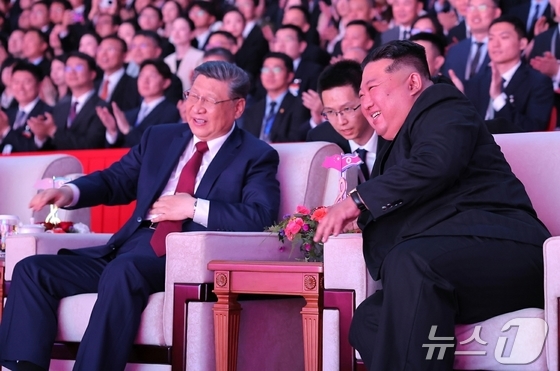
During the summit, President Xi and Kim exchanged support on issues crucial to their core interests.
Notably, President Xi avoided mentioning North Korea’s nuclear issue or denuclearization, sensitive topics for South Korea and the U.S. North Korean state media reports even omitted the word nuclear.
Nevertheless, references to military cooperation indicated that North Korea’s military strength benefits China’s national interests, suggesting China’s tacit acceptance of North Korea’s nuclear capabilities.
Given North Korea’s rejection of dialogue with the U.S. while demanding recognition as a nuclear state, China’s gesture may also aim to emphasize its greater influence over North Korea.
Kim publicly supported China’s One China principle regarding Taiwan, significantly raising the possibility of North Korea’s involvement in potential U.S.-China conflicts over Taiwan.
This sharing of core interests suggests North Korea and China are forming a joint front against the U.S.
Professor Lim explained that with North Korea promoting its nuclear power status constitutionally, China’s intentional silence effectively acknowledges North Korea’s nuclear status.
He further interpreted China’s explicit declaration to enhance military exchanges as indicating a significant shift from the previous stance of denuclearization on the Korean Peninsula.