One of the most frequently used words to describe North Korean defectors is settlement. However, Mr. Lee (36) found himself pondering this term for quite some time.
On the day of the interview, he rushed into the café, apologizing for being late due to an extended meeting. His demeanor was indistinguishable from any other office worker. Working at a bank in Seoul’s Eunpyeong district, he handles corporate loans and international remittances. As a husband of nine years and a soon-to-be homeowner awaiting his new apartment, he appears to have seamlessly integrated into South Korean society.
Yet, he hesitates to label himself as settled.
Settlement is a complex concept, he mused. It probably means establishing oneself as a member of South Korean society, but for Lee, it remains an open question.
The reason behind his struggle with the idea of settlement lies in the family he left behind in North Korea. His mother, relatives, and friends remain in Pyongyang, now unreachable. For Mr. Lee, defecting from North Korea marked both the beginning of a new life and a heart-wrenching farewell to his loved ones.
Rather than starting a new life across the border, he feel as if he simply escaped from his original enclosure, he explained. His mother’s love, his friendships, everything precious to him is still there, while he’s here alone.
He likened himself to an astronaut floating in space. Just as astronauts tether themselves to their spacecraft for safety, Mr. Lee feels an invisible heartstring connecting him to his family in North Korea.
After a decade in South Korea, he has built a stable career and family, and is on the cusp of realizing his dream of homeownership. However, as time passes, the concept of settlement feels increasingly elusive to him.
Mr. Lee joked that maybe it’s because he’s a banker, but after taking out a loan for a down payment, He thought, Doesn’t this mean he’s settled down? His brief chuckle gave way to a more serious tone. Economically, he may have settled, but he’s not sure if his heart has truly found its place.
A Fateful Career Opportunity
Mr. Lee met his wife at an alternative education institution called Banseok School and married at 27, just before starting college. While his wife now has a stable job, back then, finding employment was their top priority, which created a sense of urgency.
Initially considering a career in data analysis, a chance encounter with a bank job posting altered his life’s trajectory.
He diligently prepared for the National Competency Standards (NCS) exam alongside fellow North Korean defectors. According to Mr. Lee, over 30 defectors applied for the position, with only four, including himself, ultimately succeeding.
He received his acceptance notice just before graduating from Chung-Ang University with a degree in Applied Statistics in late 2021, and began his training the following year. Like all new employees, he was assigned to a personal teller position, learning basic tasks such as opening accounts and managing Automated Teller Machine (ATM) cash.
Those initial three months, he admitted, were vastly different from what he had envisioned.
The gap between my expectations and reality kept widening, he reflected. He never imagined he’d be sitting at a counter opening accounts. Given his major, he expected work more closely related to his field of study. But what could he do? There weren’t any other options.
For over four years now, he has dedicated himself to his duties. His workday begins at 8:00 a.m., and although the bank closes at 4:00 p.m., he often works late. After hours, he enjoys walking with his daughter and their dog, a routine that has become a cherished part of his day.
The Challenge of Fatherhood Surpasses Career Hurdles
Surprisingly, when Mr. Lee reflects on his most significant challenges, he doesn’t mention job hunting or workplace adaptation. Instead, he points to the process of welcoming his daughter, who had suffered abuse in China, into their family.
After marrying, he and his wife brought a nine-year-old girl from a Chinese facility to South Korea. Speaking only Chinese, she was thrust into a foreign language and culture, carrying deep emotional scars from her childhood. Mr. Lee empathized, speculating that she must have felt abandoned by the world.
During her tumultuous teenage years, when she would angrily question why they brought her to Korea and express desires to return to China, Mr. Lee found himself struggling with depression. Yet, he never regretted their decision to bring her into their family. Instead, this experience taught him the profound weight of responsibility that comes with caring for another life.
Recently, he’s been making efforts to respect his daughter’s choices.
In the past, Lee though he was overly attached to her out of a sense of duty, he admitted. Now, he can tell her, It’s your life. When you’re an adult, you can choose your path. This isn’t because he loves her any less, but because he recognize she needs to live her own life.
Mr. Lee explained that there was a clear rationale behind his decision to adopt the child.
He learned that the girl’s mother had been an orphan in North Korea and was subsequently sold in China. He feared that this cycle of hardship would be passed down to her daughter, and I felt compelled to intervene.
He believes that becoming a family is a natural process that takes time. His daughter has provided him with profound insights since he became a parent.
The Power of Human Connections
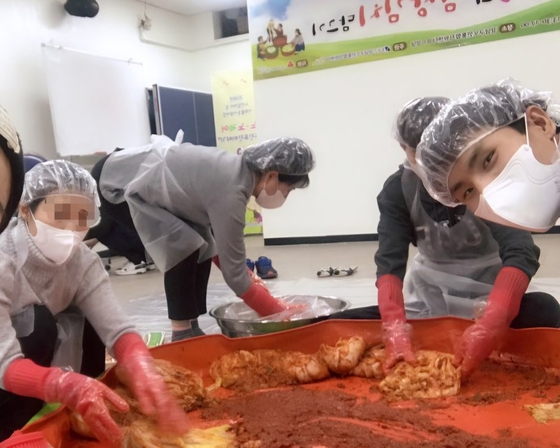
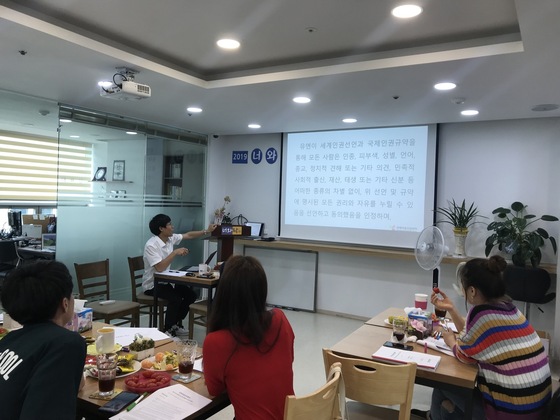
During his college years, Mr. Lee helped establish a volunteer group with fellow North Korean youth from his alternative school. They participated in various community service activities, from wildfire recovery efforts to visiting the elderly and supporting multicultural families. While unable to provide financial support, he was confident in his physical abilities and sought opportunities to contribute wherever he could.
The motivation behind their three-year commitment was straightforward.
Mr. Lee felt immense gratitude towards Korean society, he explained. He was thankful to the Korean people and the government. Feeling that he had received so much, he wanted to give back to society. It was this simple thought that drove him to volunteer.
Recalling that period with a smile, he added that he was brimming with enthusiasm back then. When the conversation turned to the people he’s met in Korea, his expression brightened noticeably. Asked about the most memorable individuals from his decade in Korea, he mentioned two: a businessman who facilitated his journey to Korea and an unnamed taxi driver.
After defecting and while staying in Qingdao, China, a Korean businessman helped him navigate the process of coming to South Korea. This individual connected Mr. Lee with the Korean embassy and provided him with food and shelter for over a month.
However, an unexpected turn of events occurred shortly after his arrival in Korea. The businessman, claiming financial need, received part of Mr. Lee’s settlement support funds and then cut off contact. Mr. Lee still grapples with whether this person was a savior or a con artist, but regards him as someone who provided both his greatest help and his biggest shock.
Although he still struggles to understand that experience, he harbors no resentment. He acknowledges encountering both kind and questionable individuals, but believes he has persevered thanks to the people he’s met along the way.
A taxi driver he encountered shortly after arriving in Korea left an entirely different, positive impression.
When he mentioned he was from North Korea, he was refused to charge for the ride, Mr. Lee recalled. The driver said, Welcome, and he hope Mr. Lee live well here. That simple gesture has stayed with me all these years.
Though brief, the warmth of that encounter has endured. Thanks to that driver, he reflected, He thinks he’s managed to maintain his gratitude towards Korean society. His memories are a mix of kindness and betrayal, warmth and disappointment, but he has ultimately retained his faith in people. He strives to remember the help he has received.
As the interview concluded, he inquired about his future plans. His answer was surprisingly straightforward.
Health, he replied without hesitation. After a decade here, Mr. Lee realized that physical well-being is paramount. If he’s healthy, he can protect his family and have the energy to face life’s challenges.
While he feels it’s premature to speak of complete settlement, the pillars that sustain his current life are clear: his loving family, the people around him, and the emotional ties he still holds to his past.