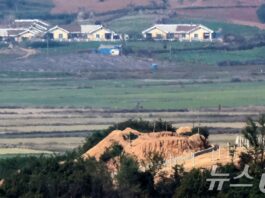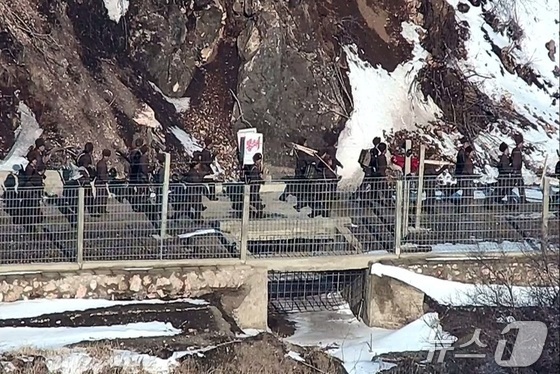
On Monday, a suspected landmine explosion occurred near the Military Demarcation Line (MDL) within the Demilitarized Zone (DMZ) on the western front. This incident took place amid North Korea’s ongoing border fortification efforts near the MDL, following its recent characterization of inter-Korean relations as those between hostile states.
Intelligence reports confirm that North Korea has been planting landmines in close proximity to the blast site, raising suspicions of potential North Korean involvement. If these suspicions are confirmed, it could lead to a significant escalation in tensions, possibly resulting in military confrontation between North and South Korea. This has sparked serious concerns as of September 22.
North Korean Operations Near Search Area: Possible Deliberate Action?
The South Korean military is investigating the incident with an open mind, considering all possibilities regarding the origin of the explosive device. They are prioritizing site security while developing plans to recover debris for analysis.
Colonel Jang Do-young, spokesperson for the Joint Chiefs of Staff, stated during a regular Defense Ministry briefing that South Korean forces had identified terrain alterations by North Korean troops near the MDL. As a result, they requested a field investigation by the United Nations Command (UNC), scheduled for early next week. Col. Jang explained that yesterday’s DMZ operation was aimed at preparing the ground for the UNC’s investigation by clearing search routes.
This indicates that the operation’s objective was to explore previously unused terrain. It also suggests that our forces may not have had complete intelligence about potential hazards in the area before commencing the operation.
Col. Jang further detailed that the troops were using mine detectors to clear a search route when the suspected landmine detonated. He added that the incident occurred in close proximity to the MDL. It plans to conduct a swift on-site investigation in cooperation with the UNC once safety is assured to determine the exact location and cause of the explosion.
Prior to the incident, approximately ten personnel from the Army’s 25th Division reconnaissance unit and associated engineering corps entered the DMZ to begin clearing a new search route. The explosion occurred around 10:50 a.m. (KST), injuring three military officers, including the reconnaissance battalion commander (lieutenant colonel) who sustained severe injuries. The commander has undergone surgery and is currently receiving treatment.
This incident has heightened suspicions of North Korean involvement, particularly given that it occurred while North Korea has been engaged in border fortification activities near the MDL since April 2024, following its December 2023 declaration of inter-Korean relations as those between hostile states.
Reports indicate that North Korea has violated the MDL over 20 times in the past month during these operations, including instances of armed incursions.
Furthermore, there are claims that North Korea recently planted mines on the southern side of the MDL near the area of the South Korean operation. This raises the possibility that North Korea may have had prior knowledge of the South’s plans or preemptively laid mines in anticipation of such activities.
Painful Memories of the Wooden Box Mine Provocation 11 Years Ago: A Potential Game-Changer if North Korean Involvement is Confirmed
The most notable instance of South Korean troops falling victim to North Korean landmines in the DMZ occurred 11 years ago on the western front, known as the wooden box mine provocation.
In August 2015, during President Park Geun-hye’s administration, two South Korean Army non-commissioned officers conducting a patrol in the western DMZ suffered severe injuries, including lost limbs, after stepping on mines secretly planted by North Korean forces. A joint investigation by the South Korean Joint Chiefs of Staff and the UNC Military Armistice Commission’s special investigation team analyzed explosive remnants, including steel springs, confirming the mines were of North Korean origin.
The investigation revealed that North Korean forces had covertly approached the gate used by South Korean patrols to enter the DMZ search area and deliberately planted mines on both sides, clearly demonstrating intent. This evidence played a crucial role in North Korea’s tacit admission of responsibility during subsequent emergency negotiations to defuse the crisis.
The military is now considering all possibilities, including deliberate mine-laying by North Korean forces, old North Korean mines or displaced mines, and the potential for lost or detonated South Korean mines. They plan to form a joint investigation team with the UNC to recover explosive remnants and determine the specific circumstances of the incident.
If this incident is confirmed to be a North Korean action, similar to the event 11 years ago, it could lead to a dramatic shift in inter-Korean relations, potentially escalating to military conflict. However, given that the area in question has not been regularly used as a South Korean patrol route for an extended period, even if the investigation reveals the explosives to be North Korean mines, the likelihood of North Korea admitting to the operation remains low.