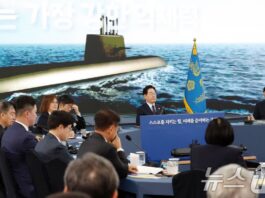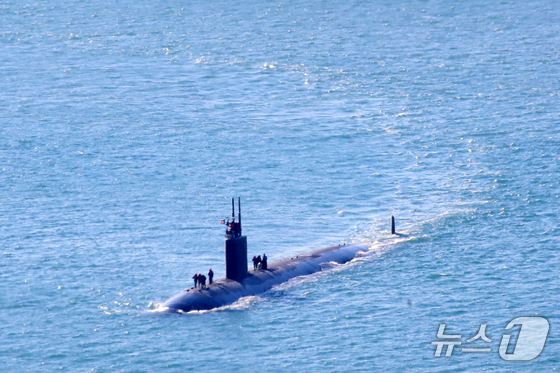
Military experts emphasize the critical importance of rapidly securing bipartisan support from the U.S. Congress and political circles to advance U.S.-South Korea cooperation on developing Korean nuclear-powered submarines.
In a report titled “Issues and Strategies for U.S.-South Korea Collaboration in Nuclear Submarine (SSN) Construction,” released on Tuesday, Dr. Hong Woo Taek, a senior researcher at the Korea Institute for Defense Analyses (KIDA), outlined this perspective.
Dr. Hong stressed that beyond revising the U.S.-South Korea nuclear agreement and navigating export reviews under the International Traffic in Arms Regulations (ITAR) and the Nuclear Non-Proliferation Act (NNPA), gaining support from Congress and establishing clear joint principles are crucial for the successful acquisition of nuclear submarines.
He pointed out that if legal documents for the nuclear submarine project are drafted, the U.S. President must submit the revised nuclear agreement and a Non-Proliferation Assessment Statement (NPAS) to Congress for review by the House and Senate Foreign Relations Committees, and added that any congressional doubts about South Korea’s non-proliferation commitment could significantly delay export approvals.
Dr. Hong noted that the political sensitivity surrounding nuclear technology varies depending on propulsion fuel types, and said Congress will likely demand documentation proving the fuel’s non-weaponization potential. He also said agreements must clearly outline IAEA verification protocols, transfer restrictions, and usage limitations.
To garner bipartisan support, he emphasized the need for early engagement with relevant committees and for highlighting the potential for job creation in key districts. Dr. Hong recommended preparing briefs for military, diplomatic, energy, and appropriations committees, demonstrating how the project enhances deterrence against North Korea while benefiting the U.S. economy.
He warned that without a compelling case for U.S. job creation, bipartisan support will be elusive and noted that potential job losses in congressional districts could become a significant political liability.
Dr. Hong also stressed the importance of developing contingency plans in case internal U.S. issues deprioritize the South Korean submarine project. He cautioned that prolonged delays in technology transfers or shifts in administrative guidelines could effectively stall the initiative indefinitely.
To mitigate these risks, he suggested including clauses in future agreements that trigger automatic alternative procurement and cost-sharing adjustments if delays exceed specified timeframes. He also recommended securing dedicated sponsor lines within both parties to ensure ongoing congressional oversight and support for the project.