A report released on Friday suggests that the National Defense Strategy (NDS) of Donald Trump’s potential second administration, expected to be unveiled by the end of the year, will likely prioritize countering China over homeland defense.
According to a study titled “U.S. Defense Strategy: Balancing Homeland Defense and China Containment – Implications for Regional Security” by Korea Institute for Defense Analyses (KIDA) researcher Kwon Bo Ram, the Trump administration appears to be tempering its strategic competition with China while emphasizing domestic security measures such as deportations and border control, alongside ongoing trade negotiations.
Some analysts worry that if the forthcoming NDS shifts its primary focus to homeland defense, it could lead to a less robust U.S. response to North Korean threats during a potential crisis on the Korean Peninsula.
Kwon, however, argues that the strategy to counter China outlined in the NDS is more likely to be implemented with a staggered approach and varying levels of intensity rather than being significantly weakened.
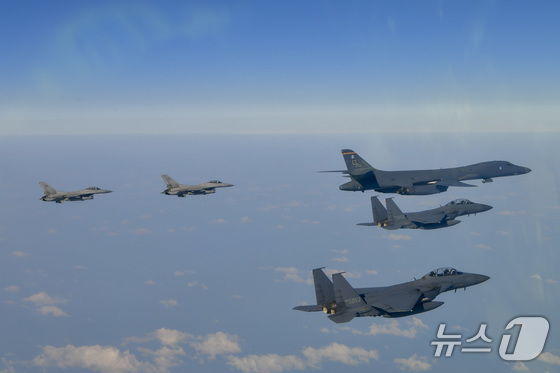
He points out that recent developments, including the establishment of a new integrated command with Japan, expanded U.S. military access in the Philippines, and the Quad security dialogue involving the United States, Japan, Australia, and India, are all aimed at countering China’s influence. Kwon notes that the enhancement of military capabilities on the Korean Peninsula, such as the deployment of indirect-fire defense systems similar to Iron Dome, the latest Athena-R reconnaissance aircraft, and the creation of an MQ-9 Reaper expeditionary reconnaissance battalion, serves a dual purpose: deterring both North Korea and China.
Kwon emphasizes that while the 2018 NDS from Trump’s first term included provisions for homeland defense against enemy attacks, it was also significant for formally acknowledging strategic competition with China, marking a pivotal shift in U.S. defense policy.
He asserts that the United States continues to prioritize the Indo-Pacific theater, allocating resources primarily for countering China while dedicating only the remaining assets to European defense.
Given the likelihood that the United States will pursue a broader concept of homeland defense that assumes an expanded role for allies, Kwon advises that South Korea should proactively seek ways to contribute to regional stability and security in preparation for this strategic shift.
Kwon notes that the recent U.S.–South Korea Security Consultative Meeting (SCM) joint statement omitted language about maintaining current U.S. Forces Korea troop levels while including references to strategic flexibility. He argues that this change signals an increased emphasis on the regional role of the U.S.–South Korea alliance and suggests that South Korea should take advantage of opportunities, including pursuing approval for nuclear-powered submarines, to assume a more prominent role in defending the Korean Peninsula.