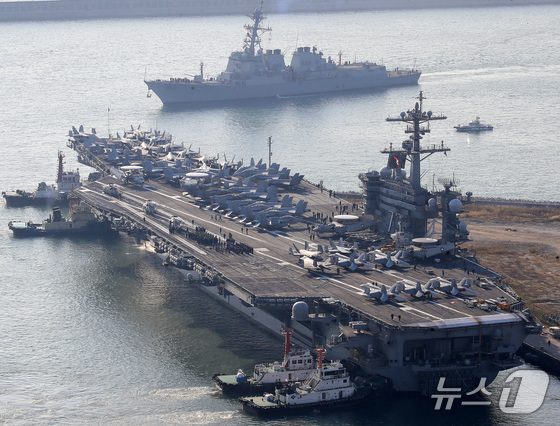
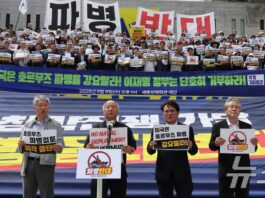
On January 23, the Donald Trump administration unveiled a new National Defense Strategy (NDS) that prioritizes defending the U.S. homeland and safeguarding interests across the Western Hemisphere as the primary objectives for military operations.
The strategy also clearly outlines the goal of deterring China in the Indo-Pacific region and emphasizes that South Korea and the North Atlantic Treaty Organization (NATO) allies must assume greater responsibilities in regional security.
In the 2026 NDS, the Pentagon stated it would vigorously protect U.S. interests not only on American soil but throughout the Western Hemisphere. The document specifically highlighted the strategic importance of securing military and commercial access to Greenland, the Panama Canal, and the Gulf of Mexico.
Regarding its approach toward China in the Indo-Pacific, the Defense Department emphasized enhancing communication with the People’s Liberation Army (PLA) while supporting strategic stability with Beijing and overall conflict de-escalation. However, it stressed the need to maintain a pragmatic view of the pace, scale, and quality of China’s military expansion.
The Pentagon clarified that its aim is not to dominate, pressure, or humiliate China. Rather, our objective is straightforward: to ensure that no entity, including China, can dominate us or its allies.
The strategy outlines plans to establish a robust defensive system along the First Island Chain, encompassing Okinawa, Taiwan, and the Philippines.
The Defense Department asserted that it will urge and support key regional allies and partners to increase their efforts for its collective defense, stating this approach aligns with President Trump’s vision of peace through strength in the Indo-Pacific region.
The Pentagon explained that its strategy is not isolationist; as the National Security Strategy (NSS) indicates, it’s a targeted engagement strategy clearly focused on advancing tangible American interests abroad.
It also noted that from an America First and common-sense perspective, while the allies and partners play crucial roles, they must move beyond past dependence on the U.S. The document added that as the Department of Defense (DoD) prioritizes homeland defense and China deterrence, other threats will persist, requiring allies to respond to all such challenges.
The Pentagon assessed China as the world’s second most powerful nation after the U.S., emphasizing that the pace, scale, and quality of China’s unprecedented military buildup are self-evident and critically important to U.S. national interests.
Regarding Russia, the strategy stated it will remain a persistent but manageable threat to NATO’s eastern members for the foreseeable future. It acknowledged that despite demographic and economic challenges, Russia’s ongoing war in Ukraine demonstrates its significant military and industrial capabilities.
The document cautioned that while Russia’s military threats primarily target Eastern Europe, it possesses the world’s largest nuclear arsenal. Moscow continues to modernize and diversify this arsenal, maintaining capabilities to strike the U.S. homeland, including nuclear submarines and advanced space and cyber capabilities.
The Pentagon expressed confidence that NATO allies are significantly stronger than Russia, noting that Germany’s economy alone dwarfs that of Russia.
It emphasized that NATO allies are well-positioned to lead Europe’s conventional defense, including spearheading support for Ukraine’s defense, while receiving crucial but limited U.S. backing.
The strategy stated that the Ukraine conflict must be resolved, but as President Trump stressed, this is primarily Europe’s responsibility. NATO allies’ leadership and commitment are vital for securing and maintaining peace.
On Iran, the document noted that despite recent setbacks, Tehran shows determination to rebuild its conventional military power and keeps the option of pursuing nuclear weapons open.
In Africa, the strategy highlighted that the top priority is preventing exploitation by Islamic extremists.
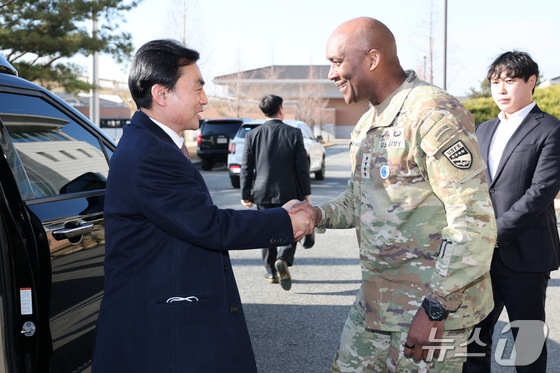
Regarding the Korean Peninsula, the Pentagon stated that South Korea possesses robust military capabilities due to high defense spending, a strong defense industry, and conscription. It can take primary responsibility for deterring North Korea with important but more limited U.S. support.
The document continued that South Korea has the resolve to do so, facing direct and clear threats from North Korea. It noted that this shift in responsibility aligns with U.S. interests in bolstering military readiness on the peninsula. This suggests an expanded role for South Korea in deterring North Korea, raising questions about potential changes to the current 28,500 U.S. troops stationed there.
The NDS also identified strengthening the U.S. defense industrial base as a key objective. The Pentagon stated that as the world’s premier arms producer, it must reclaim its status and capability to produce at scale, rapidly, and with the highest quality for ourselves and the allies. It outlined plans for defense investments, integrating advanced technologies like artificial intelligence (AI), and streamlining regulations.
The strategy added that it will also leverage the allies’ and partners’ production capabilities to meet the needs. The U.S. is collaborating with South Korea and Japan to enhance its naval power, addressing challenges in its diminished shipbuilding capacity.
This NDS serves as a follow-up to the NSS released by the White House in December. New administrations typically issue the NDS to establish defense priorities based on the NSS.
Compared to the 2022 strategy of the Joe Biden administration, this NDS shifts focus from broad global threat response alongside allies to concentrating on the most critical threats while expanding allies’ security responsibilities in other regions.
The NDS is expected to be a crucial reference point for future discussions on U.S. force deployments, alliance policies, defense spending, and burden-sharing.