

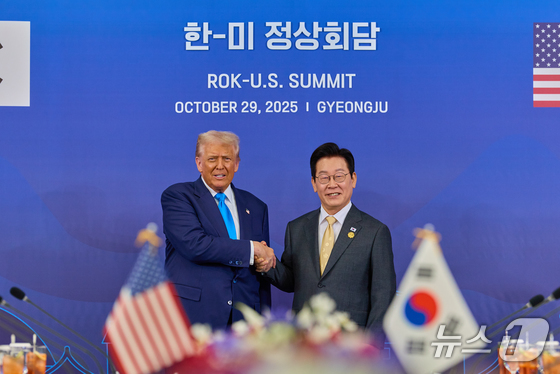
President Donald Trump’s announced 25% tariff increase is moving towards official implementation. While our government’s diplomatic and trade officials are working tirelessly, pessimistic forecasts suggest they may struggle to prevent its publication in the Federal Register.
As the U.S. has openly expressed dissatisfaction over investment delays, the National Assembly is likely to face criticism for postponing the special law on U.S. investments. This may explain why both parties are now accelerating efforts to process this legislation.
The White House is divided between hardliners and negotiators regarding the response to the impending tariff increase, intensifying President Lee Jae Myung’s dilemma.
According to government sources on Friday, the Trump administration is preparing to publish a notice in the Federal Register that includes raising tariffs on Korean imports from 15% to 25%.
Yeo Han Ku, head of the Trade Negotiation Office under the Ministry of Trade, Industry, and Energy, made an urgent visit to the U.S. for consultations. He met with Deputy USTR Rick Switzer for over two hours, rather than with USTR Representative Jamieson Greer. Yeo only stated that they had an in-depth discussion.
The State Department also remained tight-lipped about whether tariff negotiations were discussed during Tuesday’s meeting between Secretary of State Marco Rubio and Minister Cho Hyun in Washington, D.C., suggesting difficulties in the talks.
The ruling and opposition parties have finally reached a belated agreement on the special law for U.S. investments, setting a one-month timeline for processing.
The U.S. has questioned whether the delay in processing this law stems from our government’s lack of commitment to investment. They are particularly dissatisfied with the swift handling of amendments to the Information and Communications Network Act and the promotion of the Online Platform Act, which could disadvantage American companies, while the special law on U.S. investments remains stalled.
As discussions about responsibility for the tariff increase intensified, the National Assembly belatedly initiated talks on processing the bill. The People Power Party has opposed the special law, arguing that it requires ratification by the National Assembly. The ruling Democratic Party, despite its majority, cites the opposition’s chairmanship of the National Assembly’s Planning and Finance Committee as a reason for delays.
However, on Wednesday, the government and both parties agreed on a timeline for processing the special law. They plan to form a special committee on the 9th, aiming to reach a consensus within a month. Consequently, the special law is expected to be voted on by the 9th of next month at the latest.
As the special law’s processing becomes clearer, the White House is expected to intensify negotiations with the U.S. However, internal divisions over negotiation strategies suggest that some coordination will be necessary.
The policy office leading the tariff negotiations believes that our government should not maintain a submissive stance, asserting that we should not be swayed by President Trump’s characteristic tough pressure, given the existence of an agreed-upon fact sheet.
Conversely, the National Security Office advocates for a conciliatory approach, considering the broader implications for ongoing security negotiations beyond short-term tariff talks.
A White House official said that while there are various negotiation strategies, the president ultimately makes the final decision and added that the administration would do its utmost to advance national interests.