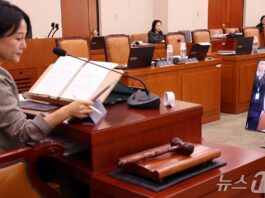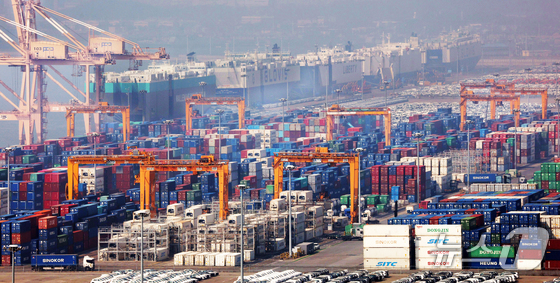
The U.S. has initiated a Section 301 investigation targeting major trading partners, including South Korea. However, on Thursday, the South Korean National Assembly passed a special investment bill aimed at the U.S., and the first investment project is taking shape. This development suggests that the likelihood of this investigation leading to increased tariffs on South Korea may diminish.
Trade experts advise that with the passage of the special investment bill, South Korea should swiftly identify and finalize its first investment project to minimize the possibility of additional tariffs related to this investigation.
U.S. Reopens Section 301 Probe… Unlimited Tariffs Loom in July
U.S. Trade Representative (USTR) Jamieson Greer announced on Wednesday that the investigation has begun against 16 economic entities, including South Korea, China, Japan, and the European Union (EU), as well as Singapore, Switzerland, Norway, Indonesia, Malaysia, Cambodia, Thailand, Vietnam, Taiwan, Bangladesh, Mexico, and India.
USTR Greer also revealed plans to initiate a separate Section 301 investigation regarding the import ban on goods produced through forced labor.
Section 301, established in 1974, allows the U.S. to investigate the impact of foreign government policies or practices deemed unreasonable or discriminatory on American commerce and to impose tariffs or other measures in response. The investigation can lead to broad tariffs on items beyond those directly investigated.
This latest investigation is seen as the Donald Trump administration’s alternative measure to maintain tariffs after the U.S. Supreme Court invalidated the country-specific mutual tariffs and the so-called fentanyl tariffs.
The U.S. plans to complete its investigation process by this summer, following public comments and hearings. While such investigations typically take over a year, President Trump has indicated he wants to shorten the timeline to about five months.
This approach takes into account that the global tariffs imposed under Section 122, following the Supreme Court’s ruling, can only be maintained without congressional approval for a maximum of 150 days (until July 24).
The Trump administration activated these tariffs at a 10% rate on February 24, mentioning the possibility of increasing them to the cap of 15%, but has not provided further updates since then.
Consequently, the U.S. administration appears to be considering plans to conclude the Section 301 investigation before the global tariffs expire on July 24 and introduce new tariff measures based on its findings.
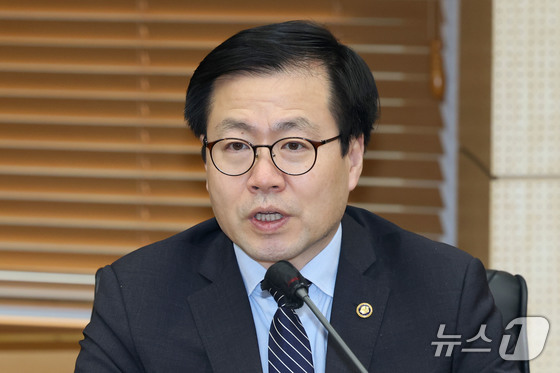
Trade Minister: Section 301 Aimed at Preserving Existing Trade Deal
The government believes that the possibility of additional increases beyond the agreed 15% mutual tariffs is low, especially after the passage of the special investment bill in the National Assembly, which addresses the legislative delay highlighted by President Trump.
Yeo Han-koo, head of the Ministry of Trade, Industry and Energy’s Trade Bureau, held an emergency briefing at the Sejong Government Complex regarding the resumption of the U.S. Section 301 investigation. He explained that the measures announced today (in the U.S.) Target excess supply in the manufacturing sector and are not specifically aimed at South Korea, adding that the investigation intends to address structural factors across all 16 countries.
He further noted that following the Supreme Court’s ruling, the U.S. government’s goal is to preserve existing trade deals as much as possible, using alternative legal measures to restore tariff levels that existed before the ruling.
Trade experts share similar views. Jang Sang-sik, head of the International Trade and Commerce Research Institute at the Korea International Trade Association, told News1 that the Section 301 investigation primarily serves as a tool for negotiation pressure. He emphasized that in a situation where South Korea is systematically supporting expanded investments in the U.S. and actual investment projects are becoming visible, the U.S. may have less incentive to choose stringent tariff measures, urging swift identification and selection of investment projects.
Professor Heo Yoon from Sogang University’s Graduate School of International Studies also commented that given the significant role of South Korean companies in supply chains and industrial investments that the U.S. views as strategically important, it would be challenging to adopt policies that damage this cooperative relationship. He suggested that publicly unveiling specific U.S. investment projects could help mitigate trade conflict risks.
He further advised that to prevent the Section 301 investigation from expanding into additional tariffs or non-tariff barriers, it is crucial to faithfully implement existing agreements between South Korea and the U.S. and to expand strategic investment cooperation. With the establishment of an investment agency and investment committee through the special investment bill, he stressed the need for proactive promotion of strategic investment projects with the U.S.
Given South Korea’s trade structure, experts believe it is unlikely that the U.S. will determine that South Korea has engaged in serious unfair trade practices regarding certain exports like semiconductors, automobiles, and steel, resulting in higher tariffs compared to countries like Japan or the EU.
Professor Heo assessed that the situation involves multiple countries facing tariff pressures simultaneously, suggesting that the immediate economic impact on South Korea is likely to be limited.
However, concerns remain regarding the lack of upper limits on the scope of tariffs applied in the Section 301 investigation and the broad criteria involved.
Aware of this, Yeo stated that it will ensure that the balance of benefits agreed upon by South Korea and the U.S. last year is maintained, and that it receives treatment that is not disadvantageous compared to major competing countries in terms of exports. He added that during the investigation discussions, South Korea would explain how its trade surplus contributes to the rebuilding of U.S. manufacturing through statistics and logic.
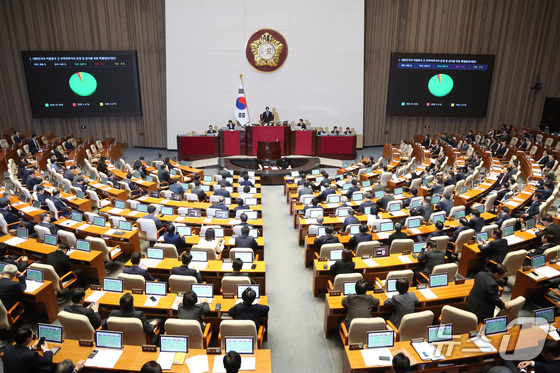
Trade Experts Warn Pressure Could Broaden… Stress Need for Talks
Experts warn of the potential for the scope of trade pressure to expand, emphasizing the importance of ongoing consultations. They advise that the government must remain proactive in its responses, as the U.S. may raise various trade issues such as digital regulations or non-tariff barriers during the investigation process.
Director Jang Sang-sik predicts that the U.S. may broaden its trade pressure to include issues beyond existing tariffs and non-tariff barriers, such as overproduction, subsidies, state-owned enterprises, and financial and currency issues.
Professor Heo also noted the possibility that the U.S. could raise other trade issues in the future, such as digital services, pharmaceutical pricing systems, and agricultural market access. He stressed the need for South Korea to leverage its investment cooperation with the U.S. as a unique negotiating card compared to other countries.