

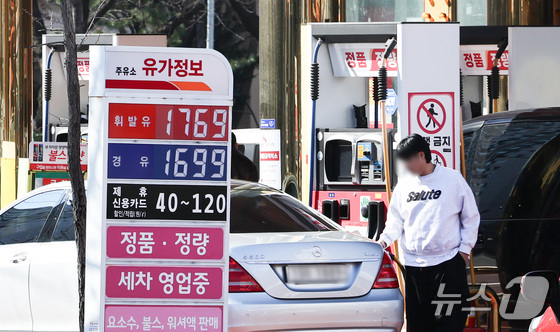
A recent analysis suggests that a 10% increase in global oil prices could lead to a 0.71% rise in production costs across the manufacturing sector.
The Korea Institute for Industrial Economics and Trade (KIET) released a report on Monday titled, The Ripple Effects of the U.S.-Iran Conflict and Its Impact on South Korea, which examines how disruptions in the energy supply chain could affect manufacturing costs in the country.
The report indicates that the petroleum products sector would face the steepest cost increase at 6.3%. Other industries expected to experience significant cost pressures include chemical products (1.59%), rubber and plastic goods (0.46%), other transportation equipment (0.2%), miscellaneous manufactured items (0.19%), food and beverages (0.15%), automobiles (0.14%), steel (0.08%), and semiconductors (0.05%).
Dubai crude, a benchmark for international oil prices, has skyrocketed by over 40%, jumping from about 72 USD per barrel before the conflict to around 103 USD. South Korea’s heavy reliance on Middle Eastern oil, which accounts for more than 70% of its crude imports and is primarily shipped through the Strait of Hormuz, makes it particularly vulnerable to cost pressures as tensions in the region escalate.
Experts caution that this surge in production costs could have a detrimental effect on South Korea’s economic growth, potentially leading to increased imports, a deteriorating trade balance, and inflation that could dampen domestic spending.
The Institute had previously forecast the country’s economic growth rate at approximately 1.9% for the year. However, in light of the sharp increase in oil prices and growing supply chain uncertainties, they acknowledge the possibility of revising this projection downward. Their initial analysis was based on oil prices ranging from 60 to 65 USD per barrel.
Researchers warn that the rising production costs triggered by higher oil prices could exacerbate global inflation and potentially usher in a period of stagflation, characterized by economic stagnation coupled with rising prices.
The report notes that while South Korea’s direct trade exposure to the Middle East is relatively limited, there are concerns about the broader economic implications of sustained high oil prices, supply chain disruptions, and a global economic slowdown.
The researchers emphasize that although it’s challenging to predict the duration and full impact of the conflict, South Korea must prepare for worst-case scenarios given its high dependence on Middle Eastern energy sources.
To mitigate potential risks, the report recommends several strategies, including diversifying energy and raw material sources beyond the Middle East for crude oil and liquefied natural gas (LNG), strategically utilizing government and private sector oil reserves, and establishing a collaborative procurement system involving government agencies, public enterprises, and private companies.