

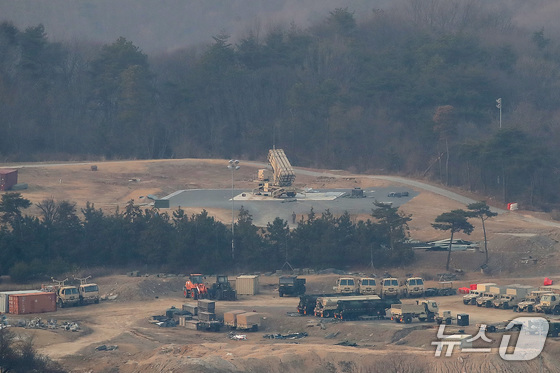
Concerns have been raised in the U.S. Congress about a potential defense gap in South Korea following discussions about redeploying the Terminal High Altitude Area Defense (THAAD) system to the Middle East.
During a hearing on defense exports on Tuesday, Rep. Ami Bera (D-CA), the ranking member of the House Foreign Affairs Subcommittee on East Asia and the Pacific, expressed deep concern over the issue. He stated that he intends to inquire about the redeployment of THAAD batteries from the Korean Peninsula, especially given North Korea’s ongoing provocations.
Bera pressed further, saying that while he understands the need to redeploy THAAD batteries to safeguard U.S. assets in the Middle East, he’d like clarification on whether this is a temporary or permanent measure.
He also requested information on plans to reinforce South Korea’s defense capabilities and readiness posture in the future.
In response, Michael Duffy, Deputy Assistant Secretary of Defense for Acquisition and Sustainment, admitted that he’s not privy to the specifics of asset redeployment timelines and can’t comment on that directly.
However, Duffy emphasized that the ability to flexibly redeploy assets to address the most critical global needs is a significant advantage of the defense system.
He affirmed that it remains fully committed to the alliance with South Korea and to providing all possible capabilities.
Duffy added that the Department of Defense plans to expand its industrial base to enhance weapon acquisition capabilities, ensuring readiness for global deployment when necessary.
These statements come amid U.S. media reports that some THAAD batteries have been moved to the Middle East to counter potential Iranian drone and ballistic missile threats.
Addressing the issue on March 10, President Lee Jae Myung acknowledged that while it opposes the withdrawal of U.S. air defense assets from South Korea based on their military needs, it must also recognizes that it can’t entirely dictate these decisions. Nevertheless, this doesn’t significantly compromise the deterrence strategy against North Korea.