

The upcoming U.S.-Japan summit on March 19 is expected to be a critical juncture that could shape the South Korean government’s stance on President Donald Trump’s call for naval deployment to the Strait of Hormuz.
On March 14, Trump took to social media, naming five countries—South Korea, China, Japan, the United Kingdom, and France—in his request for warships in the strategic waterway. He expanded the list to seven nations the following day, though it remains unclear which countries are actively engaged in specific talks.
Trump’s demands have grown increasingly forceful. On Monday, he argued that the U.S. military presence in South Korea for over 40 years justifies Seoul’s participation in the Hormuz mission.
Japan faces similar pressure. While Trump frames the Hormuz operations as a commercial vessel protection mission, many view it as tantamount to entering a conflict zone. This puts Prime Minister Sanae Takaichi in a challenging position as she prepares for her U.S. visit.
Seoul is closely monitoring the U.S.-Japan summit for two key reasons: it may reveal Trump’s true intentions and Japan’s decision could significantly impact South Korea’s own policy.
The South Korean government is treading cautiously, citing the absence of a formal U.S. request as grounds for its measured approach.
Defense Minister Ahn Kyu-back clarified in a National Assembly defense committee meeting that social media messages are not considered official requests. He stated that it has not received any formal requests from the U.S. side. An elaborated that an official request would typically involve document exchanges or ministerial-level discussions, neither of which have occurred.
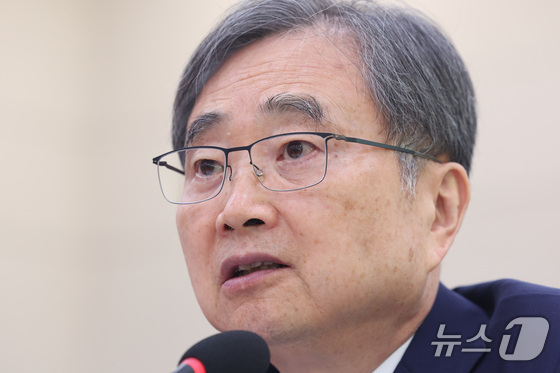
Foreign Minister Cho Hyun noted that recent U.S. statements could be interpreted as either a deployment request or not, highlighting the government’s reluctance to engage in serious deployment discussions despite the U.S. position becoming clearer. However, it’s evident that no in-depth consultations with the U.S. are currently underway.
A subtle disconnect seems to exist between President Trump and his administration. Neither the State Department nor the Pentagon has broached the Hormuz deployment topic with their South Korean counterparts.
Minister Cho’s recent call with U.S. Secretary of State Marco Rubio touched on Hormuz-related cooperation but lacked any mention of an official request. This suggests the U.S. administration may be hesitant to fully implement Trump’s policy, which places a heavy burden on allies.
The Trump-Takaichi meeting is drawing increased attention. If Trump reiterates his deployment request and Takaichi responds positively, it could pressure South Korea to maintain trilateral cooperation with the U.S. and Japan.
The Asahi Shimbun reported on Tuesday that Japan is considering deploying Self-Defense Forces to the Strait of Hormuz. The Japanese government has not denied this report.
Experts advise that Seoul should manage the situation without rushing to either fully support or reject Trump’s request. Some suggest using the required National Assembly approval process and deployment preparation time as diplomatic leverage with the U.S.
Professor Park Won-gon of Ewha Womans University stated that it doesn’t need to take the initiative, adding that following proper procedures upon receiving an official request would be timely enough. He emphasized the importance of maintaining flexibility while showing goodwill towards the U.S.