The inter-governmental consultations between South Korea and the U.S. for the introduction of Korean nuclear-powered submarines and the revision or modification of the nuclear agreement have not even reached the starting line. Although both countries planned to begin full-scale discussions earlier this year, the U.S. appears to lack the capacity due to the invalidation of the Donald Trump administration’s tariff policies and the prolonged Middle East crisis.
Some observers on Thursday suggested that if the Middle East situation continues, South Korea might miss the momentum for inter-Korean dialogue following the good North Korea-U.S. dialogue that it desires.
Last November, South Korea and the U.S. announced a joint fact sheet containing agreements between the two leaders and agreed to promptly initiate working-level talks to implement consultations in three major areas: nuclear submarine construction, nuclear energy, and shipbuilding cooperation.
To this end, both countries planned to form government-wide delegations for nuclear submarine and nuclear energy cooperation, with the first consultation set to begin through a visit by the U.S. delegation in early January.
However, the U.S. side became lukewarm about nuclear submarine and nuclear energy consultations, citing delays in passing the Special Act on U.S. Investment for 350 billion USD in U.S. investments and related plan formulation. This pushed the schedule to late February. The situation became more complicated when the U.S. Supreme Court ruled that the Trump administration’s global reciprocal tariff policy, based on the International Emergency Economic Powers Act (IEEPA), was illegal.
As the Trump administration focused on continuing its tariff policy through other means, the schedule for U.S.-Korea nuclear submarine and nuclear energy consultations was pushed to March. Amidst this, the Middle East crisis, triggered by U.S. and Israeli airstrikes on Iran, once again diverted U.S. diplomatic resources away from the Korean Peninsula. As of today, the two countries have not set a specific consultation schedule for nuclear submarine and nuclear energy discussions.
Despite high-level communications earlier this month, including a visit to the U.S. by Lim Gab-soo, the government representative for the U.S.-Korea Nuclear Energy Cooperation Task Force, and a visit to Korea by Michael DeSombre, U.S. Assistant Secretary of State for East Asian and Pacific Affairs, there has been no progress on nuclear submarine and nuclear energy consultations.
A diplomatic source stated that while it can’t pinpoint the Middle East situation as the sole cause, it can’t say it has no impact. However, they’re already prepared for negotiations. This implies that the initiation of full-scale consultations now depends on the U.S. side.
The government had planned to make progress on related consultations before the U.S. congressional elections in November, anticipating that a Republican defeat could impact the Trump administration’s policy momentum. However, this plan now seems likely to face setbacks.
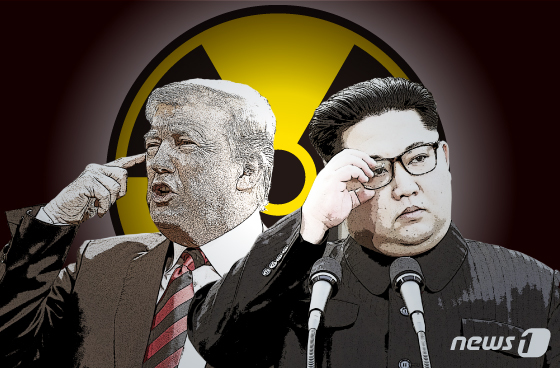
North Korea Nuclear Talks Overshadowed by Middle East Crisis; Korean Peninsula Diplomacy Loses Momentum
Diplomatic circles worry that if U.S. attention isn’t quickly redirected to the Korean Peninsula, it could affect not only the follow-up consultations for implementing the U.S.-Korea joint fact sheet but also the government’s North Korea diplomacy.
While President Trump occasionally expresses interest in U.S.-North Korea dialogue, the U.S. has yet to establish an explicit North Korea policy, such as the National Security Strategy (NSS) or National Defense Strategy (NDS). It has also not appointed a Special Representative for North Korea at the State Department, failing to lay the groundwork for addressing the North Korean nuclear issue. This approach differs significantly from that of Trump’s first administration.
Although Prime Minister Kim Min-seok reported exchanging views on resuming U.S.-North Korea dialogue with President Trump on March 13 and confirmed Trump’s continued interest, there have been no concrete actions from the U.S.
U.S. Senator Andy Kim (D-NJ) pointed out during a press conference at the Capitol in Washington D.C. on Wednesday that during Trump’s first term, we had someone like Stephen Biegun, who had deep expertise in Korean Peninsula issues, serving as Special Representative for North Korea. Now, it doesn’t see such a figure emerging.
With President Trump’s visit to China, initially scheduled for March 31 to April 2, now shortened and postponed to May 14-15 due to the Middle East crisis, the possibility of communication between U.S. and North Korean leaders on this occasion has further diminished.