The U.S.’s decision to classify its Global Posture Review (GPR) report on overseas troop deployments has raised concerns about potential impacts on allied nations, including South Korea. While the U.S. cites the rapidly changing international situation as the reason for non-disclosure, some analysts view this as a push to expand strategic flexibility – a concept centered on the free movement of major U.S. forces stationed abroad.
Allied Security Guidelines GPR to Influence the Size of the U.S. Forces Korea and Whether Combat-Ready Forces are Permanently Stationed
On Friday, U.S. political news outlet Politico reported that the Department of Defense has opted not to release the GPR, which details the status of U.S. troops worldwide. The Pentagon also plans to share only limited information with Congress, which oversees related budget approvals.
The U.S. Department of Defense (DoD) argues that maintaining confidentiality of detailed deployment plans is crucial for operational security and strategic ambiguity. Officials contend that disclosing key details could expose U.S. strategies to competitors like China and Russia. This unusual move to classify the GPR has prompted Congress to explore legislative measures to compel its release.
The GPR outlines the deployment of U.S. assets and personnel abroad, as well as the Pentagon’s foreign policy stance. It’s typically issued during administration changes or significant shifts in U.S. strategic priorities and defense commitments. Congress relies on the GPR when allocating budgets for overseas troop deployments and shaping security policies for European and Asian allies.
For South Korea, where U.S. forces are directly stationed, GPR changes have historically had significant implications for security strategy. The 2004 GPR under the George W. Bush administration introduced the concept of rapid reaction forces, allowing for flexible redeployment of U.S. troops abroad. This marked the emergence of strategic flexibility as a key doctrine.
Following the 2004 GPR announcement, U.S. troop levels in South Korea were reduced from 37,500 to the current 28,500 through base consolidation and overseas deployments, as agreed upon in U.S.-South Korea consultations.
In 2021, the Joe Biden administration developed a new GPR to shift away from Donald Trump-era isolationism and reinforce an alliance-centered approach to countering China. Key details released included force repositioning to enhance Indo-Pacific combat readiness and the permanent stationing of AH-64 Apache attack helicopters and artillery division headquarters in South Korea.
At that time, the GPR indicated no major changes in global U.S. troop deployments. Mara Karlin, then Deputy Assistant Secretary of Defense for Strategy, publicly affirmed that U.S. forces in South Korea remained firm and effective, with no changes to announce.
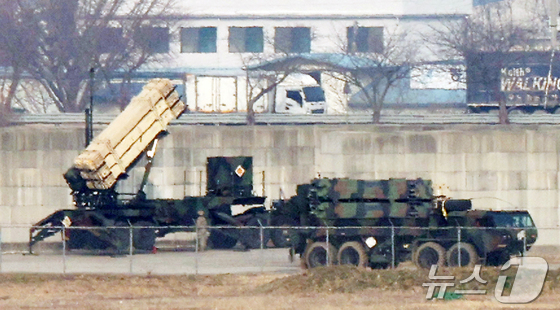
Seems To Factor In Flexible Power Deployment Amid Shifting Global Conditions, Including Potential Conflicts In The Middle East
While the Pentagon cites operational security and strategy protection as reasons for classification, some see this as a continuation of the Trump-era strategic flexibility policy. This approach involved demanding increased defense spending from allies and adjusting troop deployments as needed. The decision to withhold key deployment information aligns with this interpretation.
A recent example of this flexibility occurred in October 2025, when the U.S. temporarily redeployed Patriot missile batteries and Terminal High Altitude Area Defense (THAAD) systems from South Korea to the Middle East. This move was seen as a practical application of U.S.-South Korea strategic flexibility. Similar redeployments are believed to have occurred since February due to ongoing Middle East tensions.
Yang Wook, a researcher at the Asan Institute for Policy Studies, views this as an extension of the strategic flexibility pursued thus far. He suggests that by classifying the GPR, the U.S. aims to maintain strategic ambiguity while enabling allies to lead conventional deterrence efforts in their regions.
Professor Min Jung-hoon of the Korea National Diplomatic Academy notes that given the ongoing Russia-Ukraine war and Middle East conflict, the U.S. appears to be taking a more deliberate approach to military operations. However, he adds that the GPR classification doesn’t fundamentally alter strategic priorities. High-level U.S.-South Korea communications will continue to provide insights into the military situation, so it doesn’t anticipate negative impacts on South Korea’s security, Min concludes.