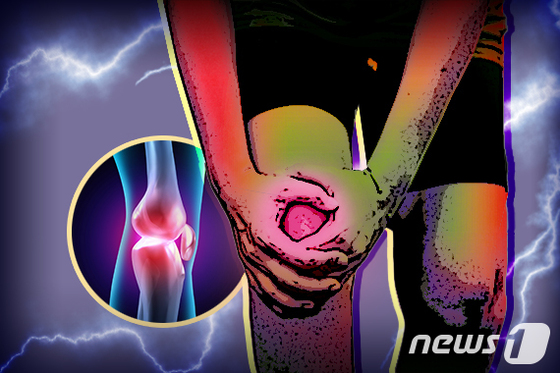
As spring brings warmer weather and increased outdoor activities, many middle-aged and older adults are experiencing knee pain. This discomfort often occurs when joints that have been less active during winter suddenly face increased strain, potentially triggering symptoms of osteoarthritis. Those who regularly feel a dull ache in their knees or experience pain while moving should assess their joint health before engaging in springtime activities.
Ignoring Age-Related Joint Issues Could Lead to Knee Replacement Surgery
According to the medical community on Thursday, the number of arthritis patients tends to increase in the spring. Healthcare statistics show a rise in arthritis patients during spring. According to the Health Insurance Review and Assessment Service, the number of patients seeking arthritis treatment peaked in March 2023 and April 2024. Arthritis, also known as degenerative arthritis, occurs when joint-protecting cartilage is damaged or deteriorates, causing inflammation and pain.
This condition primarily affects weight-bearing joints such as knees, hips, ankles, and the spine, with knee joints being particularly vulnerable. While the incidence increases around age 60, it’s not exclusive to the elderly. Younger individuals with lifestyles that stress joints, those who are obese, or those with a history of joint trauma can also develop the condition.
Degenerative arthritis is classified as either primary or secondary. Primary osteoarthritis results from age-related cartilage degeneration without a specific cause, while secondary osteoarthritis stems from joint structure changes due to trauma or other joint diseases. Obesity significantly increases the risk of knee osteoarthritis due to the added stress on these joints.
Pain is the primary symptom, but many dismiss it as a natural part of aging. This can lead to neglect or reliance on temporary solutions like topical treatments or heat therapy, potentially missing crucial treatment windows. Severe osteoarthritis can cause intense knee pain and joint deformities, drastically reducing quality of life. Chronic pain may also limit outdoor activities, potentially leading to isolation or depression.
Seasonal changes can exacerbate joint pain. Cold weather causes tissues around joints to contract and heightens nerve sensitivity, intensifying pain. The sudden increase in activity during spring, following a winter of reduced movement, can further strain joints. Therefore, as outdoor activities increase, proper knee health management becomes crucial.
Dr. Eom Sang-hyun, director of the Joint Center at Barun Medical Center and an orthopedic specialist, emphasizes that timely treatment is key. Early intervention with medication, cartilage injections, and weight management can improve symptoms significantly. He adds that if conservative treatments prove ineffective and surgery seems imminent, platelet-rich plasma (PRP) injection therapy might be considered. If symptoms persist, knee replacement surgery may be necessary.
To prevent osteoarthritis, consistent strength training is recommended. Muscles work with ligaments to support the skeleton, absorbing shock and stabilizing joints. Decreased muscle mass can worsen joint pain as weakened muscles struggle to support joint weight. Strengthening muscles around joints can alleviate pain and enhance joint stability.
For older adults, simple indoor strength exercises can be beneficial. Those with overall low muscle strength should start with lower body exercises, as 70% of the body’s muscle mass is in the lower body, making it easier to build muscle. Experts recommend exercising for about an hour, three times a week, and consuming protein post-workout. It’s advisable to avoid squatting or kneeling positions when possible.
Professor Jang Gi-mo from Korea University Anam Hospital’s Department of Orthopedics states that while degenerative arthritis is closely tied to aging, early diagnosis and proper treatment can slow its progression and effectively manage pain. He advises to not ignore recurring or worsening knee pain. Consult an orthopedic specialist promptly for an accurate assessment.