

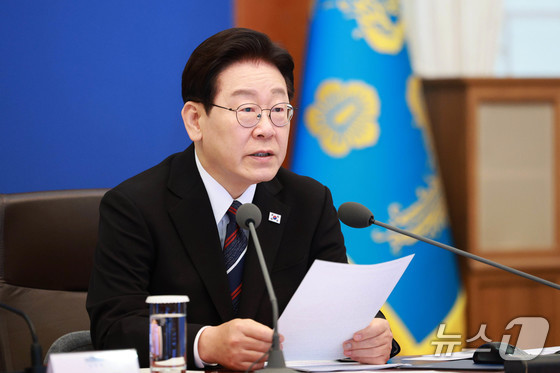
As President Lee Jae Myung’s likely participation in the video summit on Safety of Navigation in the Strait of Hormuz, spearheaded by the UK and France, becomes more probable, the need for advance coordination between South Korea and the U.S. has become apparent.
The meeting, slated for Friday evening in Korean time, will proceed without the involvement of the U.S. and Israel. The UK and France, hosting the conference, have reportedly extended invitations to leaders from 70 to 80 countries.
While the Blue House hasn’t definitively confirmed President Lee’s attendance, they’ve indicated they’re positively considering it, strongly suggesting his participation.
This summit builds on recent diplomatic and military discussions aimed at fostering joint responses among like-minded nations following the de-escalation of tensions in the Strait of Hormuz, led by the UK and France.
On April 2, the UK convened a video conference with foreign ministers from over 40 countries, including South Korea, to explore diplomatic solutions for opening the Strait of Hormuz. Furthermore, on April 7, the UK Joint Operations Command hosted a Military Strategists Conference.
On March 26, France orchestrated a video conference involving military leaders from approximately 35 countries. Jin Young-seung, Chairman of the Joint Chiefs of Staff, represented the South Korean military at this meeting.
These series of meetings emphasize post-war management rather than current military operations. The focus is on restoring the strait’s functionality through defensive missions, including mine clearance, civilian vessel escorts, and establishing navigation protocols.
However, the Trump factor has often been a wildcard in South Korean diplomacy, and President Donald Trump’s absence from this meeting presents a certain challenge for South Korea.
Recently, Trump criticized South Korea, North Atlantic Treaty Organization (NATO), and Japan for not assisting with troop deployments to the Strait of Hormuz, stating to protect your own oil. He also claimed that South Korea, which hosts U.S. forces adjacent to Kim Jong Un’s nuclear-armed regime, hasn’t provided adequate support.
According to international media, including the Wall Street Journal (WSJ), the UK is also mindful of the tensions arising from Trump’s stance.
Need for European Coordination, but Trump Factor Lingers… Calls for Preventive Diplomacy
An expert, speaking on condition of anonymity, stated that South Korea, which emphasizes freedom of navigation, must participate in the meeting due to its direct interest in securing energy transport routes. However, this places South Korea in a delicate diplomatic situation where it must avoid antagonizing the U.S.
In light of this, some analysts suggest the need for preemptive communication with the U.S. To mitigate potential Trump-related risks, they stress the importance of proactive dialogue.
Given the current U.S. reverse blockade, the timeline for fully normalizing navigation in the Strait of Hormuz remains uncertain, necessitating a cautious approach. At present, 26 South Korean vessels and 169 crew members remain stranded due to the blockade.
The government has maintained a diplomatic approach of consultation rather than negotiation with Iran while also pursuing multilateral cooperation. Last week, it dispatched Foreign Minister Jeong Byung-hwa as a special envoy to Iran. Subsequently, it was revealed that the South Korean government shared vessel information with Iran, the U.S., and Gulf Cooperation Council (GCC) countries, including Saudi Arabia, United Arab Emirates (UAE), Kuwait, Qatar, Oman, and Bahrain.
Observers in the diplomatic community suggest that the government’s response has become somewhat more proactive compared to the early stages of the blockade.
Meanwhile, experts generally concur on the necessity of attending this meeting. They argue that missing an opportunity for multilateral cooperation, especially considering U.S. sensitivities, could result in a significant diplomatic misstep.
Professor Park Won-gon from Ewha Womans University stated that Trump’s pressure isn’t solely aimed at South Korea but reflects a broader demand for cost-sharing among allies. This is an issue that requires a collective response from other countries. He emphasized that since this meeting will discuss post-war order, South Korea must participate and voice its opinions.
Professor Kim Jae-cheon from Sogang University noted that while Trump may feel uneasy about a coalition that excludes the U.S., participating may be preferable to remaining silent. South Korea should demonstrate its commitment to safeguarding maritime transport routes through its involvement.