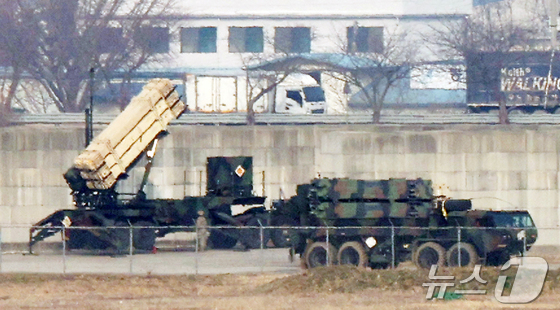
As tensions escalate between the U.S.-Israel alliance and Iran, reports indicate that the U.S. has deployed a significantly larger number of interceptor missiles compared to Israel. This development has sparked concerns about the robustness of U.S. air defense capabilities.
According to a Pentagon assessment obtained by The Washington Post on Thursday, the U.S. has launched over 200 Terminal High Altitude Area Defense (THAAD) interceptor missiles in defense of Israel. This figure represents approximately half of the Defense Department’s total THAAD inventory.
Furthermore, U.S. Navy vessels in the Eastern Mediterranean have fired more than 100 SM-3 and SM-6 interceptor missiles.
In contrast, Israel has reportedly utilized fewer than 100 of its domestically produced Arrow interceptor missiles and about 90 David’s Sling interceptor missiles.
A senior U.S. administration official revealed that, overall, the U.S. has launched approximately 120 more interceptor missiles than Israel and has engaged in twice as many counter-missile operations against Iranian threats.
Sources within the government disclosed that both nations had previously agreed on a ballistic missile defense framework. This strategy aimed to counter the majority of ballistic missile threats targeting Israel using advanced interceptor systems such as THAAD and ship-based missiles.
Both the U.S. and Israel have defended their missile usage as balanced and strategic.
Pentagon spokesperson Sean Parnell stated that ballistic missile interceptors are just one component of a comprehensive, multi-layered integrated air defense network. During Operation Epic Fury, both nations maximized the effectiveness of fighter jets, counter-drone systems, and other cutting-edge air and missile defense capabilities, ensuring an equitable distribution of the defensive burden.
The Israeli Embassy in Washington issued a statement emphasizing that Operations Roaring Lion and Epic Fury were conducted under the highest level of coordination, benefiting both nations and their allies. The embassy asserted that no U.S. partner matches Israel in terms of military resolve, readiness, shared interests, and capabilities.
However, as reports suggest that the conflict with Iran was instigated when Israeli Prime Minister Benjamin Netanyahu persuaded President Donald Trump, there is growing discontent within the U.S. over the disproportionate depletion of American military assets.
The Washington Post reports that Netanyahu’s persistent pressure to escalate the conflict is particularly frustrating some U.S. officials, given the potential strain on the Pentagon’s ammunition stockpiles.
While President Trump hints at the possibility of renewed attacks to pressure Iran, defense experts warn that further engagements could rapidly deplete interceptor missile inventories.
A U.S. administration insider cautioned that if Trump’s threats materialize and military actions resume in the coming days, American forces may expend even more interceptor missiles. This is partly due to some Israeli air defense units being offline for maintenance. The official predicted that a resumption of hostilities would exacerbate the existing imbalance.
Kelsey Griko, a senior researcher at the Stimson Center, observed that while the U.S. has shouldered the majority of missile defense operations, Israel has managed to conserve its own stockpiles. Even if the operational logic is sound, the U.S. is left with only about 200 THAAD missiles, and production lines are struggling to meet demand.
Griko warned that the depletion of U.S. interceptor missiles sends a concerning message to Asian allies like South Korea and Japan, who rely on American deterrence against North Korean and Chinese threats. She cautioned that there’s a risk that the consequences of this Middle East conflict could reverberate in regions far removed from Iran.