South Korea and the United States have wrapped up their first intergovernmental working-level talks aimed at fleshing out the nuclear-powered submarine and nuclear cooperation initiatives agreed upon during last year’s summit. Both nations committed to collaborating for swift outcomes. Notably, sources indicate that a timeline was discussed for a South Korean delegation to visit the U.S. for follow-up meetings, potentially as early as next month.
On Wednesday, the South Korean Ministry of Foreign Affairs announced that the two countries held meetings in Seoul on June 2-3 to initiate follow-up discussions on nuclear cooperation, as outlined in the Joint Fact Sheet from the summit.
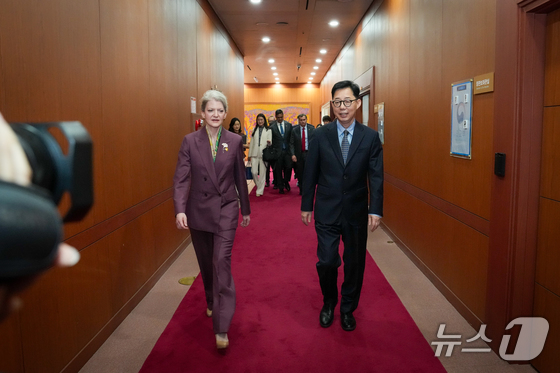
The talks kicked off with a plenary session on Tuesday, co-chaired by South Korean Deputy Foreign Minister Park Yoon-joo and U.S. Under Secretary of State for Political Affairs Allison Hooker. Subsequently, sector-specific discussions were conducted under the guidance of the National Security Council (NSC) and the White House.
The South Korean delegation included representatives from key government bodies such as the National Security Office, Foreign Affairs, Science and Information and Communications Technology (ICT), National Defense, Trade, Industry and Energy, Environment, and the Nuclear Safety and Security Commission. The U.S. side comprised officials from the NSC, State Department, Department of Energy, and the U.S. Embassy in Korea.
Discussions continued in Seoul on the second day, focusing on specific sectors. While the previous day centered on introducing nuclear submarines, the current talks primarily addressed enrichment and reprocessing issues related to the U.S.-Korea nuclear agreement.
The current nuclear agreement, valid until 2035, allows South Korea to enrich uranium below 20% only with U.S. consent and prohibits reprocessing spent nuclear fuel. Both nations reportedly exchanged significant views on various scenarios, including potential adjustments or a complete overhaul of the agreement.
Moreover, securing nuclear fuel for submarines requires a separate U.S.-Korea agreement under U.S. energy law, distinct from the nuclear cooperation agreement limited to peaceful use. This topic likely featured in the discussions as well.
Second Meeting Expected as Early as July… Some Interpret the Discussion of the Timeline as Having Effectively Become a Regular Occurrence
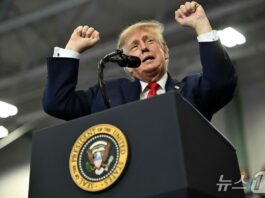
The South Korean government aims to achieve concrete negotiation outcomes before the U.S. midterm elections in November, capitalizing on the policy momentum of the Donald Trump administration.
In a press release, the Ministry of Foreign Affairs stated that both sides agreed to cooperate for prompt, tangible results. They also plan to establish a system for reviewing progress throughout the year and accelerating future discussions.
The U.S. State Department confirmed in a separate statement that bilateral meetings were held in Seoul from June 2 to 6 to advance discussions on the nuclear cooperation framework.
Following the opening session attended by Under Secretary Hooker and Deputy Minister Park, sector-specific talks were conducted under the leadership of the U.S. NSC and South Korea’s National Security Office, with participation from various government agencies.
The State Department echoed the commitment to establish a progress review system and accelerate future talks to achieve visible results promptly.
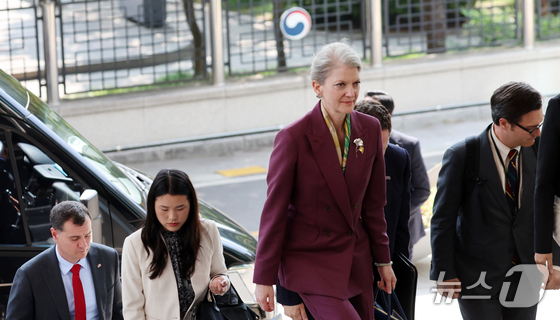
According to News1’s comprehensive report, both sides discussed a timeline for future talks during this meeting.
The second meeting is expected as early as July, with some viewing the timeline discussions as a step towards regularization.
This consultation marks the first working-level follow-up to the summit between President Lee Jae Myung and President Trump in Gyeongju last October. In November, the two nations outlined plans for South Korea’s nuclear submarine construction, uranium enrichment, spent nuclear fuel reprocessing rights, and shipbuilding cooperation.
Before concluding the talks, Under Secretary Hooker met with South Korean Foreign Minister Park Jin to discuss alliance issues and regional situations.
Minister Park stated on X that it agreed that close U.S.-Korea communication and cooperation are more crucial than ever in today’s rapidly changing global landscape. They’re committed to swiftly implementing last fall’s presidential agreements to further strengthen the alliance.
He also mentioned encouraging the working-level team to diligently pursue outcomes benefiting both nations’ security and prosperity.
Under Secretary Hooker expressed satisfaction on X, stating that she’s pleased that U.S.-Korea working-level consultations have begun to advance the nuclear cooperation framework proposed by the leaders. It hopes to deepen and modernize cooperation, building on the alliance’s 70-year history.
She added that it anticipates continuous progress across the bilateral relationship in the coming years.