The Donald Trump administration is reportedly developing a new nuclear strategy that enhances the role of short-range tactical nuclear weapons to bolster deterrence against China and Russia. This has reignited discussions about potentially redeploying U.S. tactical nuclear weapons to the Korean Peninsula and Japan as of August 9.
Military analysts see the redeployment of tactical nukes as a double-edged sword. Some experts argue that if the Trump administration modifies its nuclear posture to include tactical weapons on the Korean Peninsula, it could significantly strengthen deterrence against North Korea’s advancing nuclear and missile capabilities.
However, critics warn of severe diplomatic fallout, particularly from China, reminiscent of the backlash following the Terminal High Altitude Area Defense (THAAD) missile defense system deployment. There are also concerns that such a move could provoke more aggressive provocations from North Korea, escalating regional security threats.
Defense news outlet Breaking Defense reported that on August 5, Deputy Assistant Secretary of Defense Elbridge Colby emphasized the need for rational nuclear options during a closed-door speech at a Strategic Command symposium on extended deterrence in Omaha, Nebraska.
While Colby didn’t specify these rational nuclear options, his remarks suggest that if the U.S. shifts focus to tactical nuclear weapons, it might deploy them with forces stationed in allied countries, introducing a strategy for rapid, precise tactical nuclear strikes.
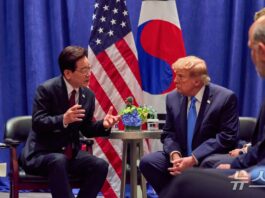
Colby, a known advocate for strengthening tactical nuclear capabilities, has been instrumental in shaping the Trump administration’s 2026 National Defense Strategy (NDS), which aims to expand U.S. forces’ role in deterring North Korea and countering China. His comments signal a potential significant shift in strategy.
If Colby’s push for enhanced tactical nuclear capabilities is adopted into the new U.S. nuclear strategy, it could dramatically alter the security landscape for U.S. allies South Korea and Japan, given their proximity to China and Russia.
Given the range of tactical nuclear delivery systems like short-range ballistic missiles, which can reach hundreds of kilometers, South Korea emerges as a prime candidate for deploying tactical nukes aimed at China.
Redeploying Tactical Nukes to the Korean Peninsula? The Pros and Cons Are Stark
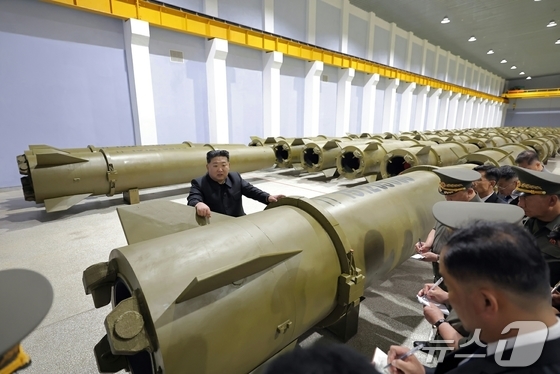
The Korean Peninsula previously hosted U.S. tactical nuclear weapons for decades. The U.S. began deploying them in 1958, with over 950 warheads present by the 1960s. This number decreased to around 600 in the 1970s and further to 100 in the 1990s.
The U.S. completely withdrew its tactical nuclear weapons from South Korea in 1991. At that time, President Roh Tae Woo’s government signed a basic agreement with North Korea and subsequently announced the Joint Declaration on the Denuclearization of the Korean Peninsula, which prohibited nuclear testing, production, storage, and possession within the peninsula. Consequently, U.S. forces removed all tactical nuclear weapons from South Korea.
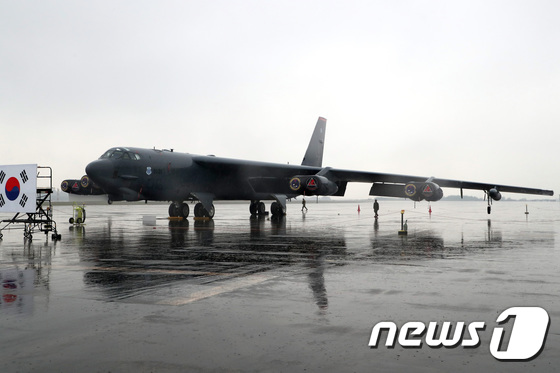
Since the withdrawal of tactical nukes, the U.S. has maintained a nuclear umbrella doctrine for the Korean Peninsula. When North Korea’s nuclear threats escalate, the U.S. rapidly deploys nuclear-capable aircraft carriers or bombers to the region, demonstrating its commitment to South Korea’s defense.
The military advantages of redeploying tactical nuclear weapons are evident. With North Korea’s continued enhancement of its nuclear capabilities over the past 3-4 years and its overt nuclear threats against South Korea, including potential front-line deployments, reintroducing tactical nukes to the peninsula could significantly bolster deterrence against Pyongyang.
Moreover, North Korea has been strengthening military ties with Russia amid the ongoing Ukraine conflict, developing an 8,700-ton nuclear submarine and enhancing its underwater and surface-based missile systems. Meanwhile, China is also expanding its nuclear arsenal and naval power while seeking to extend its influence over Taiwan and the South China Sea.
To counter China, the U.S. has been steadily expanding its forces’ role in South Korea from purely deterring North Korea to also countering Chinese influence through strategic flexibility. Colby’s mention of a new nuclear strategy could be seen as an effort to enhance this flexibility while also pressuring allies to take on more responsibility. At the same time, it aims to provide tangible support to South Korea’s defense capabilities.
Shin Jong Woo, Secretary General of the Korean Defense Security Forum, noted that as North Korea bolsters its naval nuclear capabilities with new destroyers, South Korea needs countermeasures. Tactical nuclear weapons are being discussed as a potential option to maintain the balance of power.
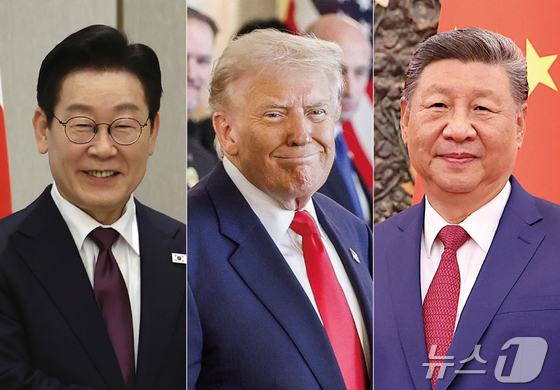
However, redeploying U.S. tactical nuclear weapons presents major diplomatic challenges. It would likely trigger strong opposition from China and escalate provocations from North Korea, as well as pressure from its ally, Russia.
China vehemently opposed the THAAD missile defense system deployment in Seongju during the Park Geun-hye administration in 2016, claiming it threatened Chinese security. This led to economic retaliation, including restrictions on Korean cultural imports, which significantly impacted South Korea’s economy and diplomatic relations.
Currently, numerous obstacles stand in the way of redeploying U.S. tactical nuclear weapons, including bilateral agreements on nuclear weapons deployment and operations on the Korean Peninsula, and establishing new bases. As signatories to the Nuclear Non-Proliferation Treaty (NPT), it’s unclear how South Korea and the U.S. would justify such a move.
Given the South Korean government’s public commitment not to possess nuclear weapons, any U.S. proposal on this issue would likely lead to intense negotiations between the two countries.
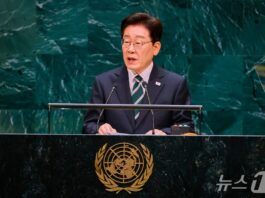
The Lee Jae Myung administration launched the Jangbogo N Project to develop nuclear-powered submarines while reaffirming its stance against nuclear weapons acquisition. In May, the government unveiled its basic plan for nuclear submarines, emphasizing that it would not pursue the introduction, production, or acquisition of nuclear weapons. This principle is reportedly included in the draft special law on nuclear submarine acquisition, operation, and safety management.
Furthermore, many experts believe that strong non-proliferation sentiment in the U.S. Congress means any push to redeploy tactical nuclear weapons to allies would face significant domestic opposition. Additionally, tactical nukes on the Korean Peninsula could be vulnerable to concentrated strikes during a conflict, potentially diminishing their strategic value.
Yoo Yong Won, a People Power Party lawmaker and former military journalist, stated on SBS Radio’s “Kim Tae Hyun’s Political Show” on August 7 that from North Korea’s perspective, their first target in a war would likely be U.S. tactical nuclear weapons in South Korea. Given that key weapon locations on the Korean Peninsula are now easily detectable, and the U.S. is aware of this risk, he believes the actual likelihood of tactical nuclear weapons being deployed is quite low.